MH Energy Your Better Solar and Energy Partner

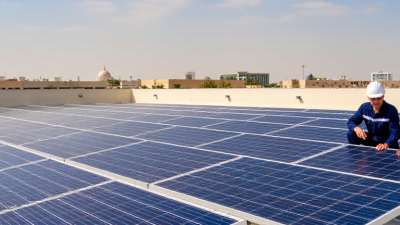
Choosing the right Pv System can reshape how a business manages energy, costs, and operational risk. It is not simply a matter of placing panels on an available roof. A suitable design must match electricity demand, site conditions, budget, and future expansion plans.
Begin with the business’s actual load profile. A warehouse may consume the most power during daylight, while a restaurant may peak after sunset. Monthly utility bills can reveal patterns, but interval data offers a clearer picture. Roof age matters too. Replacing a roof after installation can create avoidable costs. Shading from nearby buildings, dust, drainage, and panel access also deserve careful inspection.
A qualified installer should explain system capacity, inverter performance, battery options, warranties, maintenance needs, and expected degradation. Independent engineering checks can strengthen confidence in the proposal. Local grid requirements and applicable safety standards must guide the final design. Financial returns should include installation, insurance, repairs, incentives, and changing electricity prices.
Numbers can look attractive.
However, projections are not guarantees. Weather varies, equipment fails, and business demand changes. Even experienced teams may overlook a shaded section or underestimate future cooling loads. A careful decision leaves room for uncertainty. Comparing several technically detailed proposals is often more valuable than choosing the lowest initial price.
The best Pv System supports reliable operations without forcing the business into an uncomfortable financial commitment. It should be measurable, maintainable, and suitable for the site today. It should also remain practical five or ten years from now.
Choosing the right PV system starts with your operating profile, not your available roof area. Map hourly electricity use, peak demand, seasonal production, and critical loads. A warehouse running refrigeration needs a different design from an office that empties at 6 p.m. Review at least twelve months of utility bills. Include demand charges, export limits, and planned equipment upgrades.
Solar goals must be measurable. A business may target lower annual costs, daytime energy independence, carbon reduction, or resilience during outages. According to IRENA’s Renewable Capacity Statistics 2024, solar capacity grew by about 346 GW worldwide in 2023. That growth shows maturity, but it does not make every project financially suitable. The International Energy Agency’s Renewables 2024 report identifies solar PV as the largest source of new renewable capacity. Strong market growth still requires site-specific analysis.
Match system size to the goal. A self-consumption project may favor load alignment over maximum generation. Battery storage can shift midday energy into evening operations, but its value depends on tariffs, cycling, and maintenance. NREL’s 2024 Annual Technology Baseline shows that PV costs vary by project scale and market conditions. Assumptions matter.
A spreadsheet can still mislead. Weather, tariffs, and production losses deserve conservative estimates. Test a low-generation year. Then test higher demand.
Choosing a commercial PV system starts with the site, not the equipment. A grid-tied system suits businesses with reliable utility service and daytime electricity demand. Offices, supermarkets, and workshops can use rooftop arrays to reduce purchased power. Net-metering rules may improve value, but these rules vary by location.
A hybrid PV system adds batteries to solar generation and grid power. It fits clinics, cold-storage facilities, and factories needing backup during short outages. Battery size should follow measured loads, not guesses. A large battery may look impressive, yet it can remain underused for much of the year. Energy audits and interval meter data provide a stronger design basis.
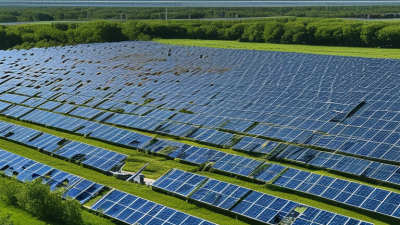
Off-grid systems serve remote cabins, farms, and field operations without dependable grid access. They need solar modules, batteries, charge controls, and usually a backup generator. Ground-mounted systems work when roofs are shaded, weak, or crowded with vents. Carport systems can generate power while covering parking areas, though structural reviews and drainage planning are essential. I have seen projects overestimate winter production. Weather, dust, and shading quietly reduce output. No design is perfect. Engineers should document these uncertainties, check local permits, and leave room for future loads.
| PV System Type | Typical Capacity Range | Best Business Use Cases | Installation Location | Key Advantages | Main Limitations | Storage and Grid Configuration | Best Fit for |
|---|---|---|---|---|---|---|---|
| Commercial Rooftop PV | Approximately 30 kW to 1 MW or more |
|
Existing flat or pitched commercial roofs |
|
|
Usually grid-connected; batteries may be added for peak shaving, backup, or demand management | Most businesses with suitable roofs |
| Ground-Mounted PV | Approximately 100 kW to several MW |
|
Open land using fixed-tilt or tracking structures |
|
|
Grid-connected; batteries can support energy shifting and resilience | Land-rich, high-consumption facilities |
| Solar Carport PV | Approximately 50 kW to 5 MW |
|
Elevated structures installed over parking spaces |
|
|
Grid-connected; batteries may be paired with EV charging and demand management | Businesses with large parking areas |
| Building-Integrated PV (BIPV) | Approximately 5 kW to 500 kW, depending on building design |
|
Integrated into roofs, facades, windows, skylights, or shading elements |
|
|
Usually grid-connected; storage depends on the building's resilience and load-management goals | New builds and premium developments |
| Solar-plus-Storage Hybrid PV | Approximately 30 kW to several MW |
|
Rooftop, ground-mounted, or carport PV combined with batteries |
|
|
Grid-connected with lithium-ion or other suitable battery technology; backup circuits require appropriate switching equipment | Critical loads and peak-demand customers |
| Off-Grid PV System | Approximately 1 kW to 500 kW, depending on load requirements |
|
Rooftop, ground-mounted, or portable structures at remote sites |
|
|
Battery-based system, often supported by a backup generator for extended autonomy | Remote or weak-grid operations |
| Agrivoltaic PV | Approximately 100 kW to several MW |
|
Elevated or specially spaced structures over agricultural land |
|
|
Grid-connected or hybrid; batteries may support irrigation, refrigeration, and other agricultural loads | Agricultural businesses with suitable land |
| Floating PV | Approximately 100 kW to hundreds of MW |
|
Floating platforms on relatively calm, managed bodies of water |
|
|
Generally grid-connected; storage can be added where operational or resilience benefits justify it | Businesses with suitable managed water areas |
Note: Capacity ranges are indicative planning ranges rather than fixed classifications. Final system selection should consider electricity demand profiles, available space, structural conditions, local solar resources, grid rules, permitting, safety requirements, and project economics.
A suitable PV system begins with the site, not the sales estimate. Walk around the property at different times of day. Note nearby trees, chimneys, vents, and taller buildings that may cast moving shadows. Even narrow shadows can reduce output across several connected panels.
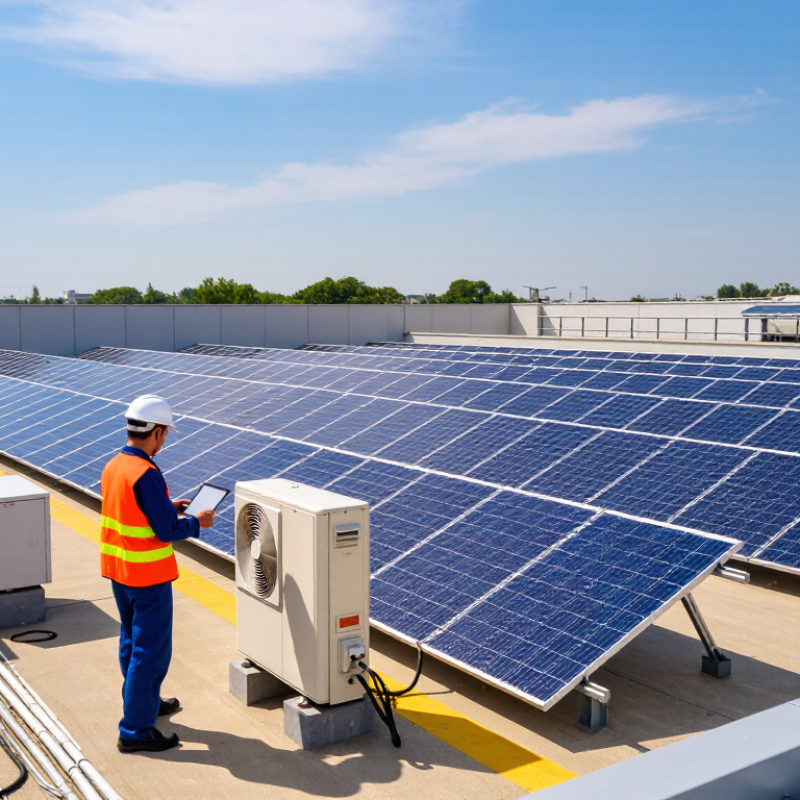
Roof space needs careful measurement. Mark usable areas after excluding skylights, access paths, drainage zones, and fire-safety clearances. A large roof does not always provide enough practical space. I once measured an apparently open warehouse roof and lost nearly a quarter of the area to maintenance routes. That mistake changed the expected system size.
Roof condition matters too. Inspect the membrane, supports, drainage, and signs of moisture before installation. Replacing an aging roof later can require costly panel removal. Structural checks should confirm that the building can carry the equipment, wind loads, and installation hardware. An engineer should review uncertain structures.
Sunlight assessment should use local solar data and on-site observations. Compare seasonal shadows, roof direction, pitch, and expected weather patterns. South-facing roofs often perform well in many regions, but orientation rules vary by location. Do not trust a single clear-day reading. Clouds, winter shading, and soiling may lower production more than expected. A realistic proposal should show assumptions, losses, and several production scenarios, including a less optimistic one.
Choosing a PV system begins with capacity, but financial returns deserve equal attention. Oversizing can increase unused exports, while undersizing may leave expensive daytime demand uncovered. IRENA reported a global utility-scale solar cost of about USD 0.044 per kWh in 2023. However, commercial projects can cost more because roofs require engineering, access equipment, and safety upgrades.
Compare total cost, not only panel prices. Include inverters, mounting, grid connection, monitoring, insurance, maintenance, and replacement reserves. The IEA PVPS Trends 2024 report notes that module prices continued falling, yet financing and grid constraints still affect project economics. A system producing 500,000 kWh yearly is not automatically profitable. Its value depends on how much energy the business consumes onsite. Self-consumed electricity usually creates stronger savings than exported power. Tariffs matter greatly.
Tips: Request at least three production studies using local irradiance data. Test conservative assumptions, including 0.5% annual degradation, tariff changes, and delayed commissioning. Calculate payback, internal rate of return, and net present value together. Do not trust one attractive scenario. A spreadsheet can look precise while hiding weak assumptions. Review roof condition before signing. Replacing a roof later can disrupt generation and damage projected returns. Cash flow may also differ sharply between a cash purchase, loan, and lease. The best capacity is rarely the largest one; it is the size that matches load patterns, available capital, and export rules.
Choosing a commercial PV system begins with the installer, not the panel. Request recent project references with similar roof areas, electrical loads, and grid requirements. Verify licensing, insurance, safety records, and commissioning procedures. A professional installer should provide single-line diagrams, structural checks, yield assumptions, and a clear handover package.
Equipment selection should match the site’s reality. Compare module temperature coefficients, inverter efficiency, warranty terms, replacement procedures, and monitoring quality. The IEA PVPS Trends 2024 report recorded about 456 GW of new solar capacity worldwide in 2023. That scale increases equipment choice, but it does not remove technical risk. Ask how the system performs during heat, dust, shading, and partial outages. A lower quotation may be fair. It may also hide weaker components or limited engineering.
Support deserves equal attention. Require documented response times, preventive maintenance schedules, remote alerts, spare-parts access, and performance reporting. The International Renewable Energy Agency reported that global solar capacity reached approximately 1,419 GW by the end of 2023. Long-term reliability now matters as much as installation speed. Still, no checklist catches every roof leak or communication failure. Review the service agreement annually, because business conditions change. The best decision is not always the largest system; it is the system your team can operate, inspect, and repair without guessing.