| 1 |
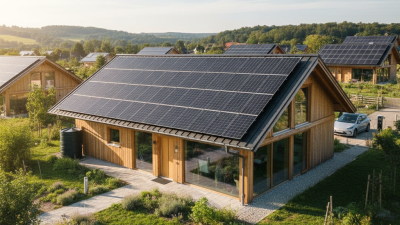
Residential Rooftop Grid-Tied String System |
Approximately 2–15 kW |
Multiple PV modules connected in strings to one or more string inverters; normally connected to the local low-voltage grid. |
Detached homes, small multi-unit buildings, and owner-occupied residential properties. |
Roofs with suitable orientation, limited shading, adequate structural capacity, and reliable grid access. |
AC-coupled or DC-coupled battery storage can be added, depending on the inverter architecture. |
Generally cost-effective; simple energy metering; widely understood by installers; good use of unused roof area. |
String output can be affected by partial shading; export limits may reduce annual generation; roof replacement can complicate installation. |
Electrical safety, anti-islanding, grid connection approval, rapid shutdown or equivalent requirements where applicable, module and inverter certification, and local fire-access rules. |
Compare net-metering or export-credit rules, single-phase versus three-phase supply, permitted export capacity, household voltage, inspection procedures, and battery incentives. |
| 2 |
Residential Rooftop Microinverter System |
Approximately 1–15 kW |
One small inverter is installed per module or for a small group of modules; AC output is collected on the roof circuit. |
Homes with multiple roof orientations, partial shading, complex roof geometry, or phased expansion plans. |
Sites with variable roof pitch, intermittent shade, dormers, skylights, or several azimuths. |
Usually paired with AC-coupled batteries; some systems support dedicated storage interfaces. |
Module-level monitoring; improved performance under mismatch and partial shading; flexible system design; easier module-level expansion. |
More electronic devices are exposed to rooftop temperature and moisture; replacement access may be more difficult; equipment cost can be higher. |
AC branch-circuit loading, rooftop equipment access, inverter compliance, anti-islanding, arc-fault protection where required, rapid shutdown where required, and interconnection limits. |
Compare labor availability, replacement practices, rooftop temperature range, local certification acceptance, data-communication requirements, and export-control policies. |
| 3 |
Commercial Rooftop Distributed String System |
Approximately 30 kW–5 MW |
Several medium-power string inverters distributed across a commercial or industrial roof, often with combiner equipment and monitoring. |
Warehouses, factories, retail buildings, offices, schools, and logistics facilities. |
Large, structurally sound roofs with significant daytime electricity demand and low shading. |
DC-coupled or AC-coupled battery storage; load management and peak-demand control are common objectives. |
Modular design; reduced single-point failure risk; flexible array layout; good match for behind-the-meter consumption. |
Structural reinforcement, roof warranty coordination, fire setbacks, cable routing, and electrical-room capacity can increase project complexity. |
Commercial interconnection studies, transformer and switchgear ratings, protection coordination, power-quality limits, fire pathways, wind uplift, roof loading, and occupational safety. |
Compare demand charges, time-of-use tariffs, self-consumption rules, maximum export capacity, building permits, labor standards, and insurance requirements. |
| 4 |
Ground-Mounted Fixed-Tilt Utility-Scale System |
Approximately 5 MW–500+ MW |
Large module arrays installed on fixed structures at a selected tilt angle; centralized or distributed inverters connect to medium-voltage collection systems. |
Utility generation, independent power projects, public procurement, and large corporate power-purchase agreements. |
Open land with good solar resource, suitable geotechnical conditions, access roads, and available grid capacity. |
AC-coupled battery storage is common; DC-coupled storage may increase energy capture and reduce clipping losses. |
Proven design; comparatively simple mechanical structure; predictable operations and maintenance; suitable for large-scale deployment. |
Land use, transmission availability, permitting time, environmental review, and curtailment risk can be significant. |
Land-use approval, environmental impact assessment, glare review where required, medium- and high-voltage protection, grid-code compliance, earthing, lightning protection, and performance testing. |
Compare irradiation, land cost, interconnection queue, curtailment, tax treatment, auction rules, local-content requirements, import duties, and PPA bankability. |
| 5 |
Single-Axis Tracking Utility-Scale System |
Approximately 20 MW–1 GW+ |
Long rows of modules rotate around a horizontal or near-horizontal axis to follow the sun during the day. |
Large utility plants, merchant solar projects, and projects requiring higher output during morning and afternoon periods. |
Broad, relatively flat land with low horizon obstruction, suitable wind conditions, and adequate construction access. |
Highly compatible with co-located battery systems and grid-connected hybrid plants. |
Higher annual energy yield than fixed-tilt systems in many sunny regions; better generation profile in some markets; efficient land utilization in suitable terrain. |
Higher mechanical and operational complexity; increased wind loading; additional maintenance; less suitable for steep, irregular, or highly shaded land. |
Wind and snow loading, tracker stow strategy, pile or foundation design, mechanical safety, inverter grid support, glare assessment, and terrain drainage. |
Compare direct normal and global horizontal irradiation, land topography, wind regime, snow conditions, maintenance capability, time-of-use pricing, and curtailment exposure. |
| 6 |
Agrivoltaic Dual-Use PV System |
Approximately 1 MW–100 MW+ |
PV modules are elevated or arranged to permit continued agricultural activity, grazing, pollinator habitat, or controlled cultivation beneath and between rows. |
Farms, orchards, grazing land, horticulture, research sites, and land-constrained renewable projects. |
Areas where agricultural land must remain productive and where crop or livestock requirements can be integrated with array design. |
Battery storage can support irrigation, refrigeration, pumping, and farm-load management. |
Dual land use; potential reduction in heat or water stress for selected crops; additional revenue streams; improved land-use acceptance in some jurisdictions. |
Higher structure and foundation costs; agricultural compatibility is crop-specific; machinery access and shading design require careful planning. |
Land-use classification, agricultural preservation rules, minimum clearance, drainage, livestock safety, pesticide and equipment access, glare, and electrical protection. |
Compare crop-specific shading tolerance, local farm regulations, lease structure, agricultural subsidies, rainfall, irrigation needs, and community acceptance. |
| 7 |
Floating Solar PV System |
Approximately 1 MW–500 MW+ |
PV modules are mounted on buoyant platforms anchored to a reservoir, quarry lake, irrigation pond, or other suitable inland water body. |
Water-supply reservoirs, irrigation facilities, mine lakes, industrial ponds, and hydropower reservoirs. |
Protected inland water bodies with suitable water-level variation, low wave action, adequate anchoring conditions, and nearby grid access. |
Can be combined with hydropower or battery storage to improve dispatchability and use existing electrical infrastructure. |
Reduces direct land occupation; may lower module operating temperature; can share grid infrastructure with water or hydropower assets. |
Anchoring, corrosion, biofouling, storm exposure, water-level changes, access, and environmental impacts require specialized assessment. |
Water-use permits, aquatic-environment assessment, buoyancy and anchoring design, electrical isolation, corrosion protection, navigation safety, and emergency access. |
Compare water ownership, reservoir operating levels, wind and wave conditions, water-quality rules, evaporation objectives, access logistics, and environmental permitting. |
| 8 |
Building-Integrated PV System |
Approximately 1 kW–10 MW |
PV elements form part of the building envelope, such as façade panels, roof elements, skylights, balcony systems, or solar shading. |
New commercial buildings, public facilities, high-rise developments, transport structures, and architecturally constrained projects. |
Buildings where the PV element can replace or perform part of the conventional façade, roof, glazing, or shading system. |
Usually paired with AC-coupled batteries or building-energy-management systems. |
Combines electricity generation with weather protection, shading, or architectural function; can increase usable PV area in dense urban locations. |
Higher design and installation complexity; orientation may be suboptimal; replacement and fire access need integration with the building design. |
Building code, structural and wind-load requirements, fire classification, water penetration, thermal performance, electrical safety, façade testing, and emergency access. |
Compare construction standards, daylight requirements, façade procurement, planning approval, urban fire rules, architectural integration costs, and available building incentives. |
| 9 |
Off-Grid PV System with Battery Storage |
Approximately 0.5 kW–1 MW |
PV generation charges batteries through a charge controller or hybrid inverter; loads are supplied without a permanent utility-grid connection. |
Remote homes, telecommunications sites, islands, agricultural pumps, health facilities, emergency systems, and rural mini-grids. |
Locations with weak or unavailable grids, high fuel-delivery costs, and sufficient solar resource. |
Battery storage is essential for night-time operation and short-term energy autonomy; generators may provide backup for critical loads. |
Provides energy access without grid extension; reduces fuel consumption; scalable from small systems to community mini-grids. |
Battery replacement and temperature management are important; system sizing must account for seasonal solar variation and critical-load priorities. |
Battery safety, enclosure ventilation, earthing, lightning protection, generator integration, mini-grid licensing, electrical inspection, and disposal or recycling rules. |
Compare solar seasonality, load profile, battery transport, service availability, fuel logistics, import duties, rural electrification standards, and required autonomy days. |
| 10 |
Grid-Forming Hybrid PV-and-Storage System |
Approximately 50 kW–500 MW+ |
PV inverters, battery energy-storage converters, and an energy-management system coordinate grid-connected and islanded operation; the storage system can establish voltage and frequency references. |
Microgrids, critical facilities, weak-grid locations, industrial sites, islands, data centers, and renewable-heavy power systems. |
Sites with unreliable grids, strict resilience requirements, high renewable penetration, or limited diesel backup. |
Storage is central to the architecture; may include AC-coupled PV, DC-coupled PV, backup generation, and controllable loads. |
Improves resilience and power quality; supports black start or islanded operation when properly designed; reduces dependence on fossil-fuel backup. |
Higher controls and protection complexity; battery degradation and replacement economics must be modeled; interoperability testing is essential. |
Grid-forming and grid-following behavior, islanding detection, black-start sequence, protection coordination, fault current, harmonic limits, cybersecurity, fire safety, and utility approval. |
Compare outage requirements, weak-grid characteristics, ancillary-service markets, battery duration, dispatch rules, cybersecurity obligations, and local acceptance of islanded operation. |