MH Energy Your Better Solar and Energy Partner

Leave Your Message
MH Energy Your Better Solar and Energy Partner
Choosing a reliable Photovoltaic Solar Power System requires more than comparing panel prices. Global buyers must examine performance, durability, safety, and long-term service support.
This guide introduces seven leading systems for different climates, building types, and energy needs. Some options suit compact homes with limited roof space. Others support farms, warehouses, remote facilities, or large commercial projects. Each system should be judged through practical details, including panel efficiency, inverter reliability, battery compatibility, monitoring functions, and warranty coverage. A strong datasheet helps, but field performance matters more. Dust, salt air, snow, heat, and unstable grids can change results significantly.
Local installation quality remains critical. Even premium equipment may underperform with poor wiring, weak mounting, or incorrect system sizing. Buyers should confirm certifications, replacement procedures, grid requirements, and available technical support before ordering. Product documentation should be clear and verifiable. Transparent warranties also reveal how seriously manufacturers support their equipment.
No ranking is perfect. A system that performs well in Australia may not suit a cloudy northern climate. Prices, shipping costs, import requirements, and installer experience can also reshape the final decision. This comparison therefore focuses on balanced value, not marketing claims alone. It combines technical specifications with practical buying considerations. Readers can use these insights to narrow their choices, ask better questions, and avoid expensive mistakes. Solar power is a long-term investment. Careful evaluation pays off.
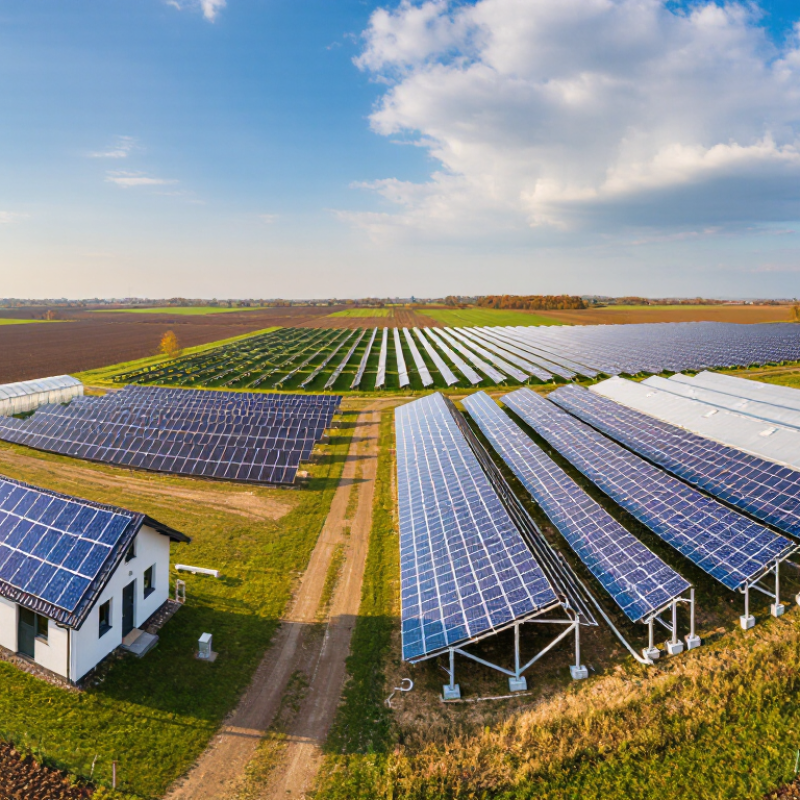
A photovoltaic solar power system turns sunlight into usable electricity through coordinated electrical and mechanical components. Solar modules contain semiconductor cells that generate direct current when photons release electrons. Frames, mounting rails, cables, and connectors support the array and transfer energy toward the inverter. The inverter converts direct current into alternating current for household loads or grid-compatible equipment. The inverter matters. Its monitoring data can reveal low output, insulation faults, or uneven module performance before failure becomes obvious.
A battery system adds charge controllers, battery cells, protection devices, and a battery-management system. It stores surplus daytime energy and releases it during evening demand or outages, where permitted by local requirements. Capacity is not the same as usable energy. Temperature, depth of discharge, conversion losses, and aging reduce the available amount. Practical assessments examine roof orientation, seasonal shade, cable routes, ventilation, and maintenance access before estimating production. A clean roof drawing helps. Still, one nearby tree can disturb a confident calculation.
System performance depends on matched component ratings, grounding, overcurrent protection, and careful commissioning. Qualified technicians should test polarity, insulation resistance, operating voltage, and shutdown functions with documented procedures. A system may look impressive on paper yet perform poorly when dust, heat, snow, or weak connections are ignored. Production forecasts should use local solar data, not optimistic assumptions. No forecast is perfect. Experienced assessors still question battery sizing, shading estimates, and long-term maintenance plans before approving a design.
| System Type | Typical Capacity | Core Components | Operating Principle | Typical Energy Yield | Storage Requirement | Best Applications | Key Advantages and Limitations |
|---|---|---|---|---|---|---|---|
| 1. Grid-Tied Rooftop PV System | 2–10 kW for homes 10–500 kW for commercial buildings |
PV modules, string or microinverters, mounting structure, AC/DC protection, monitoring equipment, bidirectional utility meter | Solar cells convert sunlight into DC electricity. The inverter converts DC to grid-compatible AC. Electricity is consumed on-site, while surplus energy may be exported where permitted. | Approximately 900–1,800 kWh per installed kW annually, depending on solar resource, orientation, temperature, and system losses | Not normally required; the utility grid balances production and demand | Urban homes, offices, schools, retail buildings, warehouses, and other sites with reliable grid access | Advantages: Lowest complexity and cost among grid-connected options, high daytime bill savings, limited site footprint. Limitations: Standard systems shut down during grid outages unless special backup equipment is installed. |
| 2. Hybrid PV and Battery System | 3–100 kW solar capacity 5–500 kWh battery capacity |
PV modules, hybrid inverter, lithium iron phosphate battery or other approved battery chemistry, energy-management system, backup panel, protection devices | Solar power supplies loads first, charges the battery with excess energy, and discharges the battery during evening periods or outages. The grid can supplement or absorb power when allowed. | Approximately 850–1,650 kWh per installed kW annually before battery-related losses | Integrated storage is essential; commonly designed for 2–12 hours of selected-load backup | Homes and businesses facing time-of-use tariffs, unreliable grids, demand charges, or backup-power requirements | Advantages: Backup capability, improved self-consumption, peak-demand management, and greater energy independence. Limitations: Higher upfront cost, battery replacement planning, thermal-management and fire-safety requirements. |
| 3. Stand-Alone Off-Grid PV System | 0.5–20 kW solar capacity 2–200 kWh battery capacity |
PV modules, charge controller, off-grid inverter, battery bank, mounting system, DC/AC protection, optional generator and energy-management controls | PV electricity serves loads and charges the battery. The inverter creates a local AC network, while the battery supplies energy when sunlight is unavailable. | Approximately 700–1,500 kWh per installed kW annually, depending on available sunlight and battery-dispatch strategy | Required; commonly sized for 1–3 days of critical-load autonomy, with additional backup generation in difficult climates | Remote homes, telecom sites, islands, rural clinics, agricultural pumping, and locations without economical grid access | Advantages: Operates independently of the utility network and can provide power in remote areas. Limitations: Requires careful load sizing, weather forecasting, battery maintenance, and possible generator support. |
| 4. Utility-Scale Fixed-Tilt PV Farm | 10 MW to more than 1 GW | Large PV arrays, central or distributed inverters, fixed steel or aluminum structures, medium-voltage transformers, collection network, substation, weather station, and supervisory controls | Parallel PV strings deliver DC power to inverters, which convert it to AC. Transformers raise voltage for efficient transmission to the grid. | Approximately 1,200–2,400 kWh per installed kW annually, depending on solar irradiation, tilt angle, and grid availability | Optional; batteries may be added for energy shifting, frequency regulation, or grid-support services | Large-scale electricity generation, power-purchase agreements, national grids, and industrial decarbonization projects | Advantages: Economies of scale, predictable operation, and relatively simple mechanical design. Limitations: Requires substantial land, transmission access, permitting, site studies, and environmental management. |
| 5. Single-Axis Tracking PV System | 1 MW to more than 1 GW | Bifacial or monofacial PV modules, horizontal single-axis trackers, motors and controllers, inverters, transformers, SCADA system, and weather sensors | Motorized rows rotate from east to west during the day to keep modules closer to the sun’s position and increase direct irradiance capture. | Often 15–30% higher annual energy production than a comparable fixed-tilt array at the same site, with total yield commonly around 1,400–2,700 kWh per installed kW annually | Optional; storage can improve dispatchability and reduce solar curtailment | Large projects in regions with strong direct sunlight, relatively flat land, and adequate tracker-maintenance access | Advantages: Higher energy yield and a broader production profile across the day. Limitations: More moving parts, higher maintenance requirements, greater wind-load considerations, and increased site complexity. |
| 6. Floating Photovoltaic System | 100 kW to several hundred MW | PV modules, floating platforms, anchoring and mooring system, floating cable assemblies, inverters, transformers, walkways, and monitoring equipment | PV modules are mounted on buoyant structures on reservoirs, quarry lakes, or other suitable water bodies. Electricity is collected and transmitted to shore-based equipment. | Approximately 900–2,000 kWh per installed kW annually; water cooling can reduce module operating temperatures in suitable conditions | Optional; storage can be integrated where the project requires firm output or grid services | Water-scarce regions, hydropower reservoirs, industrial ponds, and locations where land availability is limited | Advantages: Conserves land, may reduce water evaporation, and can share grid infrastructure with nearby power facilities. Limitations: Requires specialized anchoring, corrosion control, water-body studies, and safe electrical installation near water. |
| 7. Agrivoltaic Solar System | 100 kW to 50 MW | Elevated or spaced PV structures, PV modules, inverters, agricultural irrigation equipment, weather sensors, crop-monitoring systems, and access-control infrastructure | Solar modules generate electricity above or between crops while partial shading can moderate heat, light intensity, and soil evaporation for selected agricultural conditions. | Approximately 800–1,800 kWh per installed kW annually, highly dependent on row spacing, module height, crop requirements, and local climate | Optional; batteries may support irrigation, refrigeration, and other agricultural loads outside solar-production hours | Farms, orchards, vineyards, grazing areas, irrigation projects, and agricultural sites with grid or on-site electricity demand | Advantages: Combines electricity generation with agricultural land use and may improve water-use efficiency for suitable crops. Limitations: Higher structural costs, machinery-clearance requirements, crop-specific design, and potential shading-related yield changes. |