MH Energy Your Better Solar and Energy Partner

Why Choose a Solar System for Your Business?
A Solar System Solar System can turn unused rooftop space into a working energy asset. Panels absorb sunlight above warehouses, offices, and retail buildings. Inverters then convert that energy into usable electricity for lighting, cooling, and equipment.
The International Energy Agency’s Renewables 2024 report expects global renewable capacity to grow by nearly 6,000 gigawatts between 2024 and 2030. Solar power will provide most of that expansion. This trend matters to businesses facing rising electricity costs and stricter sustainability expectations. IRENA’s Renewable Power Generation Costs in 2023 report also found that solar photovoltaic costs have fallen dramatically since 2010. However, savings depend on local tariffs, roof condition, shading, and financing.
The details matter.
Fatih Birol, Executive Director of the IEA, said, “The world is set to add more renewable power in the next five years than it did in the previous 20 years.” His statement reflects a major market shift, not a guarantee for every company. A factory with daytime demand may gain more value than an office that empties at sunset. Battery storage could help, but it also adds cost and maintenance.
A careful feasibility study should examine twelve months of electricity bills, roof loading, interconnection rules, and equipment warranties. That process is less exciting than installation day. It is also where reliable decisions begin.
Solar is powerful.
It is not effortless.
For many businesses, the strongest case combines lower operating costs, predictable energy planning, and visible climate action. A well-designed Solar System Solar System should serve the building first, not merely decorate its sustainability report.
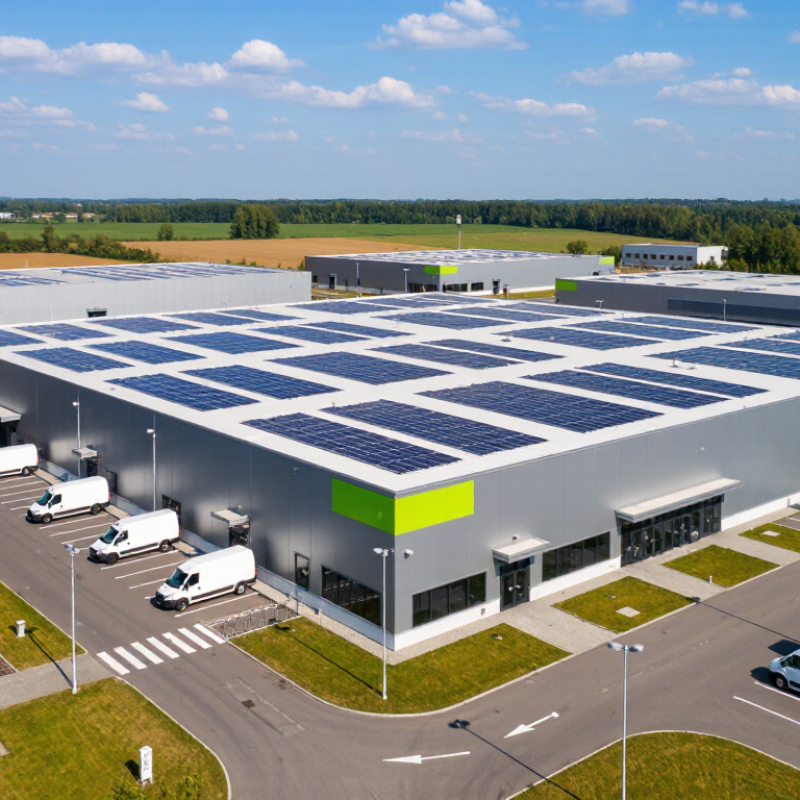
For a business, energy demand is rarely flat. Cooling rises in the afternoon, refrigeration runs overnight, and machinery can create sudden peaks. Solar power can serve daytime loads directly, reducing grid purchases when operations are busiest. The fit depends on evidence, not guesswork. Review twelve months of interval electricity data, roof orientation, shading, and demand charges before choosing system size. A large roof does not automatically mean a useful solar project.
The market signals are strong. IRENA’s Renewable Capacity Statistics 2025 reports 452 gigawatts of new solar capacity worldwide in 2024. Solar represented most global renewable additions that year. The IEA’s Renewables 2024 report expects renewable power to approach half of global electricity generation by 2030. These figures show growing technical confidence, but they do not guarantee savings for every company. Tariffs, export rules, local weather, and financing terms still shape the result.
Storage can extend solar power into evening shifts and protect selected loads during interruptions. It also adds cost, maintenance, and control complexity. NREL research commonly models photovoltaic degradation near 0.5% annually, yet actual performance varies with heat, dust, and installation quality. A careful plan should include monitoring, inverter replacement assumptions, and space for future electrical upgrades. The uncomfortable part is simple: projected payback can look precise while relying on uncertain electricity prices. That deserves regular review.
A commercial solar system turns sunlight into usable electricity through several coordinated components. Photovoltaic panels capture sunlight and produce direct current electricity. An inverter converts it into alternating current for lighting, equipment, and heating systems. The electricity then moves through the building’s distribution board. It can power refrigeration units, computers, pumps, or production machinery during operating hours.
Energy production changes with weather, roof direction, shading, and seasonal daylight. A clear noon may deliver strong output, while clouds can reduce generation quickly. On-site monitoring shows production levels and identifies unusual drops. Batteries can store surplus electricity for evening use, but they add cost, weight, and maintenance requirements. Careful load analysis matters. A system should match real consumption, not an optimistic estimate.
When solar generation exceeds demand, the extra electricity may charge batteries or flow to the utility grid, where regulations permit. When production falls, the building draws power from storage or the grid. Professional design includes structural checks, electrical protection, grounding, and safe shutdown access. Experienced installers also inspect roof condition before installation. That detail is easy to overlook. Solar does not remove every energy challenge, and some businesses may need roof repairs, efficiency upgrades, or a smaller system than expected. Field measurements and recent utility bills provide more reliable guidance than assumptions.
| System Stage | Main Equipment | Electricity Flow or Function | Typical Technical Data | Business Value |
|---|---|---|---|---|
| 1. Solar energy capture | Photovoltaic modules installed on a roof, carport, or ground-mounted structure | Semiconductor cells convert sunlight directly into direct current (DC) electricity | 400–600 W typical module rating; output varies with sunlight, temperature, shading, orientation, and system design | Uses available site area to generate electricity close to the point of consumption |
| 2. DC collection | Module strings, DC cabling, combiner equipment, and protective devices | Combines electricity from multiple modules and delivers it to the inverter | Commercial systems commonly use DC operating voltages from approximately 600–1,500 V, subject to local electrical codes and equipment ratings | Supports efficient transmission from large arrays while providing electrical protection |
| 3. Power conversion | Grid-connected solar inverter | Converts variable DC electricity into synchronized alternating current (AC) electricity for building loads and the utility grid | Typical inverter efficiency: 96–99%; advanced controls can provide voltage, frequency, and anti-islanding protection | Makes solar electricity usable by standard commercial equipment and compatible with the grid |
| 4. On-site consumption | Distribution panels, switchgear, meters, and commercial electrical loads | Solar electricity is supplied first to operating loads such as lighting, HVAC, refrigeration, machinery, and office equipment | Self-consumption depends on the timing and size of the business load; daytime operations generally improve direct solar use | Can reduce electricity purchased from the grid during solar production hours |
| 5. Energy storage option | Battery energy storage system, battery inverter, and energy management controls | Stores surplus solar electricity and releases it later when solar production is lower or demand is higher | Typical battery round-trip efficiency: 80–95%; usable capacity, power rating, temperature, and operating strategy affect results | Can support peak-demand management, backup strategies, and increased use of on-site solar energy |
| 6. Grid supply and export | Bidirectional utility meter and grid interconnection equipment | Imports electricity when building demand exceeds solar production and exports surplus electricity when permitted | Export limits, compensation rules, interconnection requirements, and metering arrangements vary by location | Maintains electricity availability while allowing surplus generation to be delivered to the grid where regulations permit |
| 7. Monitoring and control | Production meter, consumption meter, communications gateway, and energy management software | Measures solar generation, building consumption, battery operation, grid imports, and grid exports | Common performance indicators include kWh generated, system availability, inverter status, and performance ratio | Helps identify faults, verify production, improve load scheduling, and support maintenance decisions |
| 8. Annual energy yield | Complete commercial solar array | Generates electricity throughout the year, with production changing by season and weather conditions | Typical broad planning range: 1,100–1,700 kWh per kWdc per year; actual yield depends strongly on the local solar resource and design | Provides a measurable renewable electricity supply without fuel combustion during operation |
| 9. Illustrative 50 kWdc system | Roof-mounted or ground-mounted commercial PV system | Solar production is routed to business loads, with surplus sent to storage or the grid when available | Estimated annual generation: 55,000–85,000 kWh, based on 1,100–1,700 kWh/kWdc per year | Suitable for smaller commercial facilities, subject to roof area, load profile, and local permitting |
| 10. Illustrative 250 kWdc system | Medium-sized commercial or industrial PV system | Supplies daytime facility loads and may export or store excess production | Estimated annual generation: 275,000–425,000 kWh, based on 1,100–1,700 kWh/kWdc per year | Can offset a significant portion of daytime electricity use when system size matches facility demand |
| 11. Illustrative 1 MWdc system | Large commercial, industrial, or multi-building solar array | Feeds multiple electrical loads through the site distribution system, with storage or grid export as applicable | Estimated annual generation: 1,100,000–1,700,000 kWh, based on 1,100–1,700 kWh/kWdc per year | Provides substantial on-site renewable generation and may support long-term energy planning |
Planning figures are illustrative engineering ranges for grid-connected commercial photovoltaic systems. Actual electricity production and financial results depend on location, solar irradiation, system orientation, shading, temperature, equipment selection, maintenance, local grid rules, and the facility’s electricity-load profile.
Switching to business solar energy can reduce exposure to unpredictable electricity prices. IRENA’s Renewable Power Generation Costs 2023 report placed global utility-scale solar costs at about $0.044 per kilowatt-hour. Rooftop systems may cost more, but they can produce electricity beside the building. That reduces some grid delivery losses. It also protects daytime operations from future rate increases.
The financial case depends on details. A warehouse with a broad, unshaded roof may generate strong savings. An office with limited daytime demand may need battery storage. Demand charges can change the calculation completely. The U.S. Department of Energy notes that commercial customers often face demand-based billing. This can make peak-hour reduction financially valuable. Tax treatment, permits, financing, and maintenance costs also vary by location. The arithmetic is not always flattering. A longer payback period may be the honest answer.
Tips: Review twelve months of utility bills before requesting proposals. Check interval data, roof condition, shading, and equipment space. Compare cash purchase, loan, and lease scenarios. Include inverter replacement and insurance estimates. IRENA’s figures are global benchmarks, not guaranteed business returns. Ask for production estimates using local weather data. Then test the proposal against a cloudy year, not only an ideal one.
Why Choose a Solar System for Your Business?
A commercial solar system can make daily operations more predictable. Panels produce electricity near the point of use, reducing dependence on grid power during daylight hours. This matters for offices, workshops, warehouses, and refrigerated spaces with steady daytime demand. A site assessment should review roof condition, shading, electricity use, and local weather patterns. Ignoring these details can lead to disappointing output.
The operational benefits extend beyond energy generation. Solar can reduce exposure to changing electricity prices and support more stable budgeting. With battery storage, a business may keep essential equipment running during short outages. Maintenance is usually manageable, but panels still need inspections, cleaning, and safe electrical checks. Small faults can become expensive if nobody notices them. Real savings also depend on system size, financing, tariffs, and the building’s operating schedule.
The environmental case is practical, not perfect. Solar generation can lower a company’s reliance on fossil-fuel-based electricity and reduce operational emissions. It may also strengthen environmental reporting when production data is measured consistently. However, manufacturing, transport, installation, and eventual recycling create impacts. The calculation is not always tidy. Companies should request realistic performance estimates rather than optimistic promises. A well-designed system uses available roof space carefully, limits unnecessary equipment, and matches production with actual business demand. That balance supports cleaner operations without pretending solar solves every environmental challenge.
Solar power can reduce dependence on grid electricity while substantially lowering the greenhouse-gas emissions associated with electricity generation.
Lifecycle greenhouse-gas emissions include emissions from fuel extraction, manufacturing, construction, operation, and decommissioning. Solar photovoltaic systems produce no direct operating emissions, while their lifecycle emissions mainly occur during manufacturing and installation.
Source: IPCC, Climate Change 2014: Mitigation of Climate Change, Working Group III, Annex III. Values shown are median lifecycle emissions in grams of CO₂-equivalent per kilowatt-hour.
Planning and installing a commercial solar system requires more than placing panels on a large roof. Begin with accurate electricity bills and interval load data. These records show when your business uses the most power. A qualified installer should inspect roof age, structural capacity, shading, drainage, and available electrical space. A strong design matches system size with real demand, not a sales target.
Local permits, utility interconnection rules, fire access, and worker safety must guide the installation plan. Confirm who handles engineering documents and inspections. Ask for equipment specifications, expected production, warranties, monitoring access, and maintenance duties. Battery storage may help businesses with evening demand, but its value depends on tariffs, operating hours, and site conditions. A projected payback is not a promise. Weather, future electricity rates, and equipment performance can change the result.
Tips: Request a site survey before accepting a final proposal. Compare production estimates with independent solar data. Keep roof repairs in the budget. Leave clear service paths around electrical equipment. Plan for dust, storms, and occasional faults. Monitoring should show daily production and alert the right person when output drops. Small details matter.
Installation should include documented testing, labeled disconnects, and staff training. Ask the installer to explain emergency shutdown procedures in plain language. Some early estimates may be wrong, especially when roof drawings are outdated. That is worth correcting before construction. A careful review now can prevent delays, redesign costs, and disappointing energy savings later.