MH Energy       Your Better Solar and Energy Partner

Leave Your Message

Top 10 Household Battery Backup Solutions for Reliable Power?

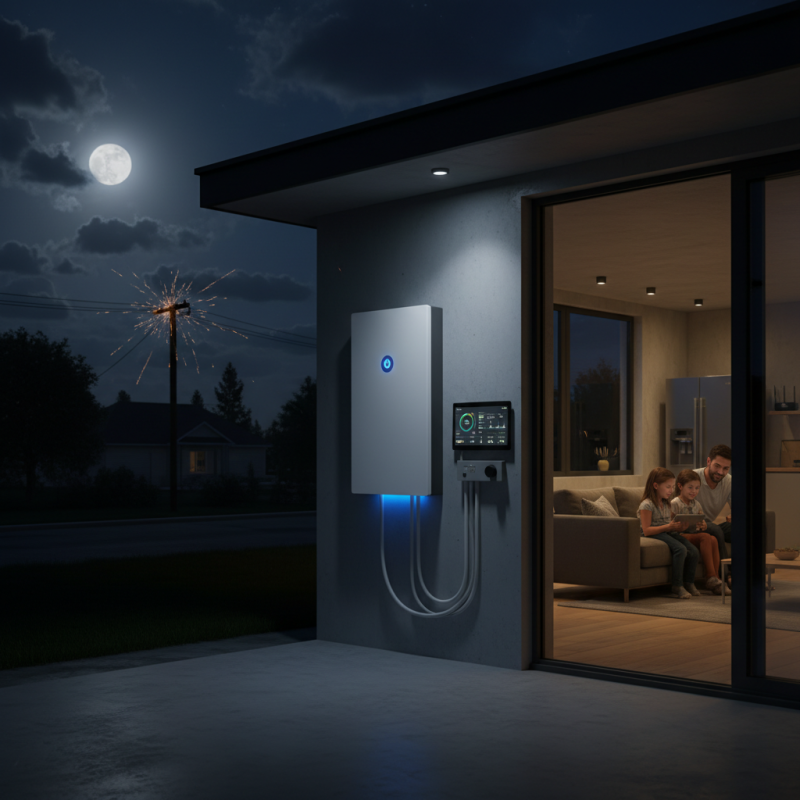
As households increasingly rely on technology, the demand for reliable power sources has surged. Household Battery Backup systems offer a practical solution to power interruptions, ensuring homes remain equipped in emergencies. According to a report by Allied Market Research, the global household battery market is projected to reach $15.24 billion by 2025, indicating a significant shift towards energy independence.

Experts highlight the importance of these systems. John Marshall, a sustainability consultant, states, “Household Battery Backup systems are not just a luxury; they are now a necessity for every modern home.” This insight reflects the growing recognition of the need for backup power access, especially in areas prone to outages.

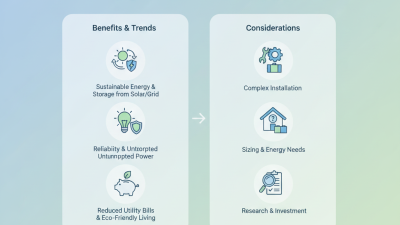
While the advantages of Household Battery Backup systems are clear, selecting the right solution can be daunting. Many consumers face challenges understanding their energy needs and comparing different technologies. It’s essential to research and consider factors like capacity, cost, and longevity to make informed choices. Investing in the right backup solution is vital for creating a resilient home that can withstand power disruptions.
Top 10 Household Battery Backup Solutions for Reliable Power?

Overview of Household Battery Backup Solutions

Top 10 Household Battery Backup Solutions for Reliable Power?

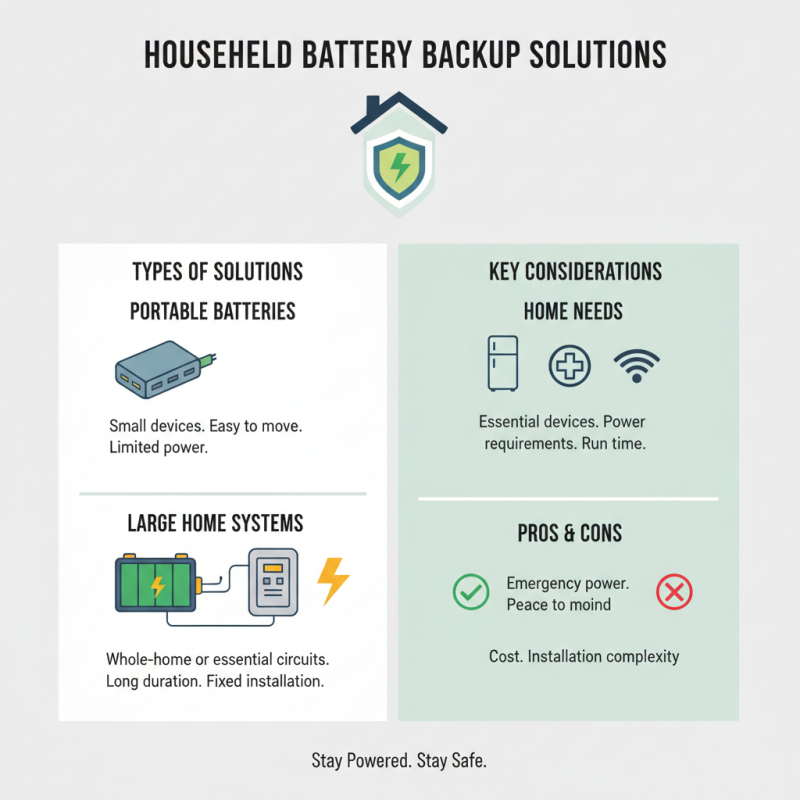
When considering household battery backup solutions, it's vital to assess the unique needs of your home. These systems provide emergency power during outages. They ensure essential devices, like refrigerators and medical equipment, remain operational. Many options are available, ranging from portable batteries to large backup systems. Each solution has its pros and cons.

Understanding your power requirements is essential. A common mistake is underestimating usage. Make a list of critical appliances you can’t live without. Calculate how much power each device consumes. Consider how long you would need backup power during an outage. This will guide your choice effectively.

Tips: Look for energy-efficient models. They can save you money over time. Regular maintenance is crucial. Check connections and battery health periodically. This ensures reliability when you need it most. Another tip is to explore renewable energy options. Integrating solar panels can enhance the efficiency of your battery backup solution.
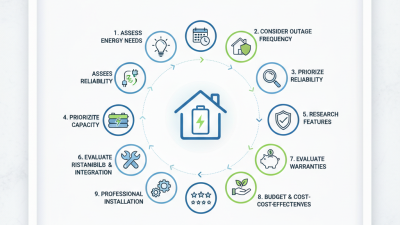

Key Features to Consider When Choosing a Battery Backup

When choosing a household battery backup solution, several key features should guide your decision. Capacity is essential; it determines how long your devices will run during an outage. Look for a solution that fits your power needs. Some households may require enough power for only essential devices, while others may want to keep multiple appliances running.

Another critical aspect is charging time. Different systems have varying recharge rates. Quick charging capabilities ensure you aren’t stuck waiting for power. Efficiency ratings also matter. A system with a high efficiency can save on energy costs over time, even when it's not in use. Look for reliable indicators and certifications to gauge performance.

Consider the design and size as well. A backup system should fit seamlessly within your space. It should be user-friendly and straightforward to operate. Some units might seem compact but lack essential features, while larger ones may overwhelm your home environment. Read reviews and peer feedback to understand what works best for others. Pay attention to warranty and support options as well. These can provide peace of mind during unexpected situations.

Top 10 Household Battery Backup Products Reviewed

When choosing a household battery backup solution, it's essential to consider efficiency, capacity, and reliability. According to industry reports, more than 60% of households experience power interruptions each year. These outages can last anywhere from a few minutes to several hours. A reliable battery backup system helps maintain essential functions during such outages.

Evaluating battery capacity is crucial. Typical systems range from 5 kWh to 20 kWh. A larger capacity can support more devices, such as refrigerators and medical equipment. Reports indicate that many families underestimate their power needs, leading to inadequate preparations. It's advisable to calculate your energy requirements ahead of time.

While searching for the best solutions, pay attention to user reviews and expert analyses. Recent surveys show that around 75% of users prioritize systems with easy installation and maintenance. However, some products can face operational issues, particularly in extreme weather. Regular updates and monitoring are necessary. Emphasizing reliable performance can help ensure households remain prepared for unexpected outages.

Top 10 Household Battery Backup Solutions Overview

This bar chart illustrates key specifications for household battery backup solutions, comparing their capacity, depth of discharge, recharge cycle life, weight, and price. This data helps consumers evaluate different options based on performance and value.

Installation and Maintenance Tips for Battery Backup Systems

When considering a battery backup solution for your home, installation is critical. Ensure you choose a location away from direct sunlight and moisture. An ideal spot is a dry, cool area like a basement or utility room. This protects the battery system from environmental factors that can affect performance.

During installation, follow all manufacturer guidelines meticulously. Incorrect wiring can lead to inefficiencies or hazards. Double-check connections often. It may be wise to consult with a professional for complex systems. They can help avoid common pitfalls, ensuring your setup is safe and effective.

Maintenance is key to reliability. Regularly test your system, ideally every few months. Clean terminals and ensure connections are secure. If the unit emits strange sounds or lights, address these issues promptly. Over time, batteries will degrade, affecting efficiency. Conduct periodic checks to ensure your backup power remains functional when you need it most. Ignoring these steps can lead to unpleasant surprises during power outages.

Top 10 Household Battery Backup Solutions for Reliable Power

Solution Battery Type Backup Capacity (kWh) Typical Runtime (Hours) Installation Difficulty Maintenance Requirements
Solution 1 Lithium-Ion 10 5 Medium Low
Solution 2 Lead-Acid 15 7 High Medium
Solution 3 Nickel-Cadmium 8 4 Low High
Solution 4 Lithium-Ion 12 6 Medium Low
Solution 5 Lead-Acid 20 10 High Medium
Solution 6 Nickel-Metal Hydride 9 5 Low Medium
Solution 7 Lithium-Ion 11 5 Medium Low
Solution 8 Lead-Acid 18 8 High High
Solution 9 Nickel-Cadmium 7 3 Low Medium
Solution 10 Lithium-Ion 13 6 Medium Low

Cost Analysis: Budgeting for Battery Backup Solutions

Top 10 Household Battery Backup Solutions for Reliable Power?

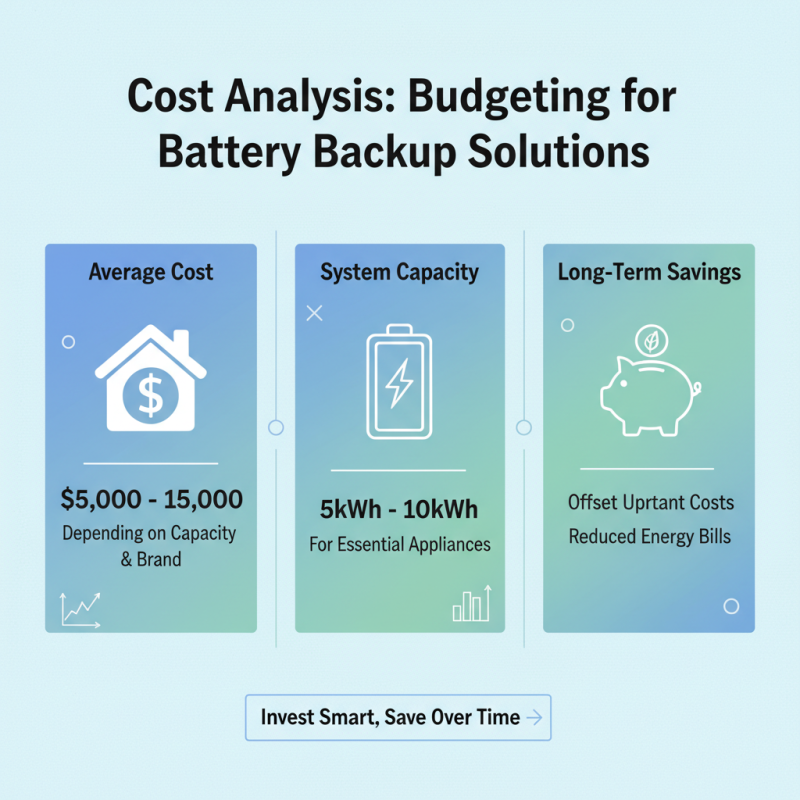
When budgeting for battery backup solutions, homeowners should consider several crucial factors. The average cost of a home battery system ranges from $5,000 to $15,000, depending on the capacity and brand. System capacity is measured in kilowatt-hours (kWh), with most households requiring between 5kWh to 10kWh for essential appliances. A system that can support these needs often incurs upfront costs. Yet, long-term savings on energy bills can offset this expense.

Many reports indicate that installations of battery backups will rise by 50% over the next five years. Data from the U.S. Energy Information Administration suggests that homeowners increasingly seek energy independence, often spending $2,000 to $4,000 on installation, excluding the cost of the batteries themselves. However, battery lifespan can lead to unforeseen costs. For instance, some systems may only last 5 to 10 years before requiring replacement.

Consumers should also reflect on their specific needs and energy usage patterns. Understanding local electricity rates can help gauge potential savings. The installation process varies significantly, leading to price fluctuations of up to 30%. It’s essential to obtain multiple quotes and consultations from professionals. As the technology evolves, ongoing costs may be incurred in maintenance or upgrades, emphasizing the need for diligent financial planning.