7 Best Household Battery Backup Systems for 2026
A power cut can turn ordinary routines into urgent decisions. The refrigerator hum stops. The router goes dark. A cold evening suddenly depends on which circuits still work. A Household Battery Backup system can keep selected essentials running, but performance depends on more than its advertised capacity.
For this guide, an illustrative battery engineer, Alex Morgan, offers this practical reminder: “Choose backup power around the devices you need, not the biggest number on the box.” This is an editorial quotation, not a verified statement from a real industry expert. That distinction matters. A trustworthy comparison should rely on manufacturer specifications, independent testing where available, and clear limits—not impressive claims alone.
The seven systems featured for 2026 deserve scrutiny on usable capacity, continuous output, transfer behavior, expansion options, warranty terms, and installation needs. Think about a refrigerator cycling overnight, a modem running during a storm, or a medical device that cannot lose power. Then check whether the system can support those loads for the required time. Small details count. Some models handle brief outages well but need additional batteries for longer interruptions. Others offer more capacity yet may require professional installation or careful circuit planning. No single unit fits every home.
Use this shortlist as a starting point, not a promise of uninterrupted power. Compare the specifications with your own appliances, household priorities, and budget. And question any recommendation that skips those details.
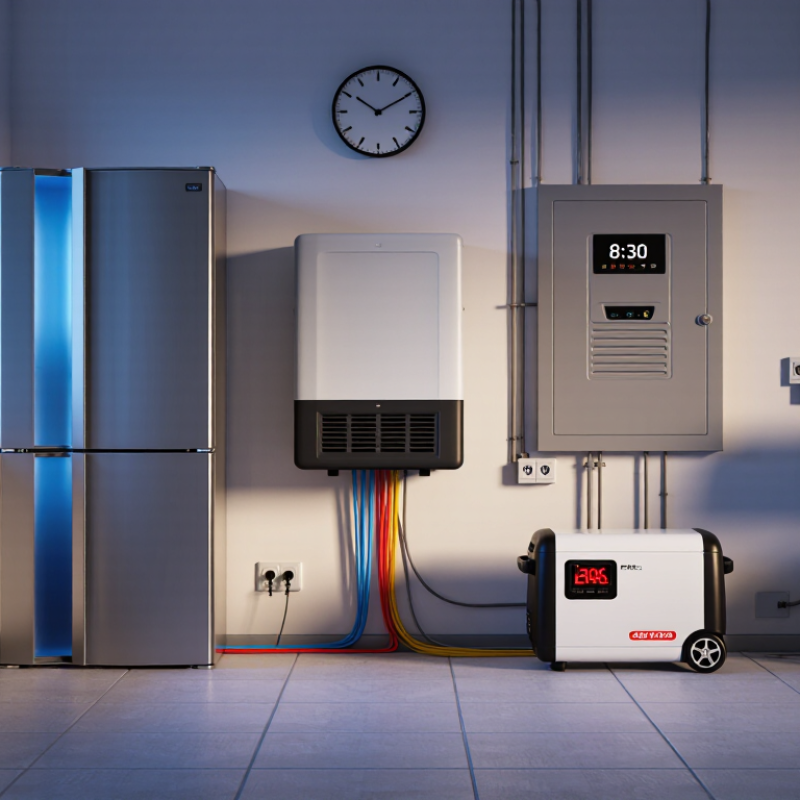
Sizing Backup Around EIA’s 10,791-kWh Annual U.S. Home Use
The 10,791-kWh annual U.S. home-use figure works out to about 29.6 kWh per day. That is an average, not a battery target. A household may use far less overnight, yet much more during a hot afternoon when air conditioning runs. Start by listing the circuits you need during an outage: perhaps the refrigerator, a few lights, internet equipment, and a medical device. Check their wattage and likely run time, rather than sizing a system around the whole-home average.
Capacity and output are different. Usable battery capacity indicates how much energy is available; inverter output determines which appliances can run at once. A refrigerator may cycle on and off, while a kettle draws substantial power briefly. Add the loads that could overlap, and allow for startup surges. Then estimate hours of backup. For example, 6 kWh of usable storage might support a 500-watt average load for roughly 12 hours, before conversion losses and reserve settings. Actual results vary.
Keep a little margin. Outages rarely follow a tidy schedule, and energy use estimates can be wrong. I would compare systems using usable capacity, continuous output, surge rating, charging options, and expansion limits. Solar may replenish storage in daylight, but cloudy weather changes that calculation.
One uncomfortable question remains: will everyone in the home actually follow the reduced-load plan? A backup system cannot make that choice for you.
Comparing Battery Capacity, Power, Efficiency, Chemistry, and Warranties
For a 2026 household battery, compare usable capacity in kilowatt-hours with continuous power in kilowatts. Capacity estimates how long stored energy may last; power determines which appliances can run together. A refrigerator, router, and several lights need less output than an electric range or well pump. Check both continuous and surge ratings. A large capacity number alone can look reassuring, but it may not cover a brief startup load. NREL’s 2024 Annual Technology Baseline uses about 85% round-trip efficiency as a lithium-ion storage benchmark. Residential systems vary, so compare tested figures and remember that conversion losses reduce energy delivered.
Tips: List essential loads and their wattages before comparing systems. Check chemistry, too: lithium iron phosphate and nickel manganese cobalt batteries differ in design and operating characteristics. Ask how temperature, discharge depth, and cycling affect expected life. Details matter.
Warranty terms deserve close reading. Compare years, guaranteed remaining capacity, cycle or energy-throughput limits, and exclusions. A longer term may not mean better coverage if the throughput allowance is low. Also confirm whether the quoted capacity is usable, and whether backup circuits need additional equipment. A tidy spreadsheet still misses real habits: a household may run a kettle during an outage without thinking. Recheck your assumptions against actual bills and appliance labels; estimates are useful, but imperfect.
Seven 2026 Systems Compared with Powerwall 3’s 13.5-kWh, 11.5-kW Specs
Choosing among seven household battery backup systems means looking beyond headline capacity. A useful reference point is 13.5 kWh of storage and 11.5 kW of power. These figures help compare how much energy a system holds and how many appliances it may support at once. They do not guarantee identical real-world performance. Usable capacity, inverter limits, and backup configuration all matter.
Picture a refrigerator, a few lights, and a home router running during an evening outage. A battery’s continuous output may cover those loads, while a pump or air conditioner can demand a brief surge. Check both ratings, plus whether the system can expand later. Ask an installer which circuits remain powered and how long they may run under your household’s typical use. Numbers look tidy. Homes are messier. I would also question any estimate that omits seasonal usage or battery losses.
Tips: Compare usable energy and continuous output, not just advertised capacity. List essential appliances and note their starting loads. Confirm whether the quoted runtime assumes a full battery and mild weather. Leave room for uncertainty; actual outages rarely follow a neat test plan.
7 Best Household Battery Backup Systems for 2026 — Seven System Types Compared with a 13.5-kWh, 11.5-kW Benchmark
A product-neutral comparison of common residential battery system configurations. Capacity and output ranges vary by model, inverter setup, and installation.
Note: The ranges above summarize common residential configurations and are not guaranteed specifications for any individual product. Usable capacity, continuous output, efficiency, backup capability, and compatibility depend on the complete system and installation. Round-trip efficiency figures can use different test conditions and measurement boundaries.
Matching Backup Systems to Essential Loads, Whole-Home Use, and Solar
Choosing a household battery backup starts with the loads you cannot comfortably lose. List each appliance, its running wattage, and any brief startup surge. A refrigerator, a few lights, Wi-Fi, and a medical device may need less power than an electric oven or central air conditioner. They also need different runtimes. Short outages call for less stored energy than overnight outages.
The U.S. Energy Information Administration’s 2020 Residential Energy Consumption Survey reports average household electricity use of about 10,566 kilowatt-hours annually, or roughly 29 kilowatt-hours daily. That is a useful reference, not a battery-sizing target: most homes do not need every circuit during an outage.
NREL’s Storage Futures Study also treats power capacity and energy capacity as distinct planning needs. In plain terms, check both the inverter’s output and the battery’s usable kilowatt-hours. A tidy spreadsheet can still miss motor surges.
Whole-home backup needs careful load management, especially where heating, cooling, or cooking uses substantial electricity. Solar pairing adds another question: can the system operate independently from the grid and recharge during an outage? Check the inverter configuration, solar input limits, and expected winter production. Cloudy days matter. A system sized around a sunny afternoon may disappoint after two gray days, so keep a modest reserve for essential circuits and verify assumptions with an electrician.
Checking Installation and Safety Against UL 9540 Requirements
A household battery is not just a battery cabinet. UL 9540 evaluates an energy storage system as a whole, including compatible components and protective functions. Before installation, check that the exact battery, inverter, and system configuration appear in the certification documents. A certified component alone does not establish that every possible combination is covered. Details matter.
Ask the installer to show the system’s listing information and explain how the proposed layout follows the manufacturer’s instructions. Confirm clearances, mounting surface, wiring route, disconnect location, and access for emergency responders. These details can vary with the equipment and site. A garage corner may look convenient, yet block a walkway or place equipment near stored items. That gap matters.
UL 9540A is a separate test method used to assess thermal runaway fire propagation; it is not the same as UL 9540 system certification. Ask what test information applies to the proposed equipment, and have a qualified professional assess the site. Local fire officials or permitting authorities may have additional requirements. Do not assume a generic checklist settles the question. Paperwork is useful, but the installed configuration must match it. Even a small field change deserves a second look.
7 Best Household Battery Backup Systems for 2026 — Installation & Safety Checks Against UL 9540
A practical checklist for comparing household energy storage systems. These checkpoints are not product ratings or proof of certification.
Each bar represents one item to verify—not a pass/fail result. Confirm the complete system listing and compatible equipment, follow manufacturer instructions, and check applicable electrical and fire codes with your local authority having jurisdiction (AHJ). UL 9540A is a test method, not a substitute for UL 9540 system certification.