MH Energy Your Better Solar and Energy Partner

Leave Your Message
MH Energy Your Better Solar and Energy Partner
Choosing the right Solar Battery Storage system is no longer a simple price comparison. Global buyers must examine usable capacity, round-trip efficiency, safety controls, warranty terms, and local installation support. A battery that performs well in a dry Australian climate may need different protection in a humid coastal region. Real-world conditions matter.
This guide reviews ten leading systems for homeowners, businesses, and energy professionals. Each option is assessed through practical criteria, including daily energy needs, backup performance, cycle life, monitoring software, and compatibility with existing solar inverters. We also consider installation quality, because even advanced equipment can underperform when cables, ventilation, or settings are poorly managed. Small details matter.
No single battery suits every market. Electricity tariffs, grid reliability, weather, building design, and certification requirements can change the final decision. Manufacturer specifications provide useful evidence, but independent testing and installer experience deserve equal attention. Some claims may appear impressive until measured under realistic temperatures and partial-load conditions.
The rankings should therefore be treated as a practical starting point, not a permanent verdict. Technology changes quickly, and product availability differs across countries. Buyers should confirm current warranties, service networks, replacement policies, and regional approvals before signing a contract. A careful decision may take longer. It can also prevent expensive disappointment.
This overview aims to make that process clearer. It combines technical comparison with practical observations from everyday energy use. Readers should still request site-specific advice from qualified professionals. There is no perfect system. There is only a better fit for a defined need.
Solar Battery Storage Systems: Purpose, Components, and Core Technologies
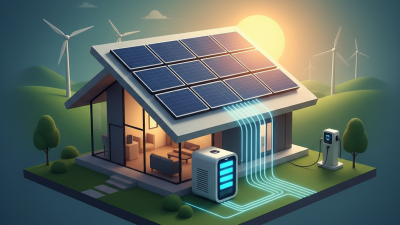
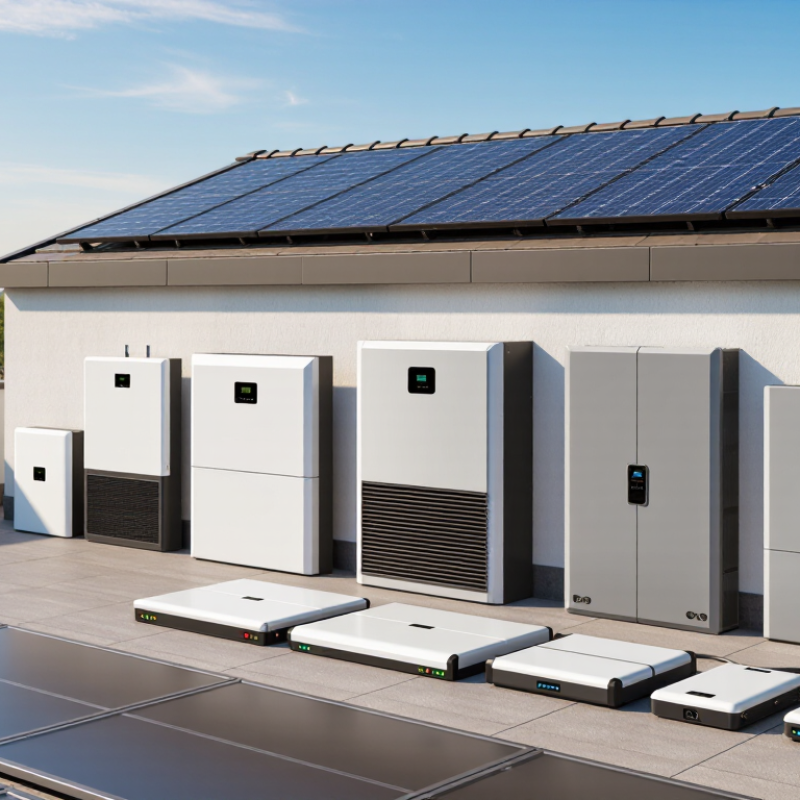
Solar battery storage systems capture surplus electricity during sunny hours and release it when solar production falls. This improves self-consumption and reduces dependence on unstable grid supply. A typical system includes battery cells, a battery management system, an inverter, protection devices, and monitoring software. The BMS tracks voltage, temperature, and state of charge. It also disconnects unsafe circuits.
Lithium iron phosphate batteries offer strong thermal stability and long cycle life. Other chemistries may provide higher energy density, but they need careful temperature control. AC-coupled systems suit existing solar installations, while DC-coupled designs can reduce conversion losses. Round-trip efficiency matters, but so does installation quality. A dusty inverter room, weak ventilation, or salty coastal air can shorten service life. No design is perfect. Real consumption data often exposes optimistic assumptions.
Tips: Match storage capacity with evening demand, not only panel size. Check usable capacity, operating temperature, ingress protection, warranty terms, and local safety certification. In hot climates, leave clear airflow around the battery enclosure. In cold regions, confirm whether cell heating is built in. Ask installers how they measure degradation. A spreadsheet may look convincing, yet household habits can change quickly. Review performance data after several months and adjust charging settings when necessary.
| No. | System Type | Typical Use Case | Nominal Capacity | Battery Chemistry | Core Technology | Main Components | Round-Trip Efficiency | Typical Cycle Life | Scalability | Key Buyer Consideration |
|---|---|---|---|---|---|---|---|---|---|---|
| 1 | Residential Hybrid Storage | Self-consumption, backup power, and time-of-use electricity management | 5–30 kWh | Lithium iron phosphate (LFP) | DC-coupled or AC-coupled hybrid inverter with battery management system | Battery modules, hybrid inverter, BMS, energy meter, monitoring gateway, protection devices | 88–96% | 4,000–8,000 cycles | Modular; commonly expandable to 30–60 kWh | Check local grid rules, backup-load capacity, and compatibility with the solar inverter. |
| 2 | All-in-One Residential System | Compact home energy management with simplified installation | 5–25 kWh | LFP | Integrated battery, inverter, charger, transfer function, and control software | Battery enclosure, inverter/charger, BMS, automatic transfer switch, smart meter, gateway | 87–95% | 4,000–7,000 cycles | Limited to moderate; depends on parallel-inverter design | Evaluate serviceability, replacement-part availability, and whole-system warranty terms. |
| 3 | High-Voltage Residential System | Higher-efficiency homes with large solar arrays and high peak loads | 10–50 kWh | LFP or high-nickel lithium-ion | High-voltage modular battery stack with bidirectional power conversion | Battery towers, high-voltage BMS, hybrid inverter, contactors, pre-charge circuit, monitoring system | 90–97% | 3,500–7,000 cycles | Good; additional modules or inverter units may be paralleled | Requires qualified installation and strict compliance with high-voltage safety procedures. |
| 4 | Low-Voltage Off-Grid System | Remote homes, cabins, telecommunications, and small standalone loads | 5–100 kWh | LFP or advanced lead-acid | Solar charge control with inverter/charger and generator integration | Battery bank, MPPT charge controller, inverter/charger, generator input, DC protection, monitoring | 80–94% | LFP: 3,000–7,000 cycles; lead-acid: 500–2,000 cycles | High when inverter and battery bus are designed for parallel operation | Size for several days of autonomy and account for seasonal solar resource variation. |
| 5 | Small Commercial Storage System | Peak shaving, demand-charge reduction, and critical-load backup | 50–250 kWh | LFP | Three-phase power conversion with energy management and load prioritization | Battery racks, PCS, EMS, switchgear, HVAC, fire detection, meters, and communications network | 86–95% | 4,000–8,000 cycles | Modular through parallel racks and power-conversion units | Confirm demand-tariff economics, three-phase requirements, and fire-code compliance. |
| 6 | Commercial and Industrial Peak-Shaving System | Factory load management, renewable integration, and backup support | 250 kWh–5 MWh | LFP or other lithium-ion chemistries | Containerized or cabinet-based battery energy storage with industrial EMS | Battery containers, PCS, EMS, HVAC, fire suppression, transformers, switchgear, SCADA interface | 85–94% | 4,000–8,000 cycles | Very high; designed for multiple racks or containers | Assess power-quality requirements, interconnection studies, cooling, and maintenance access. |
| 7 | Solar-Plus-Storage Microgrid | Community facilities, islands, campuses, and weak-grid applications | 500 kWh–20 MWh | LFP or flow battery technology | Grid-forming inverter controls with islanding, black-start, and distributed-energy coordination | Battery system, grid-forming PCS, PV inverters, microgrid controller, switchgear, protection, backup generation | 78–94% | Lithium-ion: 4,000–8,000 cycles; flow batteries: often 10,000+ cycles | Excellent; supports multiple generation and storage assets | Prioritize islanding performance, protection coordination, fuel backup, and operational control logic. |
| 8 | Utility-Scale Short-Duration BESS | Frequency regulation, renewable smoothing, and evening peak shifting | 10–500 MWh | LFP lithium-ion | High-power bidirectional PCS with automated dispatch and grid-support functions | Battery containers, PCS, medium-voltage transformers, collector system, EMS, SCADA, HVAC, fire systems | 85–95% | 4,000–10,000 cycles | Very high; containerized and rack-based expansion | Review grid-code certification, degradation guarantees, augmentation strategy, and bankability. |
| 9 | Utility-Scale Long-Duration Storage | Four- to twelve-hour renewable shifting and extended grid backup | 10–1,000+ MWh | LFP, vanadium flow, zinc-based, or other long-duration chemistries | Energy-oriented storage architecture with independently scalable power and duration in some technologies | Battery modules or electrolyte tanks, PCS, pumps where applicable, EMS, transformers, HVAC, fire protection | 65–92% | 5,000–20,000+ cycles, depending on chemistry and duty cycle | Excellent for multi-hour projects | Compare levelized cost of storage, duration, land use, auxiliary consumption, and degradation profile. |
| 10 | Mobile and Temporary Solar Storage | Construction sites, emergency response, events, and temporary off-grid power | 1–500 kWh | LFP lithium-ion | Portable or transportable battery power station with solar charging and optional generator input | Battery pack, inverter, MPPT controller, wheels or trailer frame, outlets, protection, display, communications | 80–94% | 2,000–6,000 cycles | Moderate; parallel units may increase capacity | Check transport regulations, weather protection, noise limits, outlet configuration, and charging speed. |