Top 10 Tips for Installing a Solar Panel System at Home
Installing a solar panel system home can be a rewarding endeavor. It offers both environmental benefits and potential savings on energy bills. However, the process is not without its challenges. Proper planning and execution are vital to ensure an efficient solar setup.
A successful installation requires understanding your energy needs. Evaluate your home’s roof space, orientation, and shading. Every home is unique, so one size does not fit all. Consulting with professionals can provide valuable insights tailored to your situation.
While some may feel overwhelmed by technical aspects, taking time to research makes a difference. Knowledge about solar technology empowers homeowners. Remember, a flawless installation is rare. Learning from mistakes can pave the path to a better solar panel system home experience. Each step taken is a step toward a sustainable future.
Understanding Solar Panel Systems: Types and Benefits
Solar panel systems come in various types, each with unique benefits. The three main types are monocrystalline, polycrystalline, and thin-film. Monocrystalline panels are known for their high efficiency and longevity. They are made from a single crystal structure. Polycrystalline panels are less expensive but have a lower efficiency rate. Thin-film panels are lightweight and flexible but require more space to generate the same power.
Understanding these types is crucial for homeowners. Each panel type has its advantages depending on energy needs and roof space. Monocrystalline may be ideal for small roofs but comes at a higher initial cost. In contrast, polycrystalline might suit larger installations with budget constraints. The technology is advancing, and new options can be explored.
The benefits of solar panels extend beyond energy savings. They reduce reliance on fossil fuels and lower carbon footprints. Still, solar installations can be complex. Not all homes are suitable for solar systems due to shading or roof orientation. It’s essential to evaluate your specific situation. Research, consultation, and expert advice can lead to better choices.
Top 10 Tips for Installing a Solar Panel System at Home
This chart illustrates the importance ratings of different tips for installing a solar panel system at home, highlighting which aspects homeowners should prioritize.
Evaluating Your Home's Solar Potential: Key Factors to Consider
Evaluating your home's solar potential is crucial before installing a solar panel system. Start by assessing your roof's angle and orientation. Ideally, a south-facing roof receives the most sunlight. If your roof is shaded by trees or buildings, it may not be suitable for solar panels. Consider trimming trees or removing obstacles that block sunlight.
Another factor to consider is your local climate. Regions with abundant sunshine yield better solar energy production. Even in cloudy areas, solar panels can be effective, but production might be lower. Check average sunlight hours for your location to estimate potential energy output.
Here are a few tips to enhance your solar experience. First, monitor your electricity consumption. This data helps determine the right system size for your needs. Also, explore local regulations regarding solar panel installation. Understanding permits and incentives can streamline the process. Finally, consult with solar energy experts. Their experience can guide you in making informed decisions for your home's solar potential.
Financial Incentives for Solar Installation: Savings and Rebates Overview
When installing a solar panel system, financial incentives can significantly offset costs.
Many homeowners might not realize the potential savings available through federal, state, and local rebates. It’s essential to explore these options. They can lead to substantial reductions in the overall expense of your solar project, making it more accessible.
Before installation, research various financial incentives available in your area.
Solar tax credits are often the most significant factor. These credits can allow homeowners to deduct a percentage of the installation cost from their federal taxes. Additionally, local utilities may offer rebates. These can range from hundreds to thousands of dollars. Understanding these can guide your decision-making process.
For a successful installation, consider these tips:
Find a reliable contractor with experience. Experience matters greatly when ensuring your system is efficient. Additionally, site assessment is crucial. An optimal location maximizes sunlight exposure. Improper placement can lead to inefficiencies, wasting both time and money. Lastly, monitor your system after installation. Regular checks ensure performance remains optimal over the years.
Step-by-Step Installation Process: From Planning to Powering Up
Installing a solar panel system is a rewarding project. It begins with careful planning. Start by assessing your roof space. Measure its dimensions and evaluate shading from trees or nearby buildings. This helps determine the number and type of panels you'll need. Consulting with a professional can provide deeper insights.
When choosing the right solar products, prioritize quality. Look for panels with good efficiency ratings. Don't just focus on price. Some lower-cost options may yield poor performance. Take your time when selecting equipment. It's important to understand warranties and installation requirements.
During installation, safety should be your main concern. Secure your tools and wear protective gear. Rushing through the setup can lead to mistakes. Consider hiring a certified installer for complex tasks. Even experienced DIY enthusiasts can stumble with electrical connections. Make sure to check local regulations and permits before beginning. Planning is your ally in a successful installation.
Top 10 Tips for Installing a Solar Panel System at Home
| Tip Number |
Tip Title |
Description |
Estimated Time |
| 1 |
Assess Your Energy Needs |
Calculate your home’s energy consumption to determine the size of the solar system you need. |
1-2 hours |
| 2 |
Evaluate Your Roof |
Check the condition, angle, and orientation of your roof to maximize sun exposure. |
2-3 hours |
| 3 |
Research Local Incentives |
Look into local tax credits, rebates, and incentives available for solar installations. |
1 hour |
| 4 |
Consult with Professionals |
Seek advice from solar energy experts for tailored solutions and installation. |
1-2 hours |
| 5 |
Choose the Right Equipment |
Select high-quality solar panels and inverters suitable for your energy needs. |
2-4 hours |
| 6 |
Plan for Installation |
Schedule and prepare for the installation day with all necessary permits. |
1-2 hours |
| 7 |
Install Solar Panels |
Follow the step-by-step guide or contractor instructions to mount the panels correctly. |
4-8 hours |
| 8 |
Connect to the Electrical System |
Wire the solar panels to the inverter and connect to the electrical panel. |
2-4 hours |
| 9 |
Inspect Your System |
Have a professional inspect the installation to ensure safety and performance. |
1-2 hours |
| 10 |
Monitor Performance |
Use monitoring tools to track energy production and savings from the system. |
Ongoing |
Maintenance Tips for Longevity: Keeping Your Solar Panels Efficient
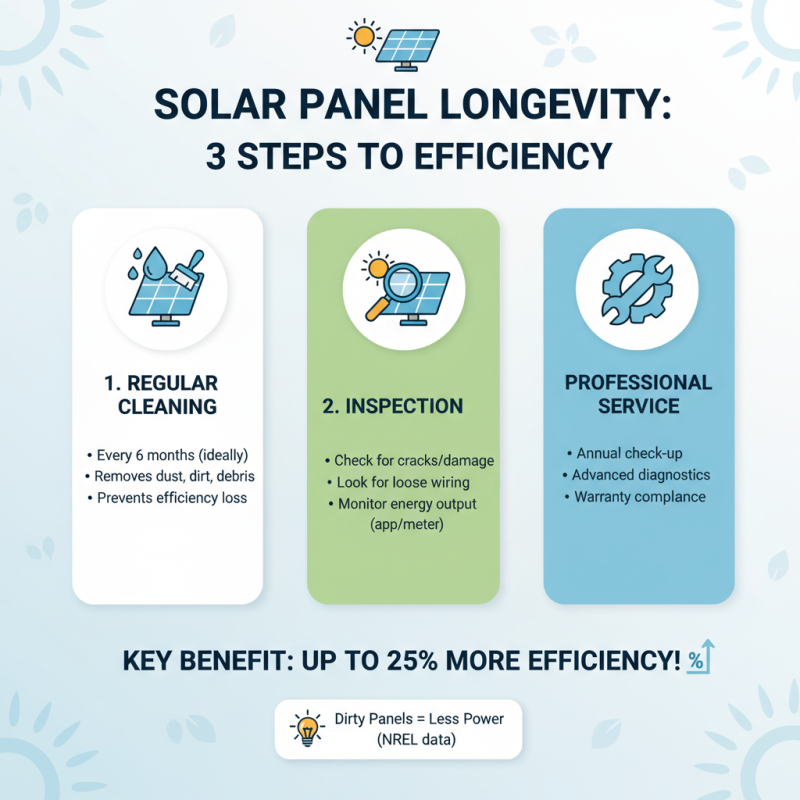
Maintaining solar panels is essential for long-term efficiency and optimal energy output. Over time, dust and debris can accumulate on the surface, reducing their ability to generate electricity. Regular cleaning, ideally every six months, ensures that dirt does not obstruct sunlight. According to the National Renewable Energy Laboratory, dirty panels can lose up to 25% of their efficiency.
Routine inspections are crucial to catch potential issues early. Look for signs of wear or damage such as cracks or corrosion. The Solar Energy Industries Association recommends checking the inverter every month. This device converts solar energy into usable electricity and is critical for the system's functionality. Remember, a malfunctioning inverter may not trigger warning signs immediately, leading to significant losses.
Weather can significantly impact solar panel efficiency. Heavy snow or ice may require removal to avoid damage. Additionally, hot weather can cause overheating, affecting performance. Panels typically operate most efficiently between 60°F and 80°F. Hence, monitoring temperature and positioning can be vital. Regular assessments and timely adjustments can prevent costly repairs and ensure the longevity of your solar system.