10 Essential Tips for Choosing Solar Panels For Home Success?
Choosing the right solar panels for your home is crucial for maximizing energy efficiency and savings. According to the latest report from the Solar Energy Industries Association, residential solar installations grew by over 20% in 2022 alone. With the rise in popularity of Solar Panels For Home, understanding your options has never been more essential. Industry expert Dr. Emily Reynolds states, "Selecting the right solar panel technology can significantly impact your home's energy production."
As homeowners seek sustainable energy solutions, the choices can be overwhelming. Cost, durability, and efficiency are vital considerations. Recent studies reveal that improperly chosen solar panels could lead to poor performance and wasted investment. Thus, it’s crucial to evaluate options carefully and consult with experts. Neglecting this step can lead to regrets down the road.
Ultimately, homeowners must balance cost against performance. As the solar market evolves, prices fluctuate. Therefore, making informed decisions about Solar Panels For Home is paramount. Taking the time to research and analyze can help avoid pitfalls and ensure your system meets your energy needs effectively.

Understanding Solar Panel Types: Monocrystalline vs. Polycrystalline
When choosing solar panels for your home, understanding the types available is crucial.
Monocrystalline panels are known for their high efficiency.
They are made from a single crystal structure, which allows for better performance in low light.
These panels often occupy less space, making them ideal for homes with limited roof area.
However, they can be more expensive compared to other options.
On the other hand,
polycrystalline panels are made from multiple crystal structures.
This design typically makes them less efficient than monocrystalline types.
They require more space to produce the same energy levels, which may be a concern for some homeowners.
However, polycrystalline panels are often more affordable.
If budget constraints are an issue, these panels might be a more viable option.
Choosing between these two types involves weighing efficiency against cost.
It's tempting to prioritize efficiency, but the price point also matters.
Consider the long-term savings from energy output versus the initial investment.
Each option has its pros and cons,
and it’s essential to reflect on your specific needs and limitations.
Evaluating Solar Panel Efficiency Ratings: What You Need to Know
When selecting solar panels, understanding efficiency ratings is crucial. The efficiency of a solar panel indicates how much sunlight it can convert into usable electricity. According to the National Renewable Energy Laboratory, most residential solar panels have efficiency ratings between 15% to 22%. Higher efficiency panels generate more power in less space, which can be advantageous for homes with limited roof area.
Another key factor to consider is the degradation rate of solar panels. Over time, panels lose efficiency due to environmental factors. The average degradation rate is approximately 0.5% to 1% per year. If a panel starts at 20% efficiency, it might only reach 15% efficiency after 25 years. Evaluating warranties can provide insight into durability. Many leading manufacturers offer warranties ranging from 25 to 30 years, reflecting their confidence in long-term performance.
It's also essential to review independent testing reports. The Solar Ratings and Certification Corporation provides valuable data on the performance of various panels. These reports shed light on real-world efficiency beyond just laboratory tests. Choosing a panel based solely on manufacturer claims can be misleading. The key is to dig deeper into reliable resources and understand what makes one panel more efficient than another.
The Importance of Warranty and Longevity in Solar Panel Purchase
When considering solar panels for your home, warranty and longevity are critical factors. A good warranty provides peace of mind. It covers unexpected issues. Look for warranties that last at least 25 years. This duration is a strong indicator of the manufacturer’s confidence. Yet, not all companies offer reliable support. Research customer reviews and the company’s history. This can reveal their reliability and service response.
Longevity in solar panels means they can withstand the elements. High-quality panels resist degradation over time. Check the materials used in construction. For instance, monocrystalline panels often last longer than polycrystalline. However, even the best panels may face challenges, like weather damage. This is where your warranty shines. It should cover defects and performance issues. Compare the terms closely. Some warranties may seem generous but have hidden constraints.
While looking for the best panels, consider your energy needs. A longer lifespan often translates to better long-term savings. However, not all panels meet the longevity promise. It’s wise to ask questions and seek transparency. Evaluate more than just specifications. Engage with installers and previous customers. Their insights can guide you through potential stumbling blocks. Balancing cost against durability is essential for making an informed choice.
Assessing Your Home's Solar Potential: Roof Orientation and Energy Needs
When considering solar panels, assessing your home's solar potential is crucial. One key factor is roof orientation. Ideally, roofs facing south receive the most sunlight, maximizing energy production. According to the U.S. Department of Energy, optimal orientation can increase efficiency by 10-30%. If your roof faces east or west, some energy loss is inevitable.
Understanding your energy needs is equally important. Analyze your past utility bills to gauge your consumption habits. For instance, residences averaging 800 kWh per month may need a 6 kW system. This can vary based on local sunlight availability. A study from the National Renewable Energy Laboratory revealed that energy requirements differ by climate zone, influencing installation costs and savings.
Tip: Evaluate shading from nearby trees or buildings. Even partial shading can reduce panel efficiency by 20-50%. Consider using a solar calculator to estimate potential savings. Assessing roof pitch also matters. A steeper pitch may capture more sunlight but complicates installation. Reflecting on these details can lead to better decision-making when choosing the right solar system for your home.
Solar Energy Potential Assessment
This chart presents the average solar potential based on roof orientations in terms of kWh/m²/day. South-facing roofs generally receive the most sunlight and generate the most energy, followed by East and West-facing roofs. North-facing roofs receive the least solar energy, making them less ideal for solar panel installation.
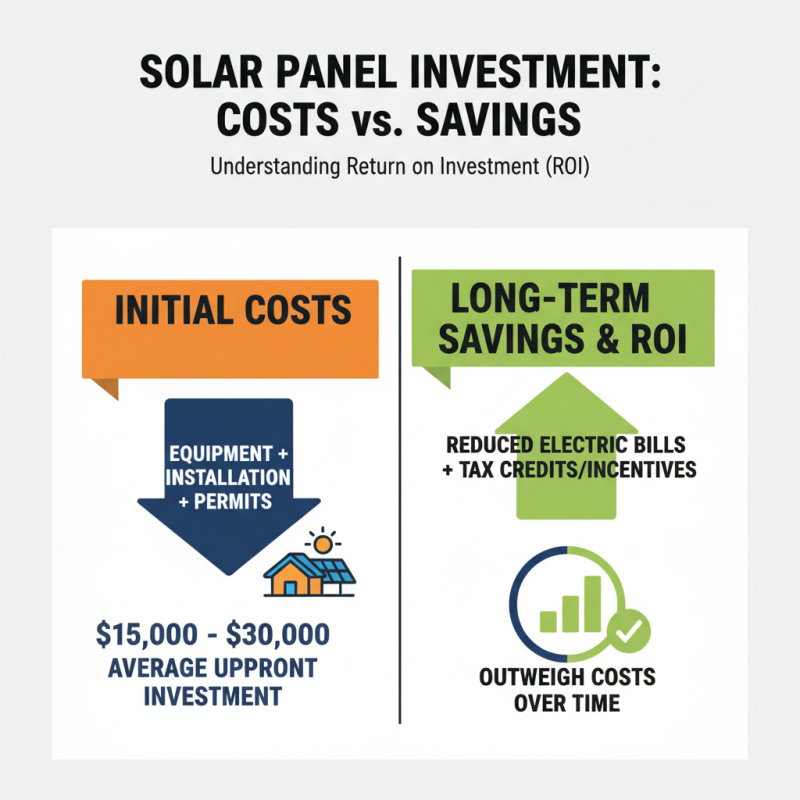
Calculating Costs vs. Savings: Understanding Return on Investment for Solar Panels
When considering solar panels for your home, understanding return on investment (ROI) is vital. Start by calculating initial costs, which include equipment, installation, and permits. This upfront investment can vary widely. On average, homeowners invest between $15,000 and $30,000. However, the long-term savings often outweigh these initial expenses.
Imagine saving on your electricity bills over time. With average savings of around $1,000 annually, the ROI becomes significant. It's essential to factor in local energy prices and your state’s incentives for solar installation. Without these considerations, you might underestimate your savings. Additionally, think about the lifespan of solar panels, which ranges from 25 to 30 years. This durability contributes to a strong, positive ROI.
But not every installation guarantees savings. Factors like shading, roof orientation, and system size can impact efficiency. Conduct thorough research and consult with professionals to avoid mishaps. Balance your enthusiasm with practical considerations. While going solar can be a smart investment, ensure that your expectations align with reality. Ask questions and seek knowledge from reliable sources to make informed decisions.