Top 10 Home Solar Panel System Manufacturers in China
China has become a major source of solar equipment, but choosing a Solar Panel System Home requires more than comparing panel prices. The Top 10 Home Solar Panel System Manufacturers in China offers a starting point for buyers weighing efficiency, product quality, warranties, and long-term support. As IEA Executive Director Dr. Fatih Birol put it, “Solar is the new king of electricity markets around the world.” His comment describes solar’s growing role in energy markets, not a recommendation of any particular manufacturer.
For homeowners, the details matter. A rooftop system must suit local sunlight, roof space, household electricity use, and available storage. A high-efficiency panel may help where roof area is tight, while clear warranty terms and dependable after-sales support can matter more over time. Look closely at product specifications, independent test results, certification records, and the company’s service arrangements before making a decision. Not every system fits. That matters at home.
This list is intended to help readers compare manufacturers, not to declare one universal winner. Rankings can shift with product updates, market conditions, and the evidence available. They can also flatten real differences: a strong factory reputation does not guarantee a smooth installation or responsive local service. That is easy to overlook. Use the profiles as a practical shortlist, then verify current specifications and warranty coverage directly with each supplier. A careful comparison can make the next step clearer, though it cannot replace a site-specific assessment.
Overview of China’s Residential Solar Industry
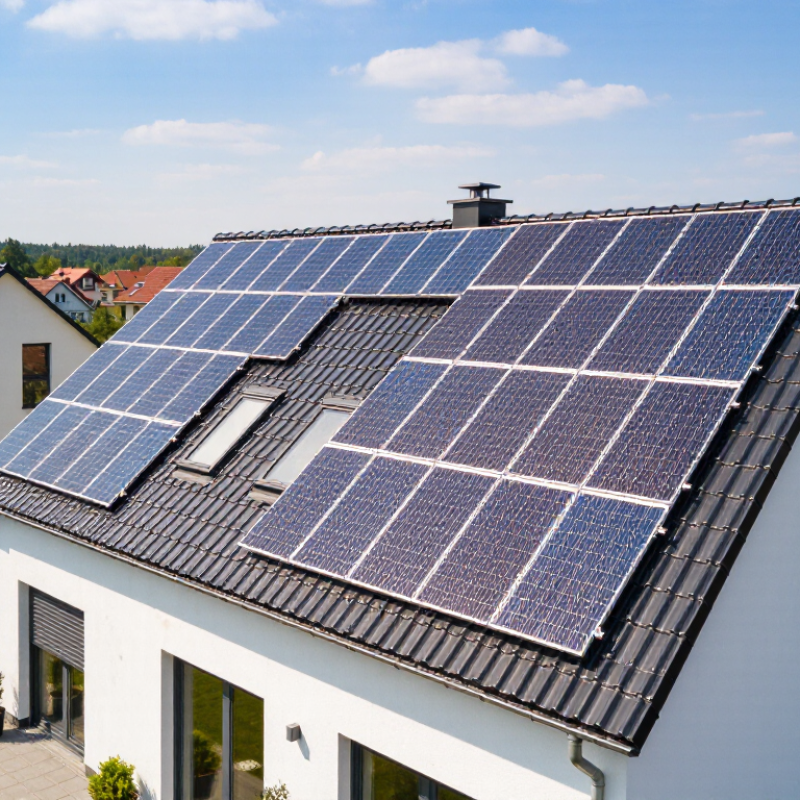
China’s residential solar industry is expanding within a much larger rooftop market. The National Energy Administration reported 216.9 GW of new solar capacity in 2023, including 96.3 GW of distributed solar. Distributed systems also serve factories and commercial buildings, so this figure is not a household-only measure. That distinction matters. In rural areas, home installations often use pitched rooftops, while urban projects may face limited roof access and shading from nearby buildings.
The International Energy Agency’s Renewables 2024 report expects China to account for nearly 60% of global renewable capacity additions through 2030. This growth supports a strong supply chain, but it does not make every home installation practical. Roof direction, structural condition, local grid access, and electricity settlement rules all affect real-world returns. A clean panel layout helps; a shaded chimney can still reduce output. Not every roof qualifies. Industry growth figures are useful context, yet they can hide differences between provinces and households. That is an imperfect part of the market picture, and buyers should examine local conditions rather than assume national growth guarantees household savings.
Criteria for Evaluating Home Solar System Manufacturers
Criteria for Evaluating Home Solar System Manufacturers
A home solar system should suit the roof, not just the sales brochure. Check module efficiency, temperature performance, warranty terms, and compatibility with inverters and batteries. IRENA’s Renewable Capacity Statistics 2024 reports that solar added about 346 GW worldwide in 2023. Rapid growth makes careful product comparisons more important, not less. Ask for test documentation against IEC 61215 and IEC 61730 standards. These tests assess design qualification and safety, but they do not guarantee decades of trouble-free operation.
Look beyond headline power ratings. NREL’s review of photovoltaic degradation studies found a median decline of roughly 0.5% per year. Warranty conditions, installation quality, and local heat can affect real-world results. Small details matter. Request clear information about degradation limits, performance claims, and how warranty claims are handled. A long warranty sounds reassuring, but it is only useful if the terms are understandable and support remains available.
For a household, practical service matters as much as factory capacity. Ask whether replacement modules and technical help can be accessed through local installers. Check production traceability and quality-control records, rather than relying only on polished factory images. Compare system output using your roof’s shading, orientation, and seasonal sunlight. Some estimates still look too neat. Treat them as forecasts, and ask what assumptions they depend on.
Profiles of 10 Leading Chinese Home Solar System Manufacturers
China’s residential solar sector includes manufacturers with different strengths, from panels to complete home energy systems. These ten anonymized profiles describe common capabilities, not a verified ranking of named companies.
A module-focused producer may prioritize high-efficiency N-type panels, useful where roof space is limited. An integrated-system maker pairs panels, inverters, and monitoring tools to simplify installation. A hybrid-inverter specialist helps households combine solar generation with battery storage. A storage-focused manufacturer designs battery units around daily charging and evening power use. Details matter.
A compact-panel producer serves homes with narrow roof sections or awkward layouts. A shade-management specialist may use module-level electronics to reduce losses from chimneys or nearby trees. A durability-oriented manufacturer emphasizes tested resistance to wind, moisture, and temperature changes. A cost-focused producer offers standardized packages, though buyers should check component warranties and service availability.
An export-oriented manufacturer may provide detailed product documentation and installer training. A customization-focused supplier can adapt system sizing and monitoring to household usage patterns. Ask for independent test records, clear warranty terms, and local technical support. Performance depends on installation quality and site conditions, not panel specifications alone. Industry claims deserve careful checking.
Comparison of Products, Technologies, and Certifications
Comparing Chinese home solar system manufacturers means looking beyond peak wattage. The IEA PVPS Trends 2024 report estimates that 456 GW of new photovoltaic capacity was installed worldwide in 2023. Scale matters, but household buyers should also compare module efficiency, temperature coefficient, degradation guarantees, inverter compatibility, and service support.
Technology separates many product lines. The 15th International Technology Roadmap for Photovoltaic, published in 2024, reported that n-type technologies accounted for about 30% of cell production in 2023. TOPCon and heterojunction modules may provide high efficiency and bifacial output, but real-world yield depends on roof orientation, shading, and system design.
Check datasheets for power tolerance, annual degradation, and operating-temperature figures. Small differences add up.
Certifications need careful reading. IEC 61215 tests module design qualification and durability; IEC 61730 addresses electrical safety. Neither guarantees decades of trouble-free performance. Compare independent reliability test results, factory quality controls, and warranty terms. Also check whether inverters and mounting hardware have relevant certifications. One caveat: a clean datasheet cannot predict a shaded roof. Manufacturer comparisons help, but installation quality can still shape the final result.
Factors to Consider When Choosing a Chinese Manufacturer
Top 10 Home Solar Panel System Manufacturers in China
Factors to Consider When Choosing a Chinese Manufacturer
China’s solar manufacturing scale is substantial, but scale alone does not guarantee a dependable home system. IRENA’s Renewable Capacity Statistics 2024 reports that China added about 217 GW of solar capacity in 2023. The IEA’s Advancing Clean Technology Manufacturing report notes that China holds more than 80% of global solar PV manufacturing capacity across key stages. These figures show strength in production, not the quality of every supplier. Not all capacity means equal quality.
Check module test reports, product warranties, and factory quality controls. Ask how the manufacturer tracks components from incoming cells to finished panels. Confirm that the proposed system suits your roof size, local climate, and inverter requirements. Request written performance assumptions, including expected output and degradation. A polished brochure is not enough. Compare those claims with independent test documentation and clear warranty terms. This takes time. It is easy to overlook service support, especially when a supplier is far away. Ask who handles technical questions and replacement parts after installation.
Tips: Request a sample datasheet, certificates verified with the issuing body, and a production inspection plan. Compare several quotations using the same system specifications. If an answer is vague, ask for evidence in writing.
Top 10 Home Solar Panel System Manufacturers in China: A Supply-Chain Factor to Consider
China’s share of global solar PV manufacturing capacity varies by production stage. These figures provide context when assessing a manufacturer’s supply-chain integration; they are not company rankings or product-quality scores.
Source: International Energy Agency (IEA), Solar PV Global Supply Chains (2022; 2021 capacity shares).