MH Energy Your Better Solar and Energy Partner

A Solar Panel And Battery system combines two technologies that solve different energy problems. Solar panels produce electricity when sunlight reaches their cells. Batteries store surplus power for later use. On a bright afternoon, a household may charge its battery while running appliances. After sunset, that stored energy can power lights, refrigeration, or essential equipment.
The market is expanding quickly. The International Energy Agency reported that global solar photovoltaic capacity reached almost 1,600 gigawatts by the end of 2023. Its Renewables 2023 report also identified solar PV as the main driver of renewable growth. IEA Executive Director Dr. Fatih Birol has said, “Solar PV is now the cheapest source of electricity in history.” The claim is powerful, but household savings still depend on tariffs, installation quality, weather, and battery prices.
Storage is becoming more important. The IEA’s Batteries and Secure Energy Transitions report states that global battery storage capacity must increase substantially by 2030 to support clean-energy goals. A well-designed system can reduce grid dependence and improve resilience during outages. It cannot guarantee complete energy independence.
That distinction matters.
Performance depends on roof orientation, shading, inverter efficiency, battery chemistry, and maintenance. Real experience often exposes gaps between laboratory ratings and daily use. A battery may promise ten hours of backup, yet heavy heating loads can shorten that period sharply. This guide examines system components, costs, safety considerations, sizing methods, and practical limitations. It also questions a common assumption: bigger equipment is not always better. Reliable decisions require measured energy consumption, professional assessment, and current manufacturer data.
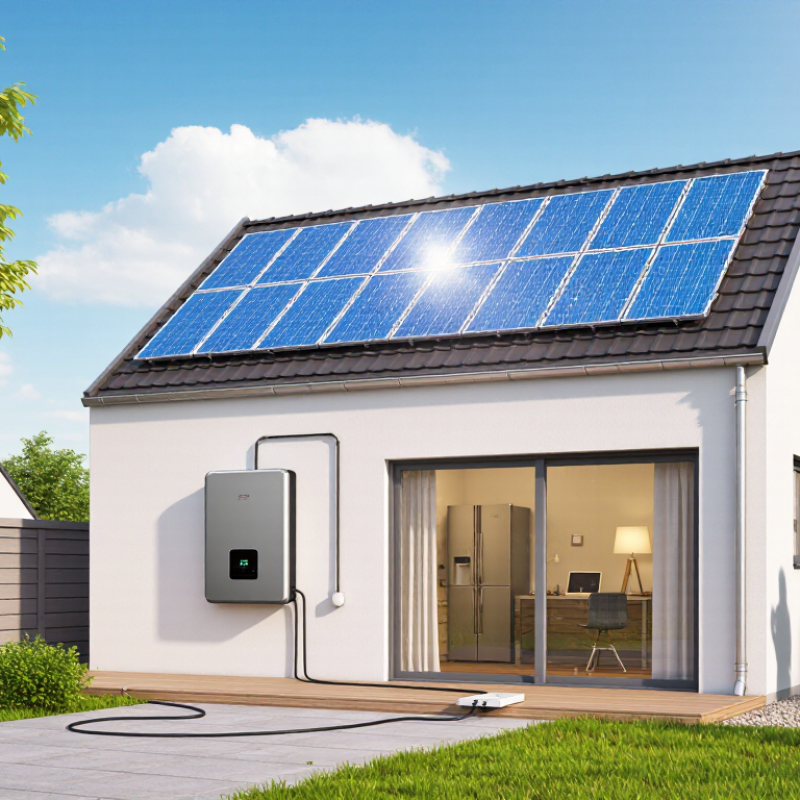
A solar panel is a device that converts sunlight into direct-current electricity. Its main working layer contains photovoltaic cells, usually made from semiconductor material. When sunlight reaches these cells, it creates an electrical flow through connected circuits.
The front glass protects the cells from rain, dust, and small impacts. Beneath it, an encapsulant holds the cells in place and limits moisture damage. A backsheet or rear layer adds insulation and protection. The aluminum frame provides rigidity and supports roof installation.
At the back, the junction box manages electrical connections and includes safety components. Small details matter here. A loose connector can reduce output or create heat.
A complete solar system also needs mounting rails, cables, and an inverter. The inverter changes panel-generated DC electricity into AC electricity for household appliances. Some systems use a hybrid inverter to connect solar panels with a battery. The battery stores unused energy for evening use, but it is not part of the panel itself.
In real installations, roofs are rarely perfect. Shade from a chimney, dirt near the lower edge, or a poor tilt can reduce production. Panel ratings come from laboratory conditions, not every cloudy afternoon. I have found that simple diagrams often hide these losses. Careful site measurement, electrical testing, and regular inspection make performance estimates more trustworthy. Yet even professional calculations can miss changing weather and future shade from growing trees.
What Is a Solar Panel and Battery System?
Solar panels convert sunlight into electricity through the photovoltaic effect. Sunlight strikes silicon cells and releases electrons, creating direct current (DC). Metal contacts collect this current from each cell. An inverter then changes DC into alternating current (AC) for household appliances. According to the IEA PVPS Trends 2024 report, global solar capacity reached about 1,624 gigawatts by the end of 2023. That growth reflects falling costs and stronger technical confidence.
The process sounds simple. Roof conditions make it less tidy. Clouds reduce incoming photons, while dust, heat, shading, and poor angles lower output. Fraunhofer ISE’s Photovoltaics Report 2024 shows that leading commercial modules now exceed 20% efficiency. However, rated efficiency is measured under controlled conditions. A south-facing roof may perform differently from the laboratory. A battery stores unused DC electricity, usually after conversion through a charge controller or inverter. It can release energy after sunset, but every conversion causes losses. Battery capacity also declines gradually with age and cycling.
Tips: Keep panels clear of heavy dust and leaves. Ask for hourly production estimates, not only annual totals. Check the inverter’s efficiency and the battery’s usable capacity. A larger battery is not automatically better. Oversizing storage can increase cost while leaving energy unused. Review shade patterns during winter, when the sun sits lower. Small roof details matter more than glossy promises.
Key components, energy-conversion stages, typical specifications, and practical performance data
| System Element | Primary Function | How It Works | Typical Data or Range | Energy Form |
|---|---|---|---|---|
| Solar Photovoltaic Panel | Captures sunlight and produces electrical power. | Photons transfer energy to semiconductor electrons, creating direct current through the photovoltaic effect. | Approximately 18%–23% module efficiency; common residential modules are about 350–450 W each. | Sunlight → DC electricity |
| Photovoltaic Cell | Acts as the fundamental electricity-generating unit inside a panel. | A semiconductor junction separates electrically excited electrons and directs them into an external circuit. | A typical crystalline-silicon cell produces roughly 0.5–0.7 V under operating conditions. | Photons → Electron flow |
| Solar Array | Combines multiple panels to increase total power output. | Panels are connected in series and/or parallel to reach the required voltage and current. | Small residential systems commonly range from about 3–10 kW DC. | Multiple DC outputs → Higher DC power |
| Charge Controller | Regulates electricity flowing from the solar array to the battery. | It controls charging voltage and current and helps prevent overcharging and excessive battery discharge. | Maximum power point tracking can harvest more energy than basic on-off regulation, especially when sunlight conditions change. | Controlled DC electricity |
| Solar Inverter | Converts DC electricity into AC electricity for household appliances and the electrical grid. | Power electronics switch the DC input at high frequency and reconstruct it as synchronized alternating current. | Typical modern inverter efficiency is approximately 95%–99%, depending on load and operating conditions. | DC electricity → AC electricity |
| Battery Storage | Stores surplus solar electricity for later use. | During charging, electrical energy is converted into chemical energy; during discharge, the process reverses. | Lithium-ion systems commonly provide about 85%–95% round-trip efficiency; usable capacity is lower than the nameplate capacity. | Electrical energy ↔ Chemical energy |
| Battery Management System | Monitors and protects rechargeable battery cells. | It supervises voltage, current, temperature, balancing, and safety limits during charging and discharging. | The system limits operation when cells approach defined voltage, temperature, or current thresholds. | Managed DC storage |
| Home Electrical Loads | Use the electricity generated or stored by the system. | Appliances draw AC electricity from the inverter, while some equipment may use DC power internally after conversion. | Energy demand varies by appliance, household size, season, weather, and operating schedule. | AC electricity → Useful work and heat |
| Energy Meter and Monitoring System | Measures electricity production, consumption, import, export, and battery status. | Sensors and software record energy flows and display performance data over time. | Common measurements include power in watts (W), energy in kilowatt-hours (kWh), voltage, current, and battery state of charge. | Data and system information |
| Sunlight Availability | Determines how much energy the panels can generate. | Output changes with solar irradiance, panel orientation, tilt, shading, temperature, dust, and system losses. | Peak output occurs near strong, unobstructed sunlight; actual daily production is lower than the panel’s rated peak power. | Variable solar input |
| System Losses | Represent energy unavailable after conversion and distribution. | Losses can occur through wiring resistance, inverter conversion, battery charging and discharging, temperature effects, shading, and soiling. | The total loss depends on design and conditions; performance ratios are often below 100% because real systems are not loss-free. | Converted energy reduction |
| Typical Energy Flow | Describes the normal operating sequence. | Sunlight reaches the panel, DC power is produced, surplus power charges the battery, and the inverter supplies AC power to loads. | Solar power is normally used by active loads first, stored second, and exported or curtailed when storage is full and export is unavailable. | Sunlight → DC → Stored DC → AC → Appliance use |
Note: Values are general engineering ranges for educational comparison. Actual performance depends on system design, local climate, installation conditions, operating temperature, maintenance, and usage patterns.
What Is a Solar Panel and Battery System?
The Role of Batteries in Solar Energy Storage
Solar panels convert sunlight into electricity, but production changes hourly. Batteries store surplus power for later use, especially after sunset. At 6 p.m., a charged battery can run lights, refrigeration, and communications equipment. This reduces dependence on grid electricity during expensive evening periods.
The International Energy Agency reported that global battery storage additions reached about 42 gigawatts in 2023. That figure was more than double the previous year. NREL research commonly places lithium-ion battery round-trip efficiency near 85% to 95%. Some energy still disappears as heat. Battery capacity also declines over time. These details are easy to overlook when comparing system prices. A larger battery is not automatically a better investment.
Tips: Match battery capacity with actual evening consumption. Review electricity bills, outage patterns, and local solar conditions before purchasing. Keep essential circuits separate from high-load appliances, such as electric heaters. Ask installers about usable capacity, warranty conditions, operating temperature, and replacement planning. A battery may perform poorly in extreme heat without proper ventilation. Performance estimates can also be optimistic. Real homes rarely follow perfect laboratory schedules. Regular monitoring helps reveal wasted solar energy and unexpected battery cycling.
A solar panel and battery system turns sunlight into usable electricity, then stores the surplus for later. Solar cells produce direct-current electricity when photons strike semiconductor layers. An inverter converts this power into alternating current for household appliances. The system sends extra electricity to the battery before exporting it to the grid, when regulations and connection settings allow.
After sunset, the battery reverses the process. Its cells release stored direct current, and the inverter supplies household alternating current. A control system constantly balances solar production, household demand, battery temperature, and charge levels. The International Energy Agency reported nearly 400 gigawatts of new solar photovoltaic capacity in 2023. That growth makes energy storage more important, especially during evening demand peaks. NREL guidance indicates that battery round-trip efficiency often falls near 85–95%, depending on chemistry, temperature, and system controls. Real performance is less perfect.
Tips: Keep the battery in a shaded, ventilated area. Review usable capacity, not only advertised capacity. Ask an installer to model winter output and evening consumption. A larger battery is not always better. Oversizing can increase cost while leaving capacity unused. Monitor monthly energy flows, because actual household habits often differ from early estimates. Safety settings and professional installation matter, particularly in enclosed spaces.
A solar panel and battery system pairs photovoltaic modules with rechargeable storage. During daylight, panels produce electricity for household use and battery charging. After sunset, stored power can reduce grid purchases or support essential circuits during outages.
Simple idea.
The International Energy Agency reported nearly 420 gigawatts of solar PV additions worldwide in 2023, showing rapid deployment. Yet capacity growth does not guarantee household savings. Roof direction, shading, tariffs, and local weather matter more than promotional averages.
A battery can reduce grid purchases during expensive evening hours and improve resilience. NREL’s 2024 Annual Technology Baseline places typical lithium-ion round-trip efficiency around 85% to 90%. Some stored energy disappears as heat. That loss is easy to forget.
Users should size storage around evening loads, not total daily consumption. A small battery may cover lighting, refrigeration, and communications, but not electric heating for long. This is where expectations often fail.
Installation costs include permits, wiring, monitoring, maintenance, and eventual battery replacement. The U.S. Energy Information Administration notes that solar output changes with season, weather, and time of day. Batteries cannot create energy.
During a cloudy winter week, grid support may still be necessary. I would not promise energy independence; that phrase is usually too neat.
Ask for measured assumptions: annual consumption, usable capacity, efficiency, outage duration, and degradation. A spreadsheet can look attractive while tariff changes quietly stretch the payback period.