How to Choose the Best Solar Off Grid System for Your Needs?
When it comes to selecting the best Solar Off Grid System, making an informed choice is crucial. Michael Green, a recognized expert in renewable energy, emphasizes, “Every home has unique needs; your solar system should reflect that.” This notion rings true as each household requires a tailored approach to solar energy.
Choosing a Solar Off Grid System involves evaluating diverse factors. These include your energy consumption, geographical location, and budget constraints. Many individuals overlook the importance of detailed energy assessment, which can lead to overspending or insufficient power supply. An ideal system should align with the user's lifestyle, ensuring reliability and efficiency.
Furthermore, the market offers various solar products, each with unique specifications. It’s essential to research and compare these options thoroughly. Not every system suits every situation. Some may even fall short of expectations. Engaging with professionals and leveraging their insights can streamline this process. Ultimately, the right Solar Off Grid System fosters energy independence and cost savings.
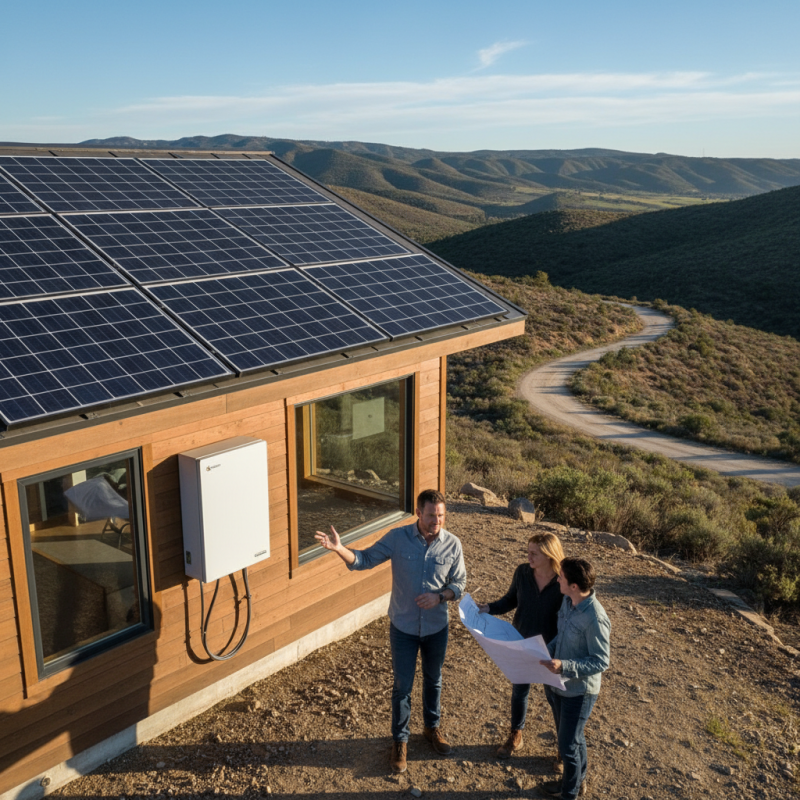
Factors to Consider When Choosing a Solar Off Grid System
Choosing the right solar off grid system can be challenging. It requires careful consideration of various factors that match your energy needs. Start with your energy consumption. On average, a household consumes about 877 kWh per month. Understanding your specific energy usage helps in sizing the system properly. Systems that are too small can lead to frequent shortages, while oversized systems may result in unnecessary costs.
Another key factor is location. The amount of sunlight varies by region. For example, areas with more than 5 sun hours daily can produce significant energy. This impacts the type and size of the solar panels needed. Additionally, consider storage solutions. Battery storage is crucial for maintaining a power supply during cloudy days or nighttime. A well-sized battery can hold enough energy for at least two days of use.
Installation complexity also plays a role. Some systems are DIY-friendly, while others need professional installation. It’s essential to weigh the costs and expertise required. Data shows that 70% of off-grid systems are installed by professionals, reflecting their intricate nature. Balancing DIY options with professional help can provide cost savings and ensure reliability.
Evaluating Your Energy Needs: Calculating Daily Consumption and Peak Loads
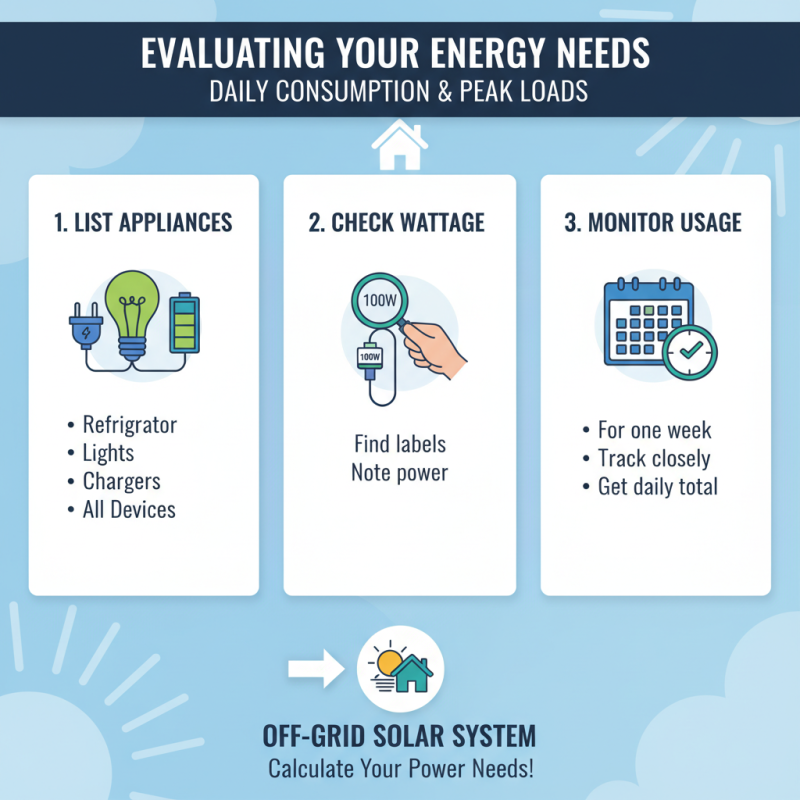
When evaluating your energy needs for an off-grid solar system, calculating daily consumption is essential. Start by listing all appliances and devices. Include everything: refrigerators, lights, chargers, and heaters. Each item contributes to your total energy use. It’s helpful to check the wattage on labels. Do this for one week, monitoring usage closely. This will give you a clear picture of daily needs.
Peak loads are just as crucial. Identify which appliances are high-wattage. For instance, a water heater may draw a lot of power. Knowing this helps you plan for spikes in energy demand. Consider how often these appliances run simultaneously. You might find surprises in your usage patterns. This reflection is important as it can reveal areas for energy savings or adjustments in your system design. By accurately assessing both daily consumption and peak loads, you can create a reliable solar setup that meets your unique needs effectively.
Types of Solar Panels: Monocrystalline vs. Polycrystalline vs. Thin-Film
When choosing a solar off-grid system, one crucial consideration is the type of solar panels. The three main types are monocrystalline, polycrystalline, and thin-film panels. Each type has unique characteristics and efficiencies, which can impact your energy needs.
Monocrystalline panels are known for their high efficiency. They can convert more sunlight into electricity compared to the other types. This efficiency often means they require less space. However, they can be more expensive upfront and may not be the best choice for everyone. If space is a concern, you might find them worthwhile.
Polycrystalline panels tend to be cheaper but have lower efficiency. They are made from multiple silicon crystals, making them less space-efficient. This choice can be beneficial for larger properties with a lot of roof area. Thin-film panels are lightweight and flexible. They are, however, the least efficient among the three. Installing these might need more space and could require reflection on your energy usage patterns.
Choosing the right panel type depends on your unique situation. Reflect on your available space, budget constraints, and energy consumption. Each option comes with pros and cons. Understanding these can guide you toward the best system for your off-grid solar needs.
Battery Storage Solutions: Understanding Capacity, Lifespan, and Efficiency
When selecting a solar off-grid system, battery storage solutions play a crucial role. Understanding capacity is vital. Capacity refers to the total energy stored, measured in kilowatt-hours (kWh). A typical household may require anywhere between 10 to 20 kWh daily. Reports show that lithium-ion batteries hold a 90% market share due to their higher energy density and longer lifespan compared to lead-acid batteries, which only offer about 400-1,000 cycles.
Battery lifespan is another aspect to consider. Most lithium-ion batteries last around 10 to 15 years, while lead-acid batteries may require replacement every 3 to 5 years. Effective cycling, or how often batteries are charged and discharged, significantly impacts their lifespan. Studies indicate that over-cycling can reduce a battery's lifespan by up to 50%. It's crucial to monitor usage patterns and adjust charging schedules accordingly.
Tip: Before purchasing, calculate your daily energy needs. Choose a battery with a capacity that exceeds these needs for optimal performance.
Efficiency also matters. Look for systems with at least
90% round-trip efficiency. This means only
90% of the energy stored can be used. Lower efficiency results in wasted energy. Regular maintenance ensures that you maximize efficiency and lifespan.
Tip: Regularly check battery connections and perform system updates to maintain efficiency.
Inverter Options: Choosing Between Pure Sine Wave and Modified Sine Wave
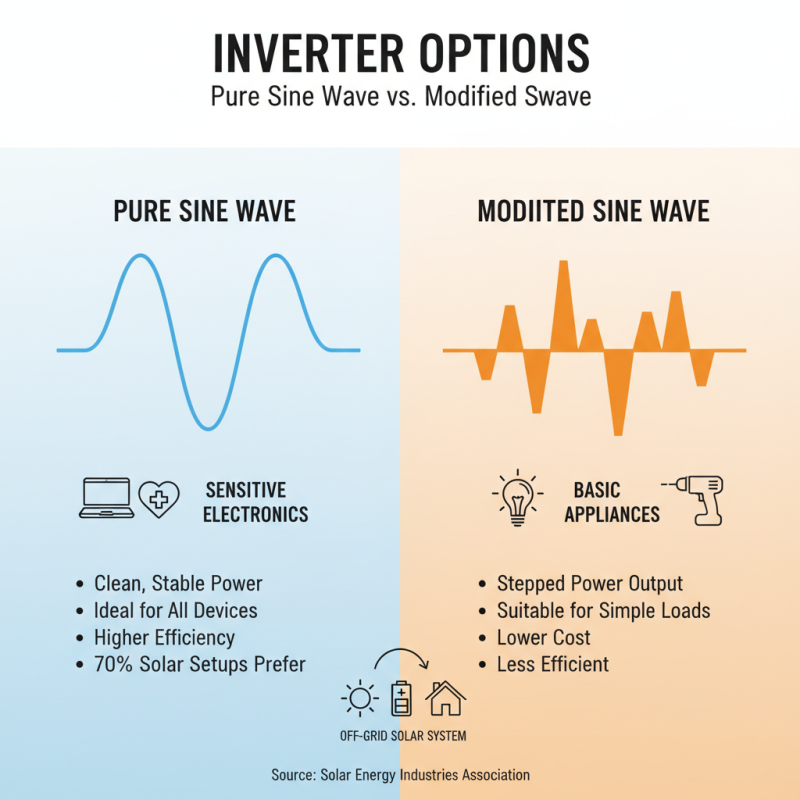
When selecting an off-grid solar system, the inverter type plays a crucial role. The choice between pure sine wave and modified sine wave inverters significantly affects performance and compatibility. Pure sine wave inverters produce a smooth, consistent output that is ideal for sensitive devices like laptops and medical equipment. According to the Solar Energy Industries Association, over 70% of solar off-grid setups favor pure sine wave technology due to its efficiency.
On the other hand, modified sine wave inverters are less expensive and can handle basic appliances. However, they may cause overheating or malfunction in sensitive devices. Reports suggest that modified sine wave inverters can reduce energy efficiency by 20% or more for certain loads. This mismatch may lead to higher long-term costs, prompting users to weigh their options carefully.
The decision can feel overwhelming. It's essential to assess your energy needs, device compatibility, and budget limitations. In some cases, users underestimate equipment performance, leading to dissatisfaction. Researching specifications and understanding how each type of inverter affects your system is vital for achieving sustainable energy independence.