Top Solar Panels and Batteries in China for Home Use?
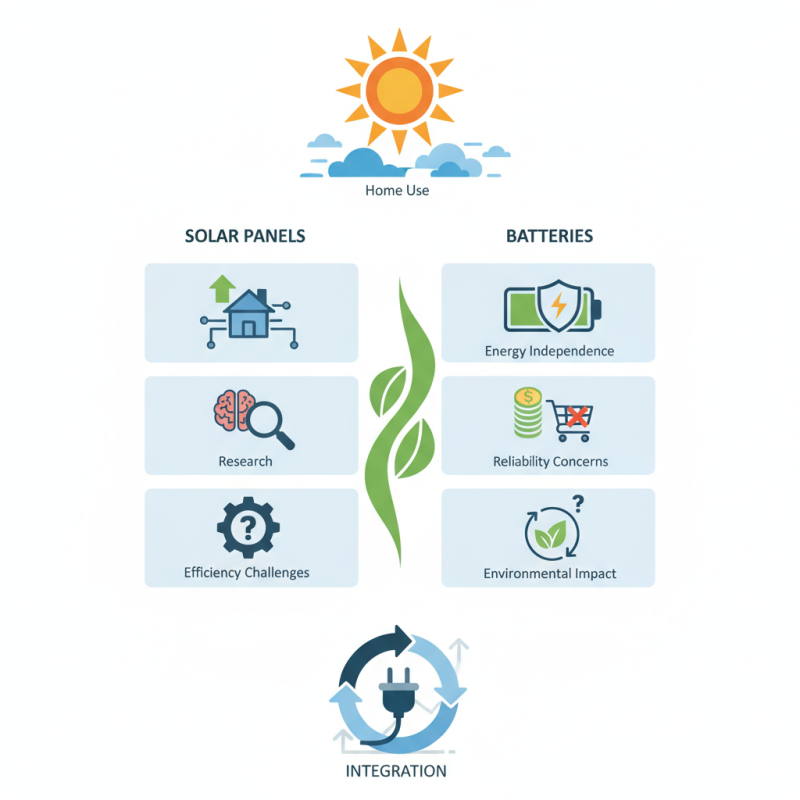
As the demand for sustainable energy grows, homeowners in China are increasingly exploring solutions involving solar panels and batteries. According to Dr. Li Wei, a prominent expert in renewable energy, "The integration of solar panels and batteries is key to achieving energy independence at home." This insight highlights the significant role that these technologies play in modern energy consumption.
While solar panels and batteries offer an eco-friendly alternative, their installation and efficiency still present challenges. Many homeowners struggle with choosing the right equipment. The market is filled with options, yet not all products are reliable. Dr. Li emphasizes that research is essential before making a purchase, as not all solar panel and battery combinations yield equal performance.
Moreover, the environmental impact of manufacturing and disposing of these systems raises questions. Homeowners must reflect on the lifecycle of their solar panels and batteries. Are they truly contributing to a greener planet? This consideration prompts further investigation into sustainable practices in the solar panel and battery industry as a whole, fostering a deeper understanding of our energy choices.
Top Solar Panel Brands in China for Home Use
When considering solar panels for home use in China, several brands dominate the market. Recent industry reports indicate that the demand for solar energy is growing rapidly. In 2023, residential solar installations in China increased by 45%. This surge reflects a shift towards renewable energy solutions.
Common characteristics of top brands include high efficiency and durability. Many solar panels now achieve over 20% efficiency rates. However, their performance may decrease in low sunlight conditions. It’s a critical factor to consider when choosing a panel. Additionally, quality does not always equal price. Some affordable options offer impressive warranties, which can signal reliability.
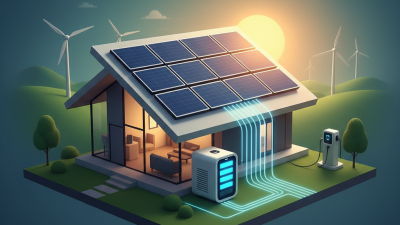
Battery storage is essential for maximizing solar energy use. Effective batteries can store excess energy produced during the day. Data shows that residential battery storage systems increased by 30% last year. However, not all batteries provide the same longevity or capacity. Homeowners need to research carefully. The right combination of panel and battery can enhance energy independence. However, the complexity of options can be overwhelming. Making an informed choice requires thorough investigation and reflection on specific needs.
Top Solar Panels and Batteries in China for Home Use
| Product Type |
Efficiency (%) |
Power Output (W) |
Battery Capacity (kWh) |
Warranty (Years) |
Price ($) |
| Monocrystalline Solar Panel |
20.5 |
330 |
10 |
25 |
250 |
| Polycrystalline Solar Panel |
18.0 |
300 |
8 |
20 |
200 |
| Bifacial Solar Panel |
22.0 |
350 |
12 |
30 |
300 |
| Lithium-Ion Battery |
N/A |
N/A |
10 |
10 |
700 |
| Lead-Acid Battery |
N/A |
N/A |
5 |
5 |
400 |
Leading Home Battery Solutions Available in China
When selecting a home battery solution in China, it’s vital to consider capacity and efficiency. Many options are available, ranging from small-scale systems to larger installations. A well-chosen battery can store excess solar energy produced during the day for use at night. This not only saves electricity costs but also enhances energy independence.
Tips: Look for batteries with a high cycle life. A longer cycle life means the battery can be charged and discharged more times without significant capacity loss.
Monitor your energy needs closely. Measure your daily consumption, as this will guide you in choosing the right battery capacity.
Understanding installation and maintenance is equally important. Some solutions require professional installation, while others are user-friendly. Keep in mind that proper maintenance can extend the life of your battery system. It’s essential to regularly check connections and battery health status to ensure optimal performance and safety.
Tips: Invest time in research. Each home has unique energy needs. Pay attention to reviews from other users. Their experiences can offer valuable insights that will help in making informed decisions.
Key Features to Consider When Choosing Solar Panels
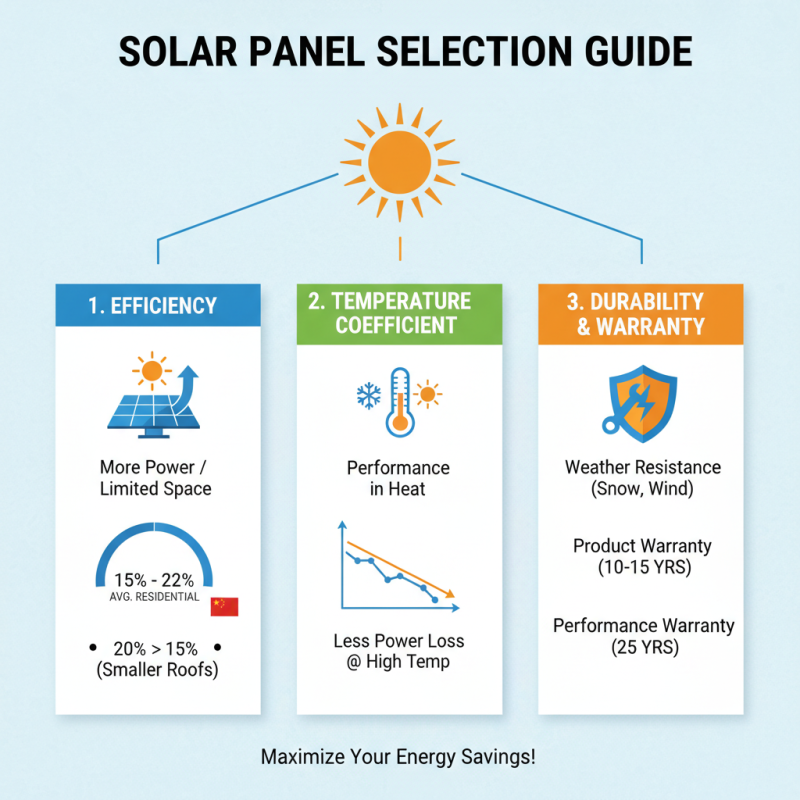
When choosing solar panels, several key features emerge as critical. Efficiency is at the forefront. Reports indicate that the average efficiency of residential solar panels in China ranges between 15% to 22%. Higher efficiency means more energy production in limited space. A panel with 20% efficiency can generate more power than one at 15%. This statistic is especially crucial for homes with smaller rooftops.
Durability is another important consideration. Many solar panels are designed to last over 25 years, but not all panels perform equally under extreme weather conditions. A study by the China Renewable Energy Association found that nearly 10% of panels tested showed significant degradation after just ten years. Buyers should look for panels that withstand heavy snow and hail, ensuring long-term value.
Finally, battery compatibility is a vital aspect. Homeowners should opt for batteries that can store excess energy effectively. A good battery allows for energy use during peak times. Data shows that homes equipped with battery storage can achieve energy independence of over 60%. However, it's crucial to assess the actual storage capacity against daily electricity needs. Understanding these features can significantly impact the performance and value of solar installations.
Comparative Analysis of Solar Panel and Battery Costs
The cost of solar panels and batteries is an essential factor for homeowners considering renewable energy solutions. A recent industry report indicates that the average price of solar panels in China has decreased by about 20% over the past five years. This significant drop makes harnessing solar energy more accessible to many families. Solar batteries, on the other hand, have seen varying costs, influenced by technology advancements. High-capacity lithium-ion batteries can still be quite pricey, with costs averaging around 3,500 to 5,000 USD per unit.
In terms of return on investment, the initial expenditure can be daunting. However, the payback period for solar panels has shortened significantly. A typical system can pay for itself within five to seven years, depending on usage. Additionally, energy savings can amount to about 30% of monthly bills. That said, the price fluctuation in solar components creates uncertainty. Homeowners face challenges in predicting the long-term economic benefits. It's crucial to consider local incentives and rebates, as they may offset costs. Each family must evaluate their specific energy needs and usage patterns to find the best solution.
Recent Innovations in Solar Technology for Residential Use
Recent innovations in solar technology are reshaping residential energy solutions. Small-scale solar panels have become more efficient, converting sunlight into electricity with greater efficacy. Homeowners can benefit from these advancements. The new designs are not only sleek but also lightweight, making installation easier.
Battery storage technology has also improved. The latest models can store more energy for later use. This is particularly helpful during cloudy days. Homeowners are now able to rely less on the grid. However, high costs can still be a barrier. Some systems may not be compatible with older homes, requiring costly upgrades.
While progress is evident, there are challenges. Efficiency fades slightly in low-light conditions, causing some frustration. Not every homeowner has access to suitable roof space. This can limit solar potential significantly. Keeping an eye on evolving technologies is essential. The landscape of solar energy for homes is shifting rapidly, but hurdles remain.