Top 10 Off Grid Solar Power System Benefits Explained?
Off Grid Solar Power System offers numerous advantages that can transform how we consume energy. These systems allow users to generate their own electricity away from traditional power grids. This independence is appealing for many, especially those living in remote areas.
One significant benefit is the cost savings. Users can avoid high electricity bills by harnessing solar energy from sunlight. This resource is abundant and renewable, unlike fossil fuels. Additionally, off-grid systems promote environmental sustainability. They reduce carbon footprints and lessen dependence on finite resources.
However, the transition to an Off Grid Solar Power System may not be seamless. Initial setup costs can be high, and maintenance is necessary. Some users may find the learning curve challenging. Yet, the satisfaction of self-sustainability often outweighs these hurdles. Embracing this technology could lead to a more environmentally friendly lifestyle.

Benefits of Off Grid Solar Power: An Overview of Energy Independence
Off-grid solar power systems provide a pathway to energy independence. They allow homeowners to generate their own electricity without relying on the grid. This autonomy can be particularly beneficial in remote areas. According to a report by the U.S. Department of Energy, off-grid solar applications have increased by 30% over the past five years. This indicates a growing trend towards energy self-sufficiency.
The environmental impact is another critical factor. Generating power through solar reduces reliance on fossil fuels. This shift can cut annual carbon emissions significantly. The National Renewable Energy Laboratory estimates that a fully off-grid solar system can reduce emissions by up to 80%. However, it’s essential to remember that initial installation costs can be high. Not all households can afford the upfront investment, and maintenance can be an ongoing concern.
Energy independence comes with challenges too. Users must manage their energy storage and usage effectively. Fluctuations in sunlight can lead to insufficient energy during cloudy days. Also, extreme weather can damage solar panels. These factors necessitate careful planning and regular monitoring. Achieving true energy independence requires commitment and a willingness to adapt.
Top 10 Benefits of Off Grid Solar Power Systems
This chart illustrates the top 10 benefits of off grid solar power systems, highlighting their contribution to energy independence, sustainability, and cost savings.
Cost Savings: How Off Grid Solar Systems Reduce Long-Term Energy Expenses
Off-grid solar power systems can significantly cut long-term energy costs. By generating your electricity, you reduce reliance on utility companies. This can save you money on monthly bills. In many areas, energy costs continue to rise. However, solar provides a stable alternative that can help mitigate this issue.
Installation costs may seem high at first. Yet, consider the savings over time. Many homeowners report that their solar systems pay for themselves within a few years. Additionally, there are often tax incentives and rebates available. These can lower initial expenses, making solar more accessible.
However, managing solar energy does require effort. You must monitor usage, especially during cloudy days. Reflecting on this, not everyone may be prepared for the responsibility. Balancing energy production and consumption can be challenging. Yet, for those who succeed, the benefits can lead to substantial savings and energy independence. It's a worthwhile journey for many, despite some initial hurdles.
Top 10 Off Grid Solar Power System Benefits Explained
| Benefit |
Description |
Cost Savings (%) |
Environmental Impact |
| Energy Independence |
Reduces reliance on utility companies and fossil fuels. |
40% |
Lower carbon footprint. |
| Consistent Energy Supply |
Provides a reliable power source even in remote areas. |
30% |
Decreased need for backup generators. |
| Low Maintenance Costs |
Requires minimal upkeep compared to conventional systems. |
20% |
Less waste production. |
| Tax Incentives |
Eligible for various government rebates and tax credits. |
15% |
Supports renewable energy policies. |
| Increase Property Value |
Solar systems can enhance the resale value of property. |
25% |
Promotes sustainable home improvements. |
| Energy Cost Stability |
Fixed energy costs protect against inflation. |
35% |
Contributes to a stable economy. |
| Adaptable & Scalable |
Easy to add capacity as energy needs grow. |
10% |
Encourages efficient resource use. |
| Emergency Preparedness |
Provides energy during natural disasters or outages. |
50% |
Reduces emergency energy dependency. |
| Support for Local Economy |
Promotes local jobs in the renewable sector. |
20% |
Enhances community viability. |
Environmental Impact: The Role of Off Grid Solar in Reducing Carbon Footprint
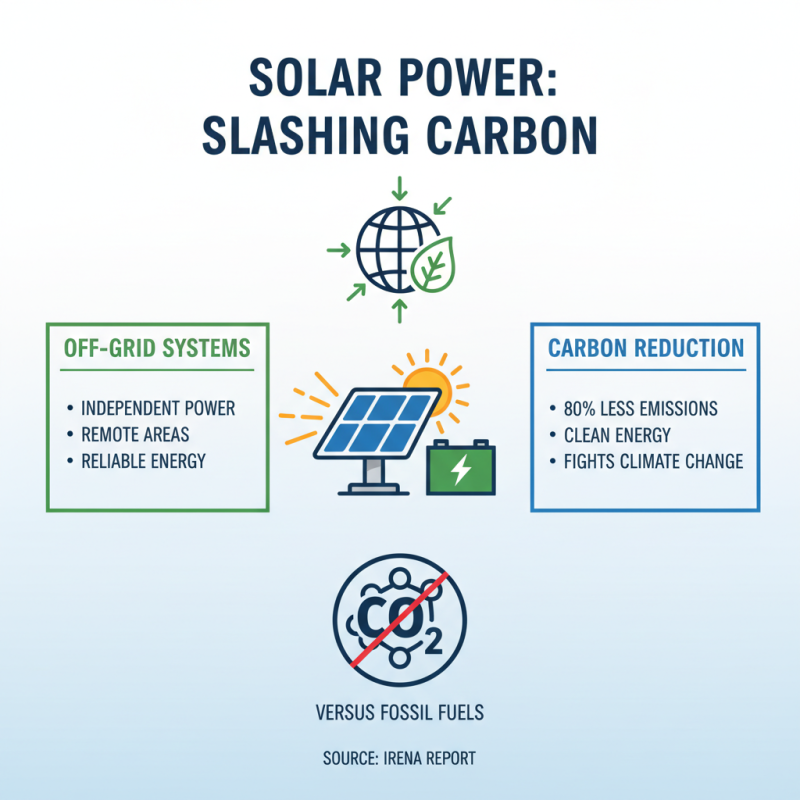
Off-grid solar power systems play a significant role in reducing the carbon footprint. According to a report by the International Renewable Energy Agency (IRENA), solar energy can reduce greenhouse gas emissions by about 80% when compared to fossil fuels. This drastic reduction is vital in combating climate change.
Installing off-grid solar solutions directly aids in curbing reliance on traditional energy sources. For every megawatt of solar power produced, approximately 2,500 tons of carbon dioxide emissions are avoided annually. These figures reveal how impactful solar energy can be when scaled appropriately. Yet, some communities remain skeptical. They question the reliability of solar power, especially in less sunny regions.
Moreover, while the benefits are clear, challenges exist. Like the issue of energy storage, which presents a hurdle for consistent power supply. The technology is improving, but progress is slow. In 2022, only 15% of global energy storage came from solar technologies. This indicates a need for further innovation. Investing in solar also promotes energy independence, which is essential as fossil fuel prices fluctuate. Yet, the initial costs can deter many households from making the switch.
Energy Security: Reliable Power Supply in Remote and Disaster-Prone Areas
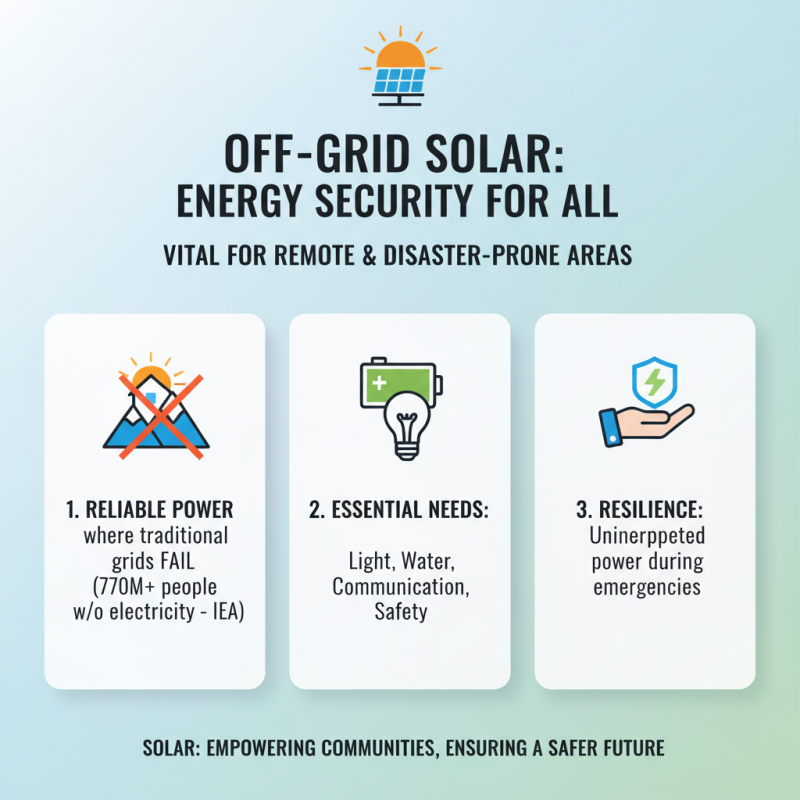
Energy security is becoming increasingly vital, especially in remote and disaster-prone areas. Off-grid solar power systems offer a reliable energy source where traditional grids are unavailable, unstable, or non-existent. A recent report by the International Energy Agency noted that over 770 million people lack electricity access. In such locations, solar systems provide essential power for basic needs, ensuring safety and comfort.
These systems enhance resilience during disasters. According to FEMA, extreme weather events have doubled in frequency over the last 30 years. In areas vulnerable to these threats, solar power can maintain electricity when conventional grids fail. For example, during Hurricane Maria, areas with solar installations fared better than those reliant solely on grid power. However, solar systems are not without their challenges. High initial costs and maintenance concerns can deter some users. Moreover, inadequate battery storage can lead to power shortages during long periods of cloudy weather.
The potential for energy independence is also significant. Households can reduce reliance on fossil fuels, decreasing energy costs in the long term. However, transitioning to solar requires careful planning and investment. Communities must weigh the benefits against initial financial barriers and ongoing maintenance needs. Balancing these elements can lead to a more resilient and sustainable future.
Increased Property Value: The Economic Advantage of Off Grid Solar Installations
Investing in an off-grid solar power system can significantly boost property value. According to a study by the National Renewable Energy Laboratory, homes with solar installations can sell for up to 4.1% more than comparable homes without solar. This increase reflects growing buyer interest in sustainable living options. As energy costs rise, buyers see solar as a long-term investment, ensuring lower utility bills.
Moreover, off-grid systems often appeal to environmentally conscious buyers. A report from the Energy Information Administration indicates that renewable energy sources are gaining popularity among homeowners. This shift is influencing property valuations. Off-grid installations may also attract those seeking independence from utility companies, making them highly desirable in competitive markets.
However, potential challenges exist. Some buyers may hesitate due to initial installation costs. Maintenance needs can also be a concern. Homeowners should weigh these factors against the financial gains. Proper evaluation of property features and location is essential. In a rapidly evolving real estate landscape, understanding these aspects is vital for maximizing value.