10 Essential Tips for Choosing the Best Battery Back Up For Homes?
Choosing the right Battery Back Up For Homes is crucial. Power outages can happen unexpectedly, leaving families vulnerable. A reliable backup system can ensure comfort and safety during these times.
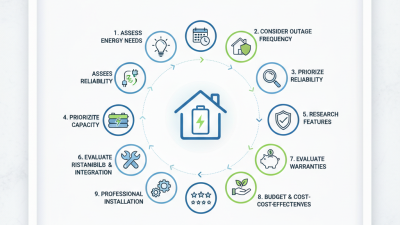
When selecting a battery backup, consider your home's energy needs. Some homes require more power due to larger appliances. Others may only need essentials like lights and a fridge. It's important to assess your requirements thoroughly.
Research different brands and models before making a decision. Look for reliable features and warranties. Customer reviews can also provide insights into performance. Remember, the most expensive option is not always the best. Sometimes a more affordable battery backup can meet your needs perfectly. Reflect on what functions are most important to you.
Understanding Your Power Needs: Assessing Home Energy Consumption
Understanding your power needs is critical when selecting a battery backup for your home. Begin by evaluating how much energy your household consumes. According to the U.S. Energy Information Administration (EIA), the average American home uses about 877 kWh per month. Break this down into daily usage. This figure helps determine the capacity you need for your backup system.
When assessing your energy consumption, consider peak usage times. Identify which appliances consume the most power. For instance, HVAC systems can draw significant energy. The U.S. Department of Energy notes that heating and cooling account for nearly 50% of home energy use. Knowing this can influence the capacity of the backup system you choose.
Tip 1: Calculate your wattage requirements by listing essential devices. This list helps you prioritize your energy needs during an outage.
Tip 2: Look into the battery’s discharge rate. A higher discharge rate may be necessary for high-draw appliances. Also, reflect on how long you might need power. Some homes may need backup for a few hours, while others could require several days.
Types of Battery Backup Systems: Comparing Options for Home Use
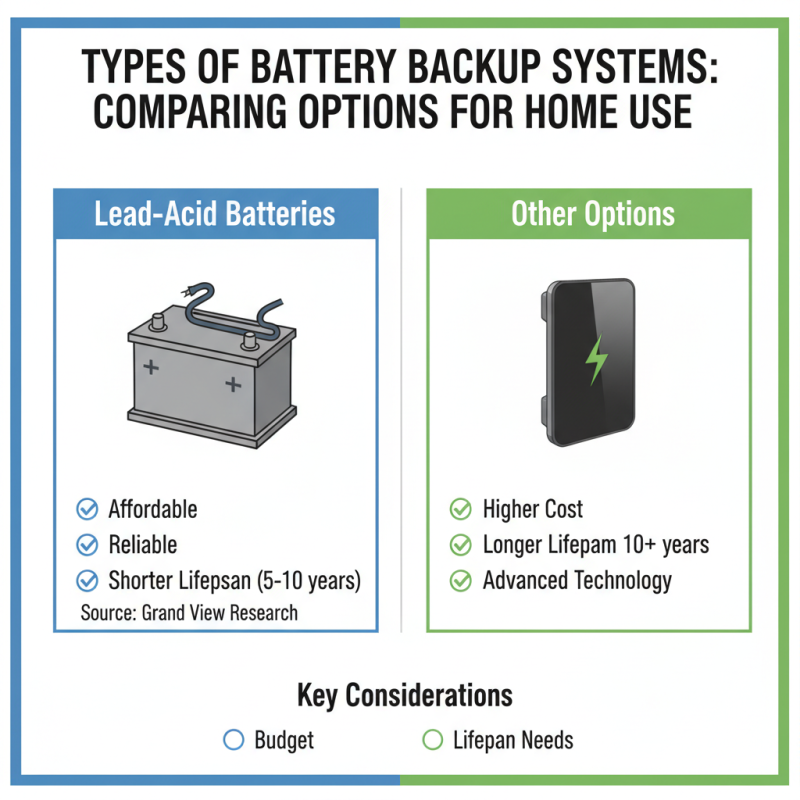
When considering battery backup systems, it’s essential to understand the various types available. Lead-acid batteries remain a popular choice due to their affordability. They are reliable but have a shorter lifespan compared to other options. According to a report by Grand View Research, lead-acid batteries typically last around 5-10 years, which may not be sufficient for all homeowners.
Lithium-ion batteries are gaining traction due to their longevity and efficiency. They can last up to 15 years, making them a more sustainable choice. The initial cost is higher than lead-acid batteries, but the long-term benefits often outweigh this. In fact, their energy density is significantly higher, meaning they take up less space for a similar power output. This can be crucial for homes where space is limited.
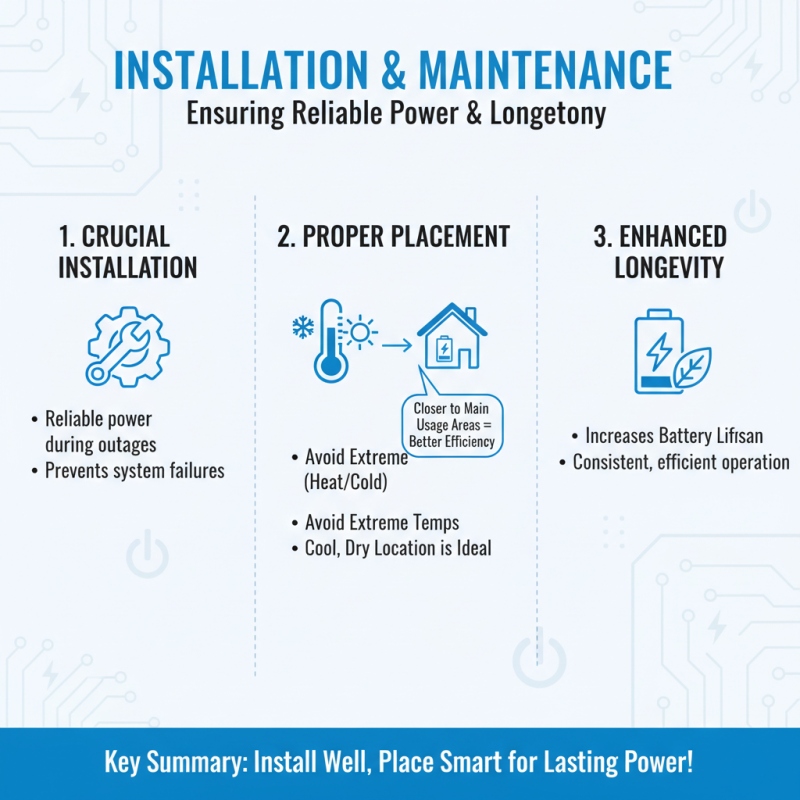
Another option is solar battery systems, which are increasingly common among eco-conscious homeowners. These systems allow for energy storage from solar panels, providing backup power at night or during outages. However, installation can be complex and may not be suitable for every home. Each type of battery system has its pros and cons, and homeowners should carefully assess their individual needs before making a decision.
Key Features to Consider: Capacity, Inverter Size, and Lifespan
When selecting a battery backup system for your home, capacity is a fundamental feature. It determines how long the backup will last during an outage. Industry reports suggest that most households require at least 5 kilowatts of capacity to sustain essential appliances. However, an average household's consumption can reach 30 kilowatt-hours daily. Therefore, assessing your needs is crucial. Many consumers overestimate their requirements, leading to wasted resources and money.
Inverter size also plays a critical role. The inverter converts stored energy into usable power. A well-sized inverter can handle the power demand efficiently. Experts recommend choosing an inverter that can manage 20-25% above your peak power needs. While many might think a larger inverter is better, oversizing can lead to inefficiencies and higher costs. It’s essential to strike a balance for optimal performance.
The lifespan of the battery backup system significantly affects long-term costs. Most lithium-ion batteries last about 10 years, while lead-acid batteries can last around 3-5 years. Research indicates that the total cost of ownership can be higher for cheaper options. Therefore, investing in quality may yield better returns over time. Understand these features thoroughly to make an informed decision. Realizing the need for careful evaluation can help avoid regret later.
10 Essential Tips for Choosing the Best Battery Back Up For Homes
| Feature |
Description |
Recommended Value |
| Capacity |
The total amount of energy the battery can store, measured in kilowatt-hours (kWh). |
5-10 kWh for average homes |
| Inverter Size |
The power rating of the inverter that converts DC to AC, measured in watts. |
3,000-5,000 watts |
| Lifespan |
The expected operational lifetime of the battery, typically measured in cycles. |
5-15 years |
| Charge Time |
The time taken to fully charge the battery. |
4-8 hours |
| Efficiency |
The ratio of useful energy output to the energy input, expressed as a percentage. |
80-95% |
| Type of Battery |
The chemistry used in the battery affects performance, cost, and lifespan. |
Lithium-ion or lead-acid |
| Safety Features |
Additional safety mechanisms such as temperature control and circuit protection. |
Built-in safety features recommended |
| Warranty |
The manufacturer's guarantee period before potential issues arise. |
5-10 years |
| Installation Complexity |
Ease of installation and whether professional services are needed. |
DIY to professional installation options |
| Cost |
The overall price of the battery backup system, including installation. |
$5,000 - $15,000 |
Budgeting for Battery Backups: Cost Considerations and Long-term Savings
When budgeting for battery backups, understanding costs is crucial. Industry data shows that the average residential battery storage system can range from $5,000 to $15,000. Installation fees add another $1,000 to $3,000. It's essential to account for these numbers when making financial decisions.
Long-term savings can be significant. According to a report from the National Renewable Energy Laboratory, homeowners can save up to 30% on energy bills with solar battery systems. Additionally, some regions offer incentives that can further lower initial costs. However, many homeowners overlook these factors. The return on investment often takes time to realize, which can lead to frustration.
Consider maintenance costs too. Batteries may require replacements every 5 to 15 years, depending on the type. It’s wise to research warranty options, as they can influence long-term expenses. Some batteries might perform well initially but decline quickly over time. Evaluating energy use patterns can help in selecting the right system, minimizing unnecessary spendings.