How to Choose the Best Battery for Solar Energy Systems?
Choosing the right battery for solar energy systems is crucial. The right battery improves efficiency and storage capacity. Renowned solar energy expert Dr. Emily Carter once stated, “The best battery for solar energy can transform your entire energy strategy.”
Solar energy systems rely heavily on battery technology. With several options available, it’s often confusing to identify the best one. Factors such as capacity, lifespan, and cost must guide your choice. Many users overlook the importance of compatibility between the battery and solar panels.
One common mistake is not considering local climate impacts on battery performance. For instance, extreme temperatures can reduce battery efficiency. This often leads to dissatisfaction with solar energy systems. Being informed and reflective about these aspects will lead to better choices in your solar journey.
Understanding Solar Energy Systems and Their Battery Requirements
When considering solar energy systems, understanding their battery requirements is essential. The right battery can maximize efficiency and storage. According to a report by the National Renewable Energy Laboratory, up to 75% of solar energy can be stored effectively when using high-quality batteries. This storage is crucial during periods of low sunlight.
Different battery types serve unique needs. Lead-acid batteries are cost-effective for short-term use, while lithium-ion batteries offer longevity and efficiency. A study from Energy Storage Association shows lithium-ion batteries can last over a decade, significantly reducing replacement frequency. Assessing your energy consumption helps in selecting the best option.
Tips: Consider your energy needs for day and night. Calculate peak usage times. Research various battery technologies. Don't overlook installation complexities. A poorly installed system can diminish performance, potentially leading to increased costs. Prioritize reliable sources when assessing battery options.
Battery Capacity and Discharge Time for Solar Energy Systems
Types of Batteries Suitable for Solar Energy Applications
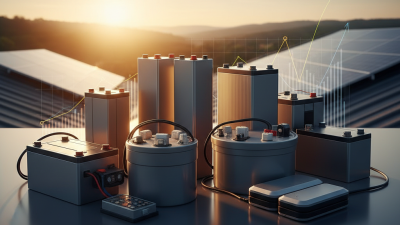
When choosing a battery for solar energy systems, understanding the types available is crucial. There are three main options:
lead-acid, lithium-ion, and flow batteries.
Lead-acid batteries are traditional and cost-effective. They have been used for decades in solar applications. However, they require regular maintenance and have a shorter lifespan.
Lithium-ion batteries offer better efficiency and longer life. They are lightweight and compact, making them ideal for residential setups. Their fast charging capabilities add to their appeal. But their higher initial cost might be a barrier for some. It’s essential to weigh the upfront investment against long-term savings.
Flow batteries stand out for their unique design. They store energy in liquid form, allowing for easy scalability. However, they are less common and can be more complex. This could lead to maintenance challenges. Careful consideration is essential to find the right fit for your needs.
Key Factors to Consider When Selecting Solar Batteries
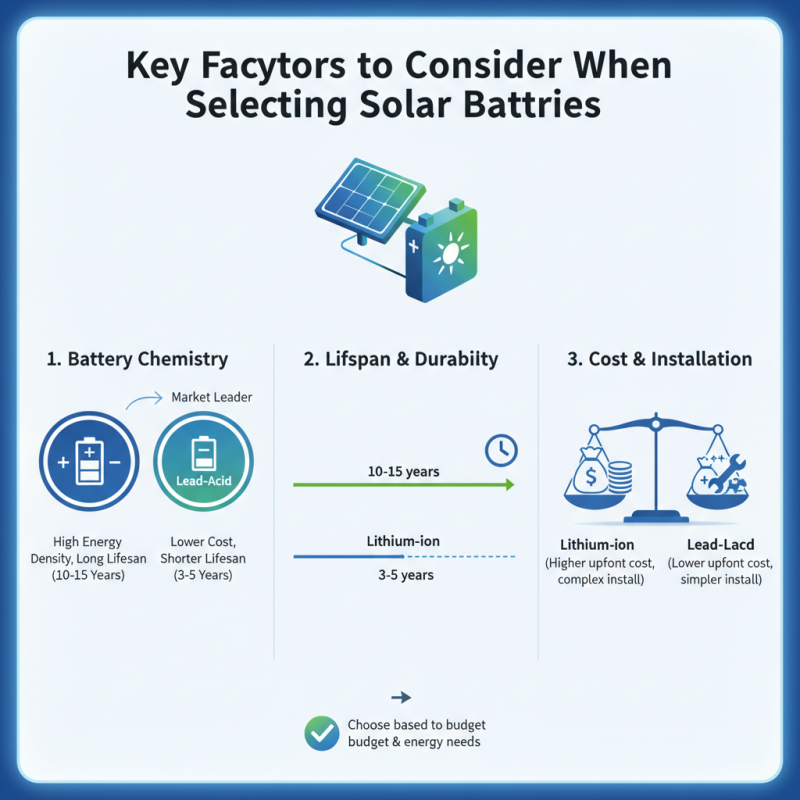
When selecting a battery for solar energy systems, several key factors come into play. The chemistry of the battery is crucial. Lithium-ion batteries lead the market due to their high energy density and long lifespan. Reports indicate that they can last up to 10-15 years, outperforming lead-acid batteries, which typically last around 3-5 years. However, cost and installation requirements can vary greatly between these options.
Another important factor is the depth of discharge (DoD). The DoD indicates how much energy can be drawn from a battery without damaging it. For instance, lithium-ion batteries often support a DoD of 80-90%, while lead-acid batteries usually cap at around 50%. This means lithium-ion batteries can offer more usable energy over their lifespan. Buyers must carefully assess their energy needs as mismatched DoD could lead to underperformance.
Capacity and efficiency are also fundamental to battery selection. Consider the battery's capacity in kilowatt-hours (kWh). A larger capacity allows for more energy storage but can also mean a higher upfront cost. Efficiency ratings show how well a battery converts and stores energy. As of recent data, the average efficiency of lithium-ion batteries exceeds 90%. This means they provide better performance, making them a preferred choice. However, the right battery for each system ultimately depends on specific use-case scenarios and budget constraints.
Evaluating Battery Capacity and Performance Metrics
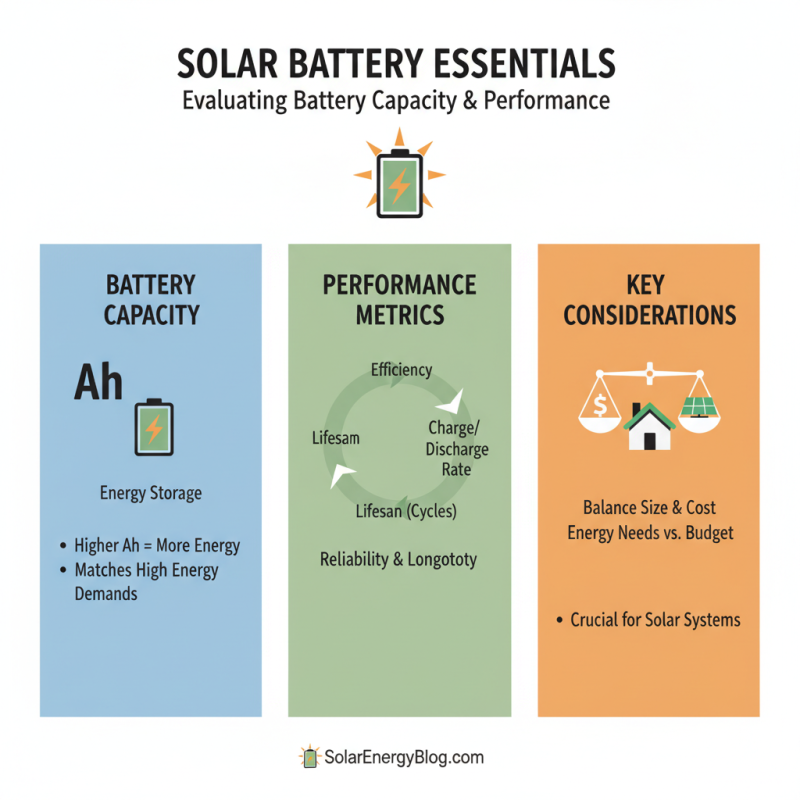
When selecting a battery for solar energy systems, evaluating capacity and performance is crucial. Battery capacity, typically measured in amp-hours (Ah), indicates how much energy the battery can store. A higher capacity means more stored energy, making it a vital consideration for users with higher energy demands. However, larger capacity batteries can be bulkier and more expensive. Balancing size and cost with energy needs is essential.
Performance metrics like cycle life, discharge rate, and efficiency play a significant role in battery selection. Cycle life refers to how many charge cycles a battery can undergo before its capacity lowers significantly. A battery with a longer cycle life may initially cost more but can be more cost-effective over time. Discharge rate indicates how rapidly energy is released. A high discharge rate can be beneficial for devices requiring quick bursts of power.
Efficiency determines how much of the stored energy is usable. Energy losses during charging and discharging can affect overall performance. Some designs may promise high efficiency, but real-world performance can vary. Reflecting on these factors can lead to better decision-making. Assessing personal energy consumption against these battery metrics ensures an informed choice.
Maintenance and Lifespan Considerations for Solar Batteries
When selecting batteries for solar energy systems, understanding maintenance and lifespan is crucial. Reports indicate that the average lifespan of solar batteries can vary significantly. Lead-acid batteries typically last 3 to 5 years, while lithium-ion batteries can last up to 15 years. This variability impacts overall system performance and cost-effectiveness. Regular maintenance is necessary to extend battery life. For instance, checking the water levels in lead-acid batteries can prevent early failure.
Temperature also plays a vital role in battery longevity. Batteries operate best at moderate temperatures. Extreme heat can reduce lifespan while extremely low temperatures may hinder performance. Industry data suggest that maintaining an optimal temperature range can enhance battery performance by as much as 30%. Regular monitoring and maintenance ensure efficiency and longevity, yet many users overlook this aspect.
Furthermore, the depth of discharge (DoD) affects battery life. For lithium-ion batteries, a DoD of 80% is ideal for maximizing lifespan. Interestingly, many users discharge their batteries deeper, which can shorten life. Evaluating usage patterns is key. Reflecting on these factors leads to better choices in battery selection and enhances the overall efficiency of solar energy systems.
How to Choose the Best Battery for Solar Energy Systems? - Maintenance and Lifespan Considerations for Solar Batteries
| Battery Type |
Cycle Life (Cycles) |
Depth of Discharge (%) |
Maintenance Requirements |
Cost per kWh |
Lifespan (Years) |
| Lead Acid |
500-800 |
50 |
Regular maintenance needed, electrolyte level checks |
$150-$200 |
3-5 |
| Lithium-ion |
2000-5000 |
80 |
Low maintenance, built-in management systems |
$400-$700 |
10-15 |
| Nickel Cadmium (NiCd) |
1500-2000 |
100 |
Periodic maintenance, potential for battery memory effects |
$300-$500 |
5-10 |
| Flow Batteries |
5000-10000 |
100 |
Very low maintenance, simplified refilling process |
$300-$600 |
10-20 |