How to Choose Solar Power for Your Home Efficiently?
Selecting the right solar power system for your home can be overwhelming. With so many options, homeowners often feel unsure. Experts recommend thoughtful consideration of various factors. John Smith, a renowned energy consultant, once stated, “Choosing solar power for your home is not just about savings; it’s an investment in a sustainable future.”
When evaluating solar power for your home, understanding efficiency and cost is key. Research the different types of panels and installers. Look for warranties and customer reviews. Solar power isn't a one-size-fits-all solution. Factors such as location and roof design greatly influence performance.
Reflect on your energy needs. Do you want to reduce bills or minimize your carbon footprint? Each home has unique requirements. Take time to weigh your options carefully. This decision shapes not only your finances but also your commitment to renewable energy. A well-informed choice in solar power for your home can lead to long-term benefits.
Understanding Your Home's Energy Needs for Solar Power
Understanding your home’s energy needs is crucial when considering solar power. Begin by analyzing your energy consumption. Look at your past utility bills. Identify trends in usage throughout the seasons. Knowing your baseline helps in determining how much energy you need from solar panels.
Once you have a clear picture of your usage, assess your roof space. Is it shaded often? Are there obstructions? A clear, sunlit roof is ideal for solar panels. If your roof isn’t suitable, consider integrating solar energy into your yard or opting for ground-mounted systems. These options often require more planning but can provide significant benefits.
Don’t overlook the importance of local regulations. Some areas have restrictions on solar panel installations. Investigate your local zoning laws and homeowners’ association guidelines. Engaging with a solar expert can also help clarify doubts. They can guide you in making informed decisions, although not every consultation will guarantee the best options. Balancing your energy needs with practical limitations takes effort and reflection.
How to Choose Solar Power for Your Home Efficiently?
| Energy Need |
Estimated Power (kWh) |
Daily Usage (h) |
Applicable Solar System Size (kW) |
| Refrigerator |
150 |
24 |
1.2 |
| LED Lights |
100 |
5 |
0.5 |
| Washing Machine |
500 |
1 |
0.5 |
| Air Conditioner |
2000 |
8 |
2.0 |
| Television |
200 |
4 |
0.8 |
Evaluating Different Types of Solar Panels for Home Use
When considering solar panels for your home, it’s crucial to evaluate the various types available.
Monocrystalline and
polycrystalline panels are the two primary options.
Monocrystalline panels often have higher efficiency rates, averaging around 20% or more.
They take up less space and perform better in low-light conditions. However, they tend to be more expensive.
Polycrystalline panels, on the other hand, are generally less efficient, averaging between 15-17%.
They are constructed from multiple silicon crystals and are typically more affordable.
This can make them attractive if you have a larger area for installation. However, they may require more maintenance over time due to lower durability.
Tips: Consider your energy needs first. If you have limited roof space, invest in higher-efficiency
monocrystalline panels. For larger roofs, polycrystalline might save you money.
Additionally, always check for warranties. Most reputable manufacturers offer warranties of 25 years or more.
Another option is thin-film solar panels. Their flexibility allows for unique installations, especially on surfaces
that cannot support traditional panels. These panels are lighter and can be cheaper but usually have lower efficiency rates, around
11-13%. Evaluate their suitability based on your specific home layout.
Tips: Research installation techniques. Effective placement maximizes energy capture.
It's worth consulting local experts to find solutions tailored to your environment. Be aware that market trends fluctuate. Stay updated on
solar technologies when making decisions.
Assessing Installation and Maintenance Costs of Solar Systems
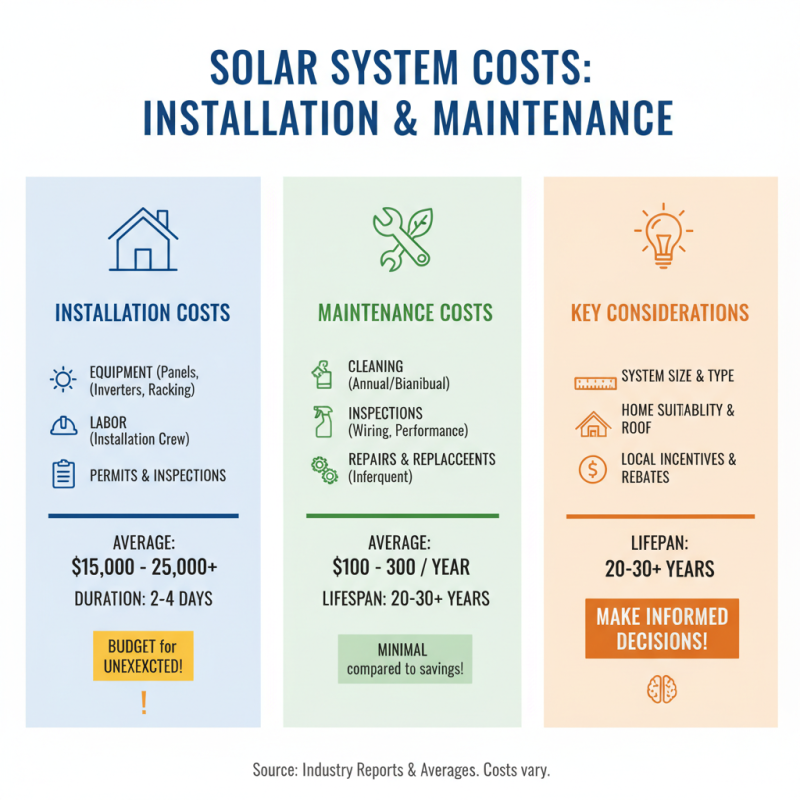
When considering solar power for your home, installation and maintenance costs are crucial. Understanding these expenses helps make informed decisions. Installation costs typically include equipment, labor, and permits. The average cost can vary widely, but budgeting for unexpected expenses is wise. Installation may take a few days, depending on the system's complexity and your home’s requirements.
Regular maintenance is necessary to ensure optimal performance. Cleaning panels twice a year helps maintain efficiency. In some regions, snow or debris can accumulate and hinder energy production. It’s worth noting that most manufacturers offer warranties, often spanning 25 years. However, just because a system has a long warranty doesn’t mean it won’t require upkeep.
**Tips:** Always get multiple quotes from installers. This step can help you identify the best deal. Consider local incentives that may reduce initial costs. Knowledge of local regulations regarding solar installations can save you time and money. Always plan for unforeseen maintenance costs to avoid surprises later on.
Exploring Incentives and Financing Options for Solar Power
When considering solar power for your home, understanding incentives and financing options can make a big difference. Government incentives often include tax credits, rebates, and grants. These can significantly reduce the initial cost of installing solar panels. Research local programs in your area. Incentives vary widely and are not always well advertised.
Financing options are also crucial to your decision. Many homeowners explore loans or payment plans designed specifically for solar energy systems. These options spread the cost over several years. This can ease financial stress while you benefit from reduced utility bills. Look for flexible terms and low-interest rates.
Tips: Evaluate your budget and energy needs before proceeding. Understand the long-term savings of solar power versus upfront costs. Connect with local experts for insights on current incentives. This can sharpen your decision-making. Remember, going solar requires commitment, not just financially but also in terms of maintenance and energy management.
Comparison of Solar Incentives and Financing Options
This chart illustrates the different solar power incentives and financing options available for homeowners. It highlights the monetary value associated with each option, helping potential solar users make informed decisions.