2026 Top Off Grid Solar Power System for Sustainable Living?
As the demand for sustainable energy solutions rises, off grid solar power systems are gaining traction. According to the International Renewable Energy Agency (IRENA), solar energy capacity across the world reached 1,000 gigawatts in 2020. This trend is crucial for individuals seeking independence from traditional energy sources. However, experts caution that not all systems are created equal.
Dr. Emily Johnson, a leading researcher in renewable energy, emphasizes, "The future of off grid solar lies in effective integration." She highlights that while technology is evolving, many systems still face challenges regarding efficiency and sustainability. Increasing energy storage capacities and improving system designs are essential for optimizing off grid solutions.
In a world where climate change demands innovative approaches, off grid solar power systems present both opportunity and complexity. Many homeowners are eager to adopt these technologies, yet they must navigate a marketplace filled with varied options and performance standards. Balancing cost, efficiency, and reliability remains a vital conversation in the journey towards sustainable living.
2026 Market Trends in Off Grid Solar Power Systems
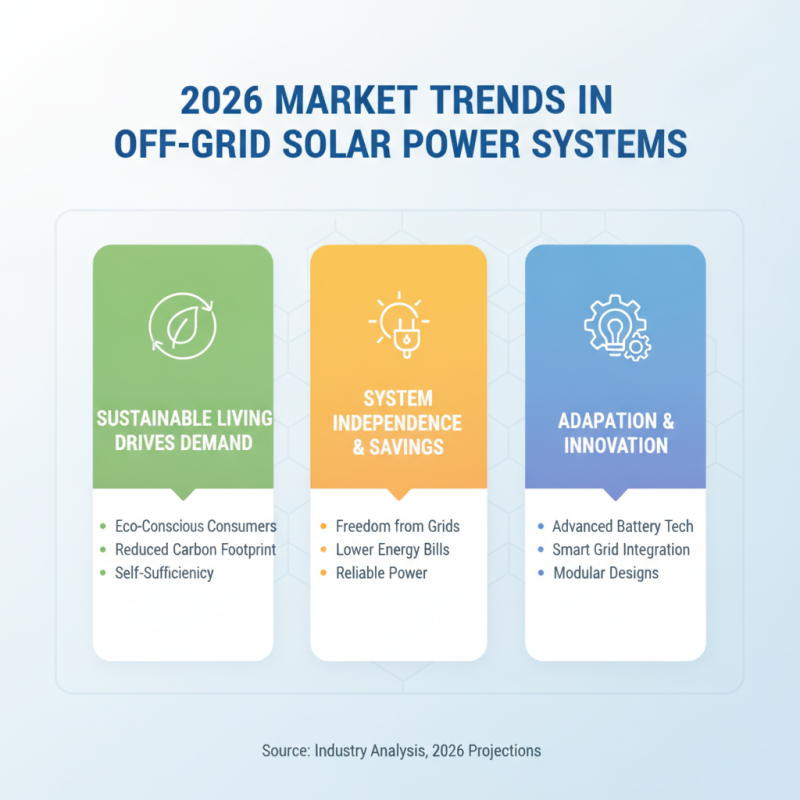
The demand for sustainable living is driving changes in off-grid solar power systems. In 2026, we can expect several market trends to emerge. These systems offer independence from utility grids and reduce reliance on fossil fuels. However, this shift requires careful planning and adaptation.
One key trend is the increase in solar battery storage solutions. As technology improves, these batteries become more efficient and affordable. Homeowners can store energy for use during nighttime or cloudy days. However, the initial investment can be high, prompting some to reconsider their energy needs.
Tips: Before investing, assess your energy consumption carefully. This approach ensures you select the right system size that complements your lifestyle. Additionally, consider local regulations about off-grid installations, which can vary significantly. Researching these aspects can prevent future complications.
Another emerging trend is the integration of smart technology with off-grid systems. Smart meters and controllers can optimize energy use. They help households manage their power more efficiently. Nevertheless, integrating these technologies requires a learning curve that many may find overwhelming.
Tips: Start small with smart devices to gauge their impact. Monitor your energy use closely for better decision-making. Embrace the technology gradually to avoid frustration and maximize savings as you adapt to off-grid living.
Key Components of Off Grid Solar Power Systems for Sustainable Living
Off-grid solar power systems are revolutionizing sustainable living. They allow individuals to harness renewable energy without relying on traditional utility grids. This independence promotes eco-friendliness and self-sufficiency, key tenets of sustainable lifestyles. To get started, it's crucial to understand the essential components of these systems.
Solar panels are the heart of any off-grid system. They convert sunlight into electricity, providing essential energy for homes. Pairing these panels with a quality inverter transforms the direct current into usable alternating current. Battery storage follows, storing excess energy for later use. Without sufficient storage, energy needs during nighttime or cloudy days may fall short. An often-overlooked aspect is the charge controller, which ensures batteries are not overcharged, prolonging their lifespan.
A well-rounded off-grid solar system must account for energy consumption patterns. Estimating needs accurately informs the size of the solar array and battery bank. Mistakes in this area can lead to inefficiencies. Understandably, underestimating requirements might result in frequent power outages. Overestimating can inflate initial costs and create waste. Engaging with local experts can help assess energy needs effectively. A tailored approach is always more reliable in achieving sustainable living goals.
Efficiency Ratings and Performance Metrics for Solar Panels in 2026
In 2026, the solar power landscape is evolving rapidly. Efficiency ratings for solar panels have improved significantly. Many solar panels now achieve over 22% efficiency, making them highly effective for off-grid systems. This increase in efficiency is essential for sustainable living. Homeowners are showing great interest in these improvements.
Performance metrics are also critical. Factors like temperature coefficient and degradation rates impact long-term performance. A lower temperature coefficient means better performance in heat. Panels with a degradation rate under 0.5% per year promise longevity. Reliable metrics help consumers make informed decisions.
However, not all solar solutions are perfect. Some systems still underperform in shaded conditions. Additionally, installation quality can greatly affect outcomes. A well-installed system can harness more energy, while a poorly installed one may need frequent repairs. As technology progresses, users must remain vigilant. Understanding these nuances is key to fully utilizing solar energy.
2026 Top Off Grid Solar Power System for Sustainable Living
| Solar Panel Type |
Efficiency (%) |
Power Output (W) |
Temperature Coefficient (%/°C) |
Warranty (Years) |
| Monocrystalline |
20.4 |
350 |
-0.34 |
25 |
| Polycrystalline |
18.3 |
300 |
-0.37 |
20 |
| Thin-Film |
15.0 |
250 |
-0.40 |
15 |
| Bifacial |
22.0 |
400 |
-0.30 |
30 |
Cost Analysis: Investment Vs. Savings in Off Grid Solar Solutions
The shift towards off-grid solar power systems is not just a trend; it’s a necessity for sustainable living. According to the Solar Energy Industries Association, residential solar installations have surged by over 30% in recent years. However, potential users must assess the cost-effectiveness of these systems. Initial investments can range from $10,000 to $40,000, depending on system size and installation. Energy savings can yield a return on investment within 5 to 10 years, significantly lowering future electricity bills.
When considering off-grid solar solutions, it’s vital to analyze the long-term benefits versus initial expenses. A study by the National Renewable Energy Laboratory shows that homeowners could save over $20,000 in energy costs across twenty years. However, factors like installation quality and regional sunlight availability can impact savings. Understanding these variables is critical.
**Tip:** Research local solar incentives to maximize your savings. Every dollar saved on installation costs adds to your eventual ROI.
Evaluating the financial aspects requires reflection. Many underestimate maintenance costs, which can average around $800 annually. This oversight could lead to unexpected budget strain. Take the time to calculate your unique needs to avoid potential pitfalls.
**Tip:** Consider consulting a local solar expert to discuss tailored solutions for your home. Investing in reliable guidance can lead to better decisions.
Impact of Off Grid Solar Power on Carbon Footprint and Energy Independence
Off-grid solar power systems play a crucial role in reducing our carbon footprint. By harnessing sunlight, these systems generate clean energy. This process diminishes reliance on fossil fuels. Each solar panel contributes to a greener planet while providing sustainable power. Many households are now embracing this lifestyle.
The impact on energy independence is significant. When a household generates its own electricity, it can cut ties with traditional energy providers. This shift fosters self-sufficiency. However, challenges remain. High upfront costs can deter some families from switching. Storage solutions, such as batteries, may also increase expenses.
Transitioning to off-grid systems requires careful planning. Not all locations receive equal sunlight. Some may face efficiency issues during cloudy days. It’s essential to conduct a site assessment before installation. Sustainability is a journey, with many lessons learned along the way. As we embrace renewable energy, continuous adaptation is key.