MH Energy       Your Better Solar and Energy Partner

Leave Your Message

China Top Solar Kit Manufacturers and Suppliers

China’s solar supply chain includes manufacturers and suppliers serving homes, farms, workshops, and remote facilities. A Solar Kit may combine panels, an inverter, mounting hardware, cables, and battery storage. Yet kit contents vary widely. Buyers should compare the actual bill of materials, not just the product name.

This guide introduces China-based solar kit companies and explains what to examine before requesting a quotation. We focus on practical details: panel output, inverter type, battery chemistry and capacity, connector compatibility, warranty terms, and available technical support. Ask whether listed power describes peak panel output or usable system capacity. That distinction matters when a pump runs at dawn or a refrigerator cycles overnight. Small details count.

Supplier evaluation also requires evidence. Review product datasheets, factory or quality documentation, sample policies, lead times, and spare-part arrangements. Confirm that stated certifications apply to the exact model and destination market; names on a website are not enough. Where possible, request a system diagram and written confirmation of included components. Check the fine print. These steps are useful, though they cannot remove every risk.

No directory stays perfect for long. Product lines change, and a supplier’s strengths may differ by project size or climate. Use this overview as a starting point, then verify current specifications directly with each company. Careful comparison can help buyers find a Solar Kit that matches real loads, installation conditions, and service expectations—not merely an attractive price.
China Top Solar Kit Manufacturers and Suppliers

What Solar Kits Include and How They Work

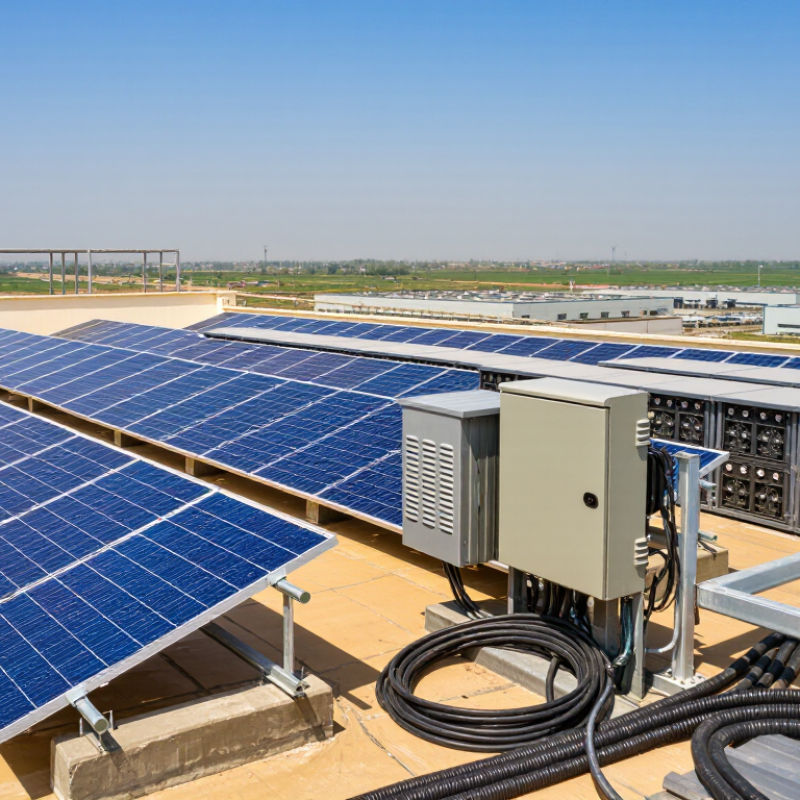
A solar kit usually combines photovoltaic panels, an inverter, mounting hardware, cables, and connection components. Some packages also include a battery and charge controller. The exact contents depend on whether the system connects to the grid or operates independently. Grid-connected kits convert panel output into electricity for compatible household circuits. Off-grid kits store excess power in batteries for later use. Small details matter. Cable length, roof angle, and available sunlight can affect performance. A kit’s listed capacity is not a promise of equal daily output.

When sunlight reaches the panels, they produce direct-current electricity. The inverter changes it into alternating current for common appliances. In battery systems, a controller manages charging and helps protect the storage unit. On a clear afternoon, a system may generate more than a home uses; cloudy weather can reduce production. It is easy to focus on panel wattage alone, but inverter limits and battery capacity also shape what the kit can support. Before choosing components, estimate daily use and note which appliances must keep running. These estimates are imperfect, especially when household habits change.

China Top Solar Kit Manufacturers and Suppliers - What Solar Kits Include and How They Work
Solar kit contents depend on the system type and application. The overview below describes common configurations; confirm component ratings and compatibility for each project.
Solar kit type Typical components How it works Common applications Important checks
Grid-tied rooftop kit PV modules, grid-interactive inverter, mounting hardware, DC and AC cables, and required electrical protection and disconnects. Modules generate DC electricity. The inverter converts it to grid-compatible AC for on-site use; surplus electricity may be exported where permitted by local rules. Homes, commercial buildings, and other sites connected to a utility grid. Check roof condition, shading, inverter and module electrical compatibility, local interconnection requirements, and whether backup power is needed. Standard grid-tied systems generally shut down during a grid outage for safety.
Off-grid kit with battery storage PV modules, charge controller or compatible inverter-charger, battery, off-grid inverter, mounting hardware, cables, and protective devices. The controller manages charging from the modules. The battery stores energy, and the inverter supplies AC power to compatible loads. System capacity depends on available sunlight, storage, and load demand. Remote buildings, cabins, and sites without a utility connection. Size the battery for energy use and desired autonomy; verify battery voltage, inverter output, surge capacity, temperature limits, and provisions for backup generation if required.
Hybrid solar kit PV modules, hybrid inverter, battery (if included), mounting hardware, cabling, metering, and electrical protection. The hybrid inverter manages solar generation and can coordinate energy use among loads, a battery, and the grid. Backup operation depends on the inverter design, battery configuration, and installation. Grid-connected properties seeking storage, backup capability, or flexible energy management. Confirm backup output and transfer behavior, battery compatibility, export settings, and which circuits can operate during an outage.
Solar water-pumping kit PV modules, a compatible pump and controller, mounting structure, cables, and optional water storage or level sensors. Solar electricity powers the pump through its controller. Water can be pumped when sunlight is available and stored in a tank for later use; batteries are not always necessary. Irrigation, livestock watering, and water supply at suitable remote sites. Match the pump to the required flow, total pumping head, water source, and daily demand. Check dry-run protection and controller compatibility.
Portable solar kit Portable PV panel or panels, charge controller or power station, battery in some configurations, and connection leads. The panel converts sunlight into electricity for compatible devices or for charging a battery. Actual output varies with sunlight, panel orientation, temperature, and connected equipment. Camping, mobile use, and small backup-power needs. Check connector type, voltage limits, device power requirements, battery capacity, and whether the rated panel output meets the intended use.
Components to verify in any kit Module datasheets, inverter or controller specifications, mounting design, cable sizes, protection devices, installation instructions, and warranty documentation. Each component must be electrically and mechanically suitable for the system. Protection, grounding, and installation should follow applicable codes and qualified-person requirements. All residential, commercial, off-grid, and portable systems. Confirm what is included and excluded, system voltage and power ratings, applicable certifications, delivery scope, after-sales support, and local compliance requirements.
Note: A solar kit’s stated power rating is not a guarantee of daily energy production. Output depends on sunlight, orientation, shading, system losses, weather, and installation conditions.

China’s Solar Kit Manufacturing Landscape

China’s solar kit manufacturing landscape rests on a connected supply chain. It spans polysilicon, wafers, cells, modules, inverters, and mounting hardware. The IEA’s 2022 report, Solar PV Global Supply Chains, estimated China held over 80% of global manufacturing capacity across key solar PV stages. This concentration supports large-scale sourcing and can shorten procurement cycles. But scale is not a quality certificate. Buyers should verify component specifications, warranty terms, and compatibility before ordering.

Small details matter.

Deployment figures show the industry’s scale. IRENA’s Renewable Capacity Statistics 2024 recorded about 217 GW of new solar capacity in China during 2023. That manufacturing base can serve varied projects, from compact rooftops to larger installations. Yet national capacity says little about one kit’s field performance. Connector fit, cable length, inverter settings, and local support can still delay installation. A pallet may arrive complete; one mismatched bracket can stop work. This happens.

The cited reports track capacity, not kit-level reliability, so supplier audits and sample testing remain useful. Market growth is impressive, though consistency still deserves scrutiny.

Leading Chinese Solar Kit Manufacturers and Suppliers

China’s solar-kit supply base includes manufacturers and suppliers of modules, inverters, batteries, mounting hardware, and monitoring equipment. IEA PVPS’s Trends in Photovoltaic Applications 2024 estimated that global solar installations reached at least 456 GW in 2023, with China contributing about 277 GW. This scale supports broad component availability, but it does not make every kit equally suitable.

Leading Chinese solar kit manufacturers and suppliers should be assessed on system compatibility, traceable test reports, warranty terms, and technical support. The IEA’s Renewables 2024 report projects that China will account for nearly 60% of global renewable capacity expansion through 2030. That growth signals strong production capacity, not automatic quality. Ask for a complete bill of materials, inverter-battery compatibility details, and clear shipping and replacement procedures. Specifications do not tell the whole story.

For buyers, practical checks matter. Confirm that the kit’s rated output matches local sunlight, roof space, and expected loads. Review connector types, cable lengths, and mounting instructions before ordering; small mismatches can delay installation. Request sample documentation and verify it against independent test records where possible. A neat datasheet is not proof of reliable field performance. Supplier comparisons can also get messy when kit contents differ. Keep the evaluation specific.

How to Compare Product Quality, Certifications, and Support

Comparing solar kit suppliers in China requires more than checking wattage and price. IRENA’s Renewable Capacity Statistics 2024 reports that global solar capacity grew by 345.5 GW in 2023. That rapid expansion makes traceable product quality especially important. Request model-specific IEC 61215 and IEC 61730 test documentation, then confirm the certificate matches the exact module offered. A certificate is not a crystal ball. Check the bill of materials, serial-number traceability, and warranty terms, too.

For a practical comparison, ask suppliers for recent production-lot inspection records and test results for power output, insulation, and temperature performance. Inspect the inverter’s protection features and the kit’s cables, connectors, and mounting hardware as a complete system. Small details matter. A mismatched connector or unclear warranty can complicate installation and service. Ask who handles technical questions, how quickly replacement parts ship, and whether manuals include clear wiring diagrams. Ask for evidence.

Support quality is easier to judge with specific questions. Request an example troubleshooting procedure and response-time commitment, then see whether answers are precise or vague. Compare English documentation, installation guidance, and spare-parts availability for your destination market. ISO 9001 certification can indicate a documented quality-management system, but it does not guarantee every shipment is defect-free. I would still verify sample units independently; paperwork can look reassuring while field support remains untested.

How to Source Solar Kits from China

Sourcing solar kits from China starts with a precise bill of materials, not a low headline price. Define the system’s intended use, output, voltage, storage needs, and installation environment. IRENA’s Renewable Capacity Statistics 2024 reports that global solar capacity grew by 346 GW in 2023, with China adding 216.9 GW. That scale offers buyers many supplier options, but does not guarantee consistent kit quality.

Request a component-by-component quotation covering panels, inverter, battery, cables, connectors, mounting hardware, and manuals. Confirm model numbers, rated power, test reports, packaging dimensions, lead time, and warranty terms in writing. Ask for recent production photos or a sample inspection before approving a large order. Compare the delivered cost, not just the factory price; freight, spare parts, and replacement handling can change the calculation. A polished datasheet can still leave gaps.

Tips: Match every quoted component to the final packing list. Check that connectors and cables fit the system design, and ask how damaged units are documented. Keep one approved sample for comparison. Small details matter. I would still treat estimated output cautiously, because shading, temperature, and installation angle can reduce real-world performance.

China’s Share of Global Solar PV Manufacturing Capacity

A supply-chain snapshot to inform solar kit sourcing decisions. China held a significant share of global capacity across key PV manufacturing stages in 2021.

When sourcing solar kits, compare suppliers on product specifications, certifications, traceability, warranty terms, and quality-control processes—not manufacturing location alone. Source: International Energy Agency (IEA), Solar PV Global Supply Chains (2022); figures show approximate shares of global manufacturing capacity in 2021.