MH Energy       Your Better Solar and Energy Partner

Leave Your Message

10 Off Grid Solar Power System Tips for Buyers

Choosing an Off Grid Solar Power System is less about buying the biggest panels and more about matching equipment to daily use. A refrigerator humming overnight, a well pump starting at dawn, and several cloudy days can quickly expose an undersized battery bank. Buyers should check their actual energy consumption, peak loads, local sunlight, and backup plan before comparing prices. Small details matter.

The International Energy Agency’s Renewables 2024 report projects solar PV will provide nearly 80% of global renewable capacity growth through 2030. That trend expands product choice, but it does not guarantee every system suits remote homes. BloombergNEF’s 2024 Battery Price Survey reported an average lithium-ion battery pack price of $115 per kilowatt-hour, down 20% from 2023. That matters. Pack prices are not installed off-grid storage prices; inverters, controls, installation, and safety equipment add costs.

The ten tips below focus on practical buying checks: usable battery capacity, inverter surge ratings, panel output, warranties, system compatibility, and dependable local support. Ask for written assumptions behind production estimates, especially winter sunlight and expected loads. A polished quote can still hide weak sizing. I have seen buyers focus on panel wattage while overlooking battery limits; it is an easy mistake, and one worth reconsidering. These checks cannot replace a qualified site assessment, but they can help buyers ask sharper questions and compare proposals more reliably.
10 Off Grid Solar Power System Tips for Buyers

Define Your Energy Needs and Off-Grid Lifestyle

Before choosing an off-grid solar system, write down what you actually use each day. List each appliance, its wattage, and hours of use. A refrigerator cycling overnight, a water pump running briefly, and a kettle used at breakfast create very different loads. Start with measurements. The U.S. Energy Information Administration’s 2020 Residential Energy Consumption Survey reported average household electricity use of 10,566 kWh per year. That figure is a reference point, not a target: an off-grid cabin with efficient appliances may need far less, while electric cooking or heating can raise demand sharply.

Think through your routine across seasons, not just a sunny weekend. Note when people are home, how often laundry runs, and whether cloudy winter days affect lighting or heating. Separate essential loads from comforts. Could you delay laundry until the solar array is producing well? Would you tolerate switching off a nonessential appliance during several overcast days? Comfort has a cost. Be honest about it.

Use a simple load sheet to estimate daily watt-hours, then account for inverter losses and the battery reserve you want. NREL’s PVWatts Calculator can estimate solar production by location and month, helping you compare summer abundance with weaker winter output. Treat its results as estimates, not promises; shade, snow, and installation angle matter. I have seen plans built around a single “average” day, and that assumption often feels too optimistic. Check your numbers against real utility bills or a plug-in energy meter before buying.
Assess Solar Panel Output and Site Conditions

A panel’s rated wattage is a laboratory figure, not a promise of daily energy. Estimate production using the array’s total kilowatts, local peak-sun hours, and a realistic allowance for system losses. A planning factor around 0.75 can be a useful starting point, but site-specific data is better. Check the assumptions.

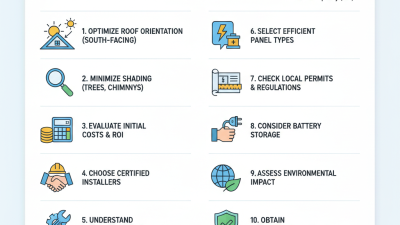
Walk the proposed site at different times of day. A chimney may cast a narrow shadow in winter, while nearby trees can shade panels for hours. Note the roof’s direction, tilt, usable area, and any seasonal changes. Small shadows matter.

Use a solar resource map or local weather records to compare summer and winter sunlight. Off-grid systems must serve the leaner season, not just sunny weekends. A simple log of shade and sunlight can reveal gaps that an afternoon visit misses. I would not trust one quick estimate.

Ask for expected daily energy, not only panel wattage, and check whether the estimate includes wiring, temperature, and inverter losses. Compare that output with measured household use, including pumps, refrigeration, and occasional high-demand tools. Leave room for cloudy stretches. Underestimating is easy.

10 Off Grid Solar Power System Tips for Buyers - Assess Solar Panel Output and Site Conditions

Tip What to Assess Practical Benchmark Buyer Action
1 Estimate daily electricity use Add the watt-hours used by each appliance over a typical day. A 100 W device running for 5 hours uses 500 Wh. List essential and optional loads separately, and use measured consumption where possible.
2 Check local peak sun hours Peak sun hours vary by location, season, weather, and orientation. Use a site-specific monthly solar resource estimate rather than assuming a fixed daily value. Size the system for the lower-sun months when reliable year-round power is required.
3 Estimate panel energy output A 400 W panel receiving 4–6 peak sun hours may produce roughly 1.2–1.9 kWh per day after allowing for typical system losses; actual output varies with conditions. Compare estimated production with daily energy use and include a realistic allowance for losses.
4 Inspect shading throughout the day Shade from trees, buildings, chimneys, or terrain can reduce output. The impact depends on the shade pattern and the system design. Check the proposed panel area in the morning, around midday, and in the afternoon, including seasonal changes.
5 Evaluate roof or ground-mount orientation Panel direction and tilt affect annual and seasonal production. The best orientation depends on location and site constraints. Ask for an output estimate based on the actual direction, tilt, and mounting location—not an idealized layout.
6 Review available installation area Panels need clear space, suitable structural support, and access for inspection and maintenance. Required area depends on panel dimensions and layout. Confirm usable dimensions, obstructions, roof condition, and required clearances before choosing system capacity.
7 Account for temperature and ventilation Panel output generally decreases as cell temperature rises above the conditions used for its rated power. Allow for airflow behind modules and use temperature-adjusted production estimates for hot-weather sites.
8 Match battery capacity to autonomy needs Usable battery energy depends on the battery chemistry, permitted depth of discharge, and system settings. Several days of backup require more storage. Specify how many days of essential-load backup are needed and compare usable—not just nominal—capacity.
9 Check inverter capacity and surge loads Motor-driven appliances, pumps, and compressors may briefly draw more power at startup than during normal operation. Compare continuous and surge ratings with the loads that may run at the same time.
10 Plan for seasonal shortfalls and maintenance Cloudy periods, snow, dust, and seasonal sun changes can reduce generation; off-grid systems may need load management or backup generation. Ask for monthly production estimates, a maintenance plan, and a clear strategy for extended low-sun periods.

Size Batteries and Inverters for Reliable Power

Reliable off-grid power starts with a clear picture of your daily use. Add the watt-hours for essentials such as a refrigerator, lights, water pump, and router. Then decide how long the system must run without sun. A battery rated at 5,000 watt-hours may provide less usable energy after reserve limits and conversion losses. Cold weather can reduce performance, too. Leave breathing room; estimates are rarely perfect.

Tips: Check both usable battery capacity and inverter output. Match the inverter’s continuous rating to appliances running together, then check its surge rating for motor startup. A pump can briefly draw much more power than its label suggests. Ask for the surge duration, not just the peak number.

For battery sizing, divide the energy you need by the usable share of the battery, then allow for inverter losses. For example, 3,000 watt-hours of daily loads may require a larger bank than 3,000 watt-hours of rated capacity. Keep a simple load log for several days before buying. It may reveal that a small heater or an old freezer changes the whole plan. Recheck the design if your usage changes; oversizing everything is costly, but sizing too tightly can mean dim lights on a cloudy evening.

Check Component Compatibility and Future Expandability

Before buying an off-grid solar power system, check that its components share compatible electrical specifications. The battery bank, inverter, and charge controller must support the same system voltage. A mismatch can limit performance or damage equipment. Check the controller’s maximum solar-input voltage and current against the panels’ combined output, including cold-weather voltage increases. Small details matter.

Tip: Leave room to grow. Ask whether the inverter can handle a future increase in essential loads, such as a well pump or freezer. Confirm that the battery chemistry and management system allow additional batteries, and whether new units must match the original model, age, and capacity. Expansion may require more than adding panels.

Plan around real measurements, not optimistic estimates. List each appliance’s running watts and startup demand, then compare daily energy use with the battery’s usable capacity. Check cable sizes, fuses, and connection limits before increasing array or battery capacity; existing wiring can become the weak point. I have seen expansion plans stall because one small controller could not accept another panel string. That is easy to overlook. Ask for written compatibility limits and a clear upgrade path, while allowing space for extra equipment and safe ventilation. A little spare capacity helps, but buying far more system than your needs justify can waste money.

Off-Grid Solar Buying Tip: Match System Voltage

At the same 1,000-watt output, a higher nominal system voltage requires less DC current: about 83.3 A at 12 V, 41.7 A at 24 V, and 20.8 A at 48 V. These figures use I = P ÷ V and exclude losses, so real current will be higher. Before buying, confirm that the battery, charge controller, and inverter support the same system voltage, and check that your chosen components can accommodate planned expansion.

Compare Costs, Warranties, Installation, and Safety Rules

For an off-grid solar system, compare complete, itemized bids—not just panel prices. Include batteries, inverter, mounting, wiring, freight, labor, and future replacement costs. IRENA’s Renewable Power Generation Costs in 2023 report puts global utility-scale solar installation costs at about $758 per kilowatt. Not a household quote. Off-grid homes need storage and often backup generation, so that benchmark cannot predict your final price. A spreadsheet can look precise; cloudy-week demand rarely is.

Check warranty details line by line. Ask how long panels, batteries, and inverters are covered, and what capacity remains guaranteed after a stated number of years or cycles. Confirm whether labor, shipping, and replacement parts are included. A long warranty can still leave gaps. Compare quotes using the same daily energy use and autonomy, such as two cloudy days. Small details matter.

Installation quality affects both performance and safety. Request a load calculation, battery location plan, and written commissioning checklist. Confirm the installer follows local electrical and fire rules; requirements vary by location. Ask whether the battery system is certified to applicable safety standards, such as UL 9540 where accepted, and includes suitable disconnects and overcurrent protection. Keep clear access to shutoffs. Have a qualified professional inspect the final wiring. I’d allow extra capacity, but not guess blindly.