MH Energy Your Better Solar and Energy Partner

Leave Your Message
MH Energy Your Better Solar and Energy Partner
Choosing the right solar setup is not simply a matter of buying the highest-rated panels. A suitable Solar Panel System Home must match your roof, electricity use, local climate, and future plans. A small family may need different equipment than a home with an electric vehicle, heat pump, or pool pump. Real decisions begin with real measurements.
Look at your last twelve months of utility bills. Note the highest monthly usage, not only the annual average. Then inspect the roof at different times of day. Chimneys, nearby trees, and even seasonal shadows can reduce production. A qualified installer should check roof strength, panel orientation, inverter capacity, battery needs, and expected system output. Ask for written estimates, equipment warranties, maintenance terms, and clear information about energy savings. Trustworthy advice includes limitations.
Numbers matter.
Battery storage can improve evening energy use, but it also increases the purchase price and may require replacement planning. Grid connection rules, incentives, and installation standards vary by location, so verify them with local authorities and licensed professionals. Online calculators are useful, but they can simplify complex conditions. They may not reflect dust, snow, shading, or changing household demand. That is where careful judgment matters. This guide will compare panel types, system sizes, costs, batteries, installers, and long-term performance. It will not promise perfect savings. Solar technology is valuable, but the best choice is usually the one that fits your home honestly, safely, and financially.
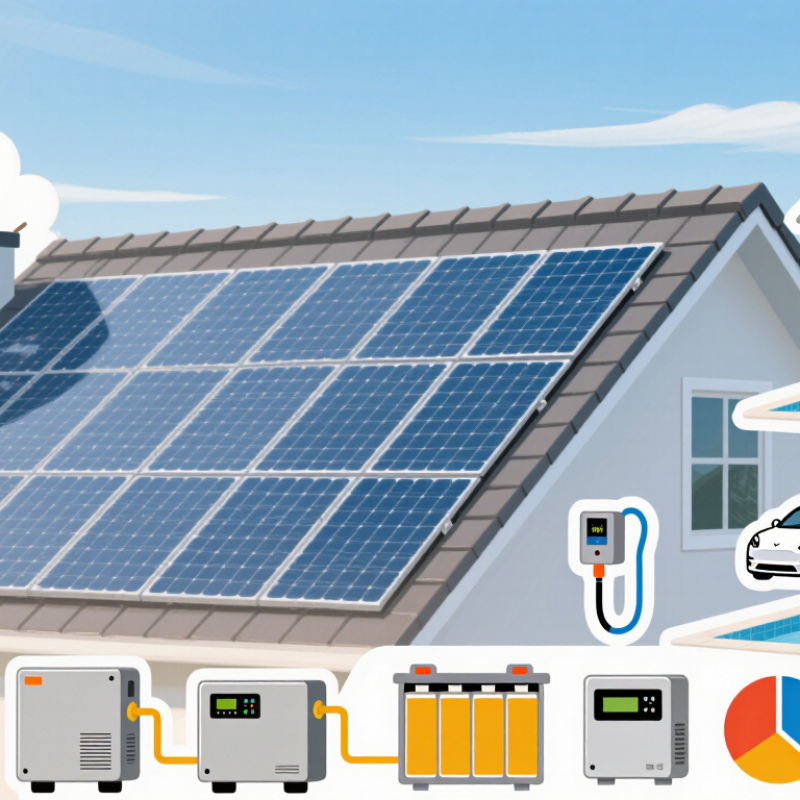
Choosing a home solar panel system starts with understanding how each part works. Panels convert sunlight into direct current electricity. An inverter changes it into usable household power. Batteries store extra energy for evening use or outages. A monitoring device tracks production and consumption.
Your electricity bills reveal the system’s likely size. Review twelve months, not one unusually high bill. Note seasonal heating, cooling, and appliance changes. Roof direction, pitch, age, and shade also matter. A chimney or nearby tree can reduce output during key hours. In the northern hemisphere, south-facing roofs often receive strong sunlight, but other orientations can still work. Do not estimate from roof area alone. Measure usable space and check local safety clearances.
An installer should inspect the roof, electrical panel, wiring, and connection requirements before giving a final design. Ask for expected annual production, equipment warranties, maintenance needs, and realistic battery performance. An unusually confident forecast deserves questions. The perfect setup does not exist. A smaller system may fit a limited budget, while a larger system could support future electric appliances. Permit rules, utility approval, and local sunlight conditions can change the final cost. Keep copies of every contract, inspection record, and performance estimate. A simple roof sketch can expose overlooked vents, weak sections, or afternoon shade. That detail may prevent an expensive redesign.
| Home Solar System Factor | What It Means | Typical Residential Range | How to Evaluate It | Why It Matters |
|---|---|---|---|---|
| System Size | The total rated capacity of the solar array under standard test conditions. | 3 kW to 12 kW for many homes | Review at least 12 months of electricity bills and compare annual consumption with local solar-production estimates. | A correctly sized system can reduce electricity purchases without creating unnecessary upfront cost. |
| Panel Count | The number of photovoltaic modules required to reach the selected system capacity. | Approximately 8 to 30 panels when using 400-watt panels | Divide the target system size in watts by the panel wattage, then round up to a whole panel. | Panel count affects roof layout, installation time, wiring, and available expansion space. |
| Annual Energy Production | The electricity expected to be generated by the system over one year. | About 3,000 to 18,000 kWh per year for a 3 kW to 12 kW system, depending on location and design | Use a site-specific estimate that accounts for solar irradiation, roof direction, tilt, shading, temperature, and system losses. | Production—not just rated capacity—determines how much household electricity the system can offset. |
| Roof Area | The usable roof surface needed for panels, setbacks, access paths, and equipment. | Roughly 160 to 650 square feet for 3 kW to 12 kW using standard residential panels | Exclude skylights, chimneys, vents, heavily shaded sections, and areas that cannot meet local access or fire-safety requirements. | A large roof does not always provide enough usable, shade-free area for the desired system. |
| Roof Orientation | The direction the roof surface faces relative to the sun. | South-facing is often favorable in the Northern Hemisphere; north-facing is often favorable in the Southern Hemisphere | Compare all suitable roof planes rather than selecting a direction based only on compass orientation. | Orientation influences daily production and may affect the number of panels needed. |
| Roof Tilt | The angle at which the panels are installed relative to horizontal. | Many pitched residential roofs fall within approximately 15° to 45° | Use the existing roof angle when practical, or evaluate whether a mounting adjustment improves output enough to justify additional cost. | Tilt affects annual solar exposure, wind loading, drainage, and mounting requirements. |
| Shading Exposure | The amount of sunlight blocked by trees, buildings, chimneys, or roof structures. | Best performance generally comes from minimal shade during peak solar hours | Check seasonal shade patterns, especially in winter when the sun is lower and shadows are longer. | Partial shading can reduce energy production and may require a different electrical design. |
| Panel Efficiency | The percentage of sunlight converted into electricity by a panel under standardized conditions. | Approximately 19% to 23% for many current residential panels | Compare efficiency together with rated power, physical dimensions, temperature behavior, warranty terms, and installed cost. | Higher efficiency can provide more power where roof space is limited, but it is not the only measure of value. |
| Inverter Configuration | The equipment that converts direct current from the panels into alternating current used by household circuits. | String inverter, power electronics at each panel, or a combination of both | Consider roof complexity, shading, monitoring needs, maintenance access, and the possibility of future battery integration. | Inverter design affects system performance, monitoring, expansion options, and conversion losses. |
| Battery Storage | A rechargeable battery that stores surplus solar electricity for later use. | Common residential usable capacities range from approximately 5 kWh to 20 kWh | Base capacity on evening and overnight electricity use, backup objectives, critical loads, and local solar-production patterns. | A battery can increase self-consumption and provide backup, but it adds cost, space requirements, and energy losses. |
| Grid Connection | The relationship between the solar system, the public electricity grid, and the utility meter. | Grid-connected, hybrid, or off-grid | Confirm interconnection rules, export limits, meter requirements, and whether grid power remains available during an outage. | Most grid-connected systems shut down during an outage unless they include approved backup equipment and storage. |
| Energy Offset | The percentage of annual household electricity use supplied by the solar system. | Often about 30% to 100%, depending on system size, consumption, roof conditions, and local rules | Compare estimated annual production with annual household consumption rather than matching only the highest monthly bill. | Seasonal production and consumption differences mean that a system may not eliminate every electricity bill. |
| System Degradation | The gradual reduction in panel power output over time. | Many panels are designed to retain approximately 80% to 90% of their initial rated output after 25 to 30 years | Read the performance warranty for the stated first-year loss, annual degradation rate, and end-of-term output. | Lower degradation can support more predictable long-term energy production. |
| Installation and Permits | The structural, electrical, inspection, and administrative work required to operate the system legally. | Requirements vary by location and may include permits, utility approval, inspections, and roof assessment | Confirm who handles engineering documents, permits, inspections, interconnection, and final commissioning. | Incomplete approvals can delay activation or prevent the system from being connected to the grid. |
| Maintenance Needs | The routine care required to keep the system operating effectively. | Generally low; periodic visual checks, monitoring, and occasional cleaning may be appropriate | Monitor production alerts, inspect for visible damage, and arrange professional service when faults or unusual output appear. | Early detection of inverter, wiring, or production problems can reduce downtime and repair costs. |
| Best Selection Approach | A balanced decision based on energy needs, property conditions, equipment, finances, and future plans. | Prioritize reliable production, suitable design, transparent pricing, and documented warranties | Obtain multiple site-specific proposals and compare annual production, total installed cost, warranty coverage, battery assumptions, and estimated payback. | The best system is not necessarily the largest or most efficient; it is the one that fits the home and household goals. |
Note: Energy production, roof requirements, financial returns, and permitting rules vary by location. The ranges shown are general residential planning values and should be verified with a site-specific assessment.