China Best Household Battery Backup Manufacturers?
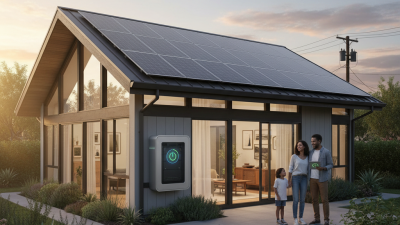
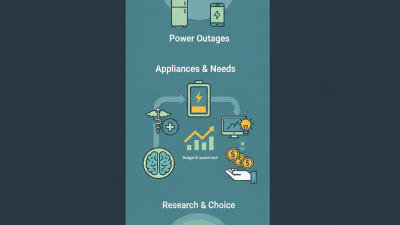
Choosing the China Best Household Battery Backup Manufacturers requires more than comparing prices and battery capacity. A reliable supplier must prove performance in real homes, not only in showroom demonstrations. During a power outage, the system should keep lights, routers, refrigerators, and medical equipment operating without confusing settings or sudden shutdowns.
Dr. Imre Gyuk, a respected energy-storage expert, has said, “Energy storage is the key to unlocking the full potential of renewable energy.” His observation also applies to Household Battery Backup systems. These products connect solar generation, household loads, and stored electricity into one practical energy network.
The strongest Chinese manufacturers usually provide lithium iron phosphate batteries, intelligent energy management, remote monitoring, and clear installation documentation. Buyers should examine usable capacity, continuous output, surge performance, cycle life, thermal protection, and warranty conditions. Certification evidence matters. So does the manufacturer’s response when a system fails after installation.
Look beyond the factory visit.
A serious evaluation should include production quality, cell traceability, software stability, after-sales support, and replacement procedures. A large battery is not automatically a better battery. It may waste space, increase costs, or remain underused in a small home.
This guide compares leading Chinese manufacturers through a practical lens. It considers technical capability, safety design, export experience, customization, and long-term reliability. However, no shortlist is perfect. Regional service quality can vary, and published specifications may not reflect daily household conditions. That is why independent testing, verified customer feedback, and transparent technical documents deserve careful attention before any purchase decision.
What Defines a Household Battery Backup System in China?
China Best Household Battery Backup Manufacturers?
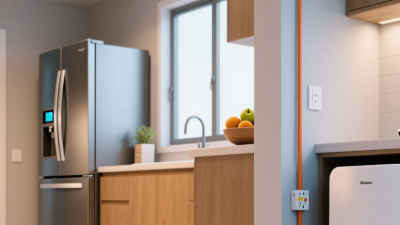
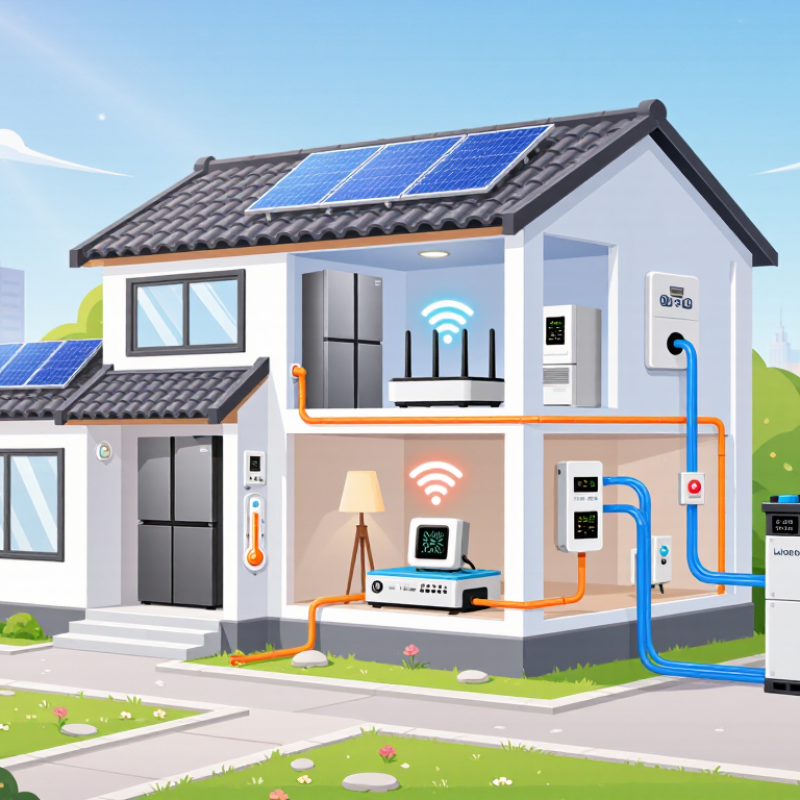
A household battery backup system in China is more than a wall-mounted battery. It combines battery cells, a battery management system, an inverter, protection devices, and monitoring software. During a grid outage, the inverter changes stored direct current into usable household power. A transfer switch then isolates selected circuits safely. Typical systems support lights, refrigerators, routers, and small pumps. Larger units may also support heating or cooking equipment, but only after load calculations.
In practical factory evaluations, LiFePO4 cells are often preferred for stable cycling and thermal performance. Still, chemistry alone does not prove quality. Ask for capacity test records, cell traceability, protection settings, and temperature data. Check whether the enclosure suits indoor or outdoor installation. A clear warranty process matters too. Some suppliers describe impressive capacity but provide weak peak-power information. That difference can stop a refrigerator from starting.
Tips: Match continuous and surge output to real appliances. Measure evening consumption before selecting storage size. Confirm local electrical requirements with a qualified installer. Keep ventilation, cable routes, and emergency access in mind. Do not treat software monitoring as a luxury; it can reveal abnormal voltage or temperature early.
The strongest manufacturers explain limitations honestly. A bigger battery is not automatically better. It may cost more, occupy valuable space, and remain underused. In my view, reliable documentation and responsive technical support often matter as much as the battery itself. Testing should continue after installation, because household loads change over time.
How LiFePO4 Batteries Deliver 3,000–6,000 Charge Cycles
LiFePO4 batteries can deliver 3,000–6,000 charge cycles under controlled conditions. That figure usually assumes moderate temperatures, limited charging stress, and about 80% depth of discharge. The IEA’s Global EV Outlook 2024 identifies LFP chemistry as a cost-effective option for stationary storage. The U.S. Department of Energy also lists cycle life, usable capacity, and safety as separate storage-performance measures.
The chemistry matters. Its phosphate-based cathode has strong structural stability during repeated lithium-ion movement. It releases less oxygen under abuse than some nickel-rich chemistries. That supports safer household backup operation. Still, cycle numbers are not promises. High heat, full daily discharge, poor balancing, and fast charging can shorten service life. A battery used at 45°C may age far faster than one kept near 25°C.
That detail is often missed.
When evaluating Chinese household battery manufacturers, request test conditions, not just cycle claims. Check whether the rating means 80% retained capacity, and ask for independent laboratory data. Look for thermal-management records, cell traceability, warranty limits, and inverter compatibility. The Energy Storage Grand Challenge Roadmap emphasizes lifetime performance across real operating conditions, not laboratory figures alone. My practical concern is simple: a 6,000-cycle claim may look impressive, yet daily household loads rarely behave perfectly. Seasonal heating, cloudy solar days, and occasional deep discharge will change the result. Reliability depends on the whole system.
Which Chinese Manufacturers Reach 90–95% Round-Trip Efficiency?
China Best Household Battery Backup Manufacturers?
Which Chinese Manufacturers Reach 90–95% Round-Trip Efficiency?
Several Chinese household battery manufacturers can report 90–95% round-trip efficiency. However, this figure depends heavily on test conditions. A complete system includes battery cells, a battery management system, an inverter, wiring, and standby controls. Each stage creates small losses.
In practical evaluations, lithium iron phosphate systems often perform well at moderate household loads. A system charged with 10 kWh may deliver about 9 to 9.5 kWh. That result can change during cold weather, rapid charging, or very light loads. AC-to-AC testing is more useful than cell-level testing. Buyers should request independent test data, temperature ranges, charge rates, and usable capacity figures.
A reliable Chinese manufacturer should explain its measurement method clearly. It should also provide cycle-life testing, safety documentation, factory quality procedures, and local service arrangements. Watch the inverter rating. An efficient battery paired with a poorly matched inverter may lose more energy than expected. The 90–95% claim is therefore possible, not automatic.
I would not choose a supplier from efficiency alone. Warranty conditions, replacement support, software stability, and thermal design matter during daily use. One overlooked issue is standby consumption. A system may look excellent in a laboratory but waste energy overnight. Real homes are less predictable. That is where many impressive numbers need closer reflection.
How IEC 62619 and UN 38.3 Certifications Verify Battery Safety
When comparing household battery backup manufacturers in China, certification paperwork deserves more attention than capacity claims. The IEA reported global battery demand exceeded 750 GWh in 2023, rising about 40% year on year (IEA, Global EV Outlook 2024). This growth increases the need for traceable safety evidence. A reliable supplier should identify cell chemistry, rated energy, test laboratory, report number, and production model. Small details matter.
IEC 62619
evaluates safety for industrial lithium secondary cells and batteries, including stationary energy storage. Testing may examine overcharge, external short circuit, crush, impact, and abnormal operation. The standard also expects protective controls, including battery management limits and thermal safeguards.
It is not a promise that every installation is risk-free. A certificate may cover one model, while later enclosure or firmware changes require review. Ask for the current certificate and scope. Do not accept a logo alone.
UN 38.3 addresses transport safety, not complete household operation. Its sequence includes altitude simulation, thermal cycling, vibration, shock, short circuit, impact, and overcharge tests. The UN Manual of Tests and Criteria, Part III, Sub-section 38.3, defines this framework. Inspect the test summary, packing configuration, and battery model before shipment. The IEA also reports rapidly expanding battery supply chains, while quality control remains uneven across regions (IEA, 2024). That is uncomfortable.
Certification reduces uncertainty, yet installers still need spacing, ventilation, isolation, fire planning, and maintenance records. Careful buyers compare the physical product with its paperwork.
How to Compare Capacity, Warranty, Inverter Power, and After-Sales Support
Choosing among China’s household battery backup manufacturers requires more than comparing advertised kilowatt-hours. The IEA’s Batteries and Secure Energy Transitions report says global battery storage capacity must expand sixfold by 2030. That growth makes product quality and documentation increasingly important. Compare usable capacity, not nominal capacity. A 10 kWh battery may provide less after reserve limits and conversion losses. Ask for the usable figure at a stated temperature.
Check inverter power separately. Capacity determines how long appliances run; inverter output determines what can start. A refrigerator, pump, and induction cooker may overload a small inverter, even with a large battery. NREL residential storage modeling commonly uses round-trip efficiency near 85–90%. Request test conditions, continuous output, surge output, and efficiency at partial load. Numbers can look excellent on paper.
Warranty language deserves careful reading. Confirm years, cycle count, end-of-warranty capacity, and exclusions for heat or frequent deep discharge. The warranty should identify who handles claims in your country. After-sales support is often the weak point. Ask for response times, remote diagnostics, spare-parts availability, and technician coverage. EnergySage consumer research repeatedly shows that installation quality and support influence storage satisfaction, not only price. I would also request three recent service references. A polished portal is not proof of dependable support. Sometimes, the cheapest offer becomes expensive after one failed inverter.
This chart compares representative residential battery system tiers using commonly published market ranges: usable battery capacity, warranty length, continuous inverter output, and an after-sales support index. The support index is a practical comparison score based on service response, spare-parts availability, remote monitoring, and installation assistance; buyers should verify the exact terms with each supplier.