MH Energy Your Better Solar and Energy Partner

Leave Your Message
MH Energy Your Better Solar and Energy Partner
China has become a major force in solar manufacturing and distributed energy. In 2023, China added approximately 216.9 gigawatts of photovoltaic capacity, according to the National Energy Administration. Its cumulative solar capacity reached about 609.5 gigawatts. These figures create a strong foundation for evaluating a Solar Power Generator made in China.
But scale does not automatically mean quality. A dependable model should balance battery chemistry, inverter efficiency, charging speed, safety systems, warranty coverage, and after-sales support. The International Energy Agency reported that solar power remained the fastest-growing renewable electricity source in 2023. IEA Executive Director Fatih Birol described solar power as “the new king of electricity markets.” His statement reflects market momentum, but portable generators still require closer testing.
Real-world performance matters. A 1,000-watt unit may run a refrigerator, lights, and a router, but not always at the same time. Cold temperatures can reduce battery output. Poor ventilation can also affect charging and lifespan. Small details matter.
Not every bright box is best.
This comparison will examine leading Chinese brands through measurable criteria, including usable capacity, continuous output, peak surge, solar input, noise, weight, battery safety, and independent certifications. Reports from the China Energy Storage Alliance and IEA provide useful industry context, while manufacturer specifications offer product-level evidence. Still, published claims can be incomplete. Testing conditions differ, and some advertised capacities are optimistic. The best Solar Power Generator is therefore not simply the largest or cheapest model. It is the unit that performs reliably when the lights actually go out.
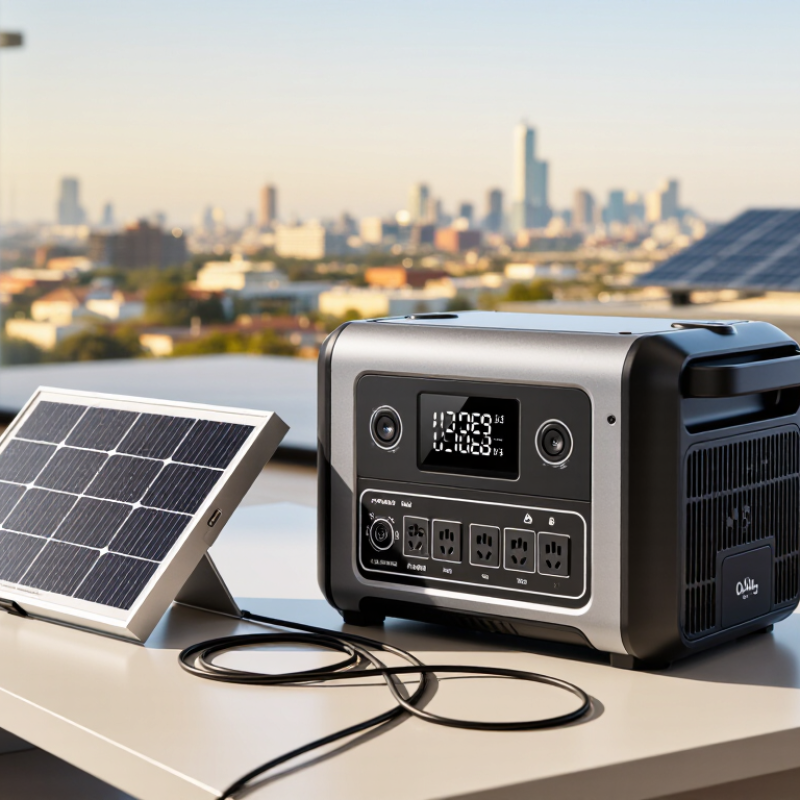
What defines the best solar power generator in China? It is not simply the unit with the largest battery or the highest advertised output. A dependable model should match local sunlight, temperature changes, and daily electricity needs. In field use, stable performance matters more than impressive numbers. Clear capacity ratings, realistic charging times, and tested output build trust.
Battery safety is essential. Look for documented protection against overheating, overcharging, short circuits, and deep discharge. A reliable generator should use a quality battery management system and an efficient inverter. Verified compliance with relevant IEC or Chinese GB standards adds confidence, but certification marks should be traceable. Do not accept unclear laboratory claims.
Practical design also defines quality. Strong handles, protected ports, readable displays, and quiet cooling improve regular use. MPPT charging can help the system collect more energy during changing sunlight. After-sales support matters in China, especially when replacement parts or repairs are needed. Warranty terms should be specific, not vague promises. No model is perfect. I would still question unusually high capacity claims, because real output often falls after inverter losses. A small, honest specification can be more useful than a larger, confusing one.
There is no single best choice for every user. The figures below are practical selection guidelines, not guarantees or specifications for any particular product. Actual performance depends on the model, operating conditions, and test method.
| Evaluation Dimension | What to Look For | Why It Matters | What to Verify |
|---|---|---|---|
| Battery capacity | Choose capacity according to the energy needs of the devices. Around 500–1,000 Wh may suit lighter use; larger loads or longer runtimes generally require more capacity. | Capacity, measured in watt-hours (Wh), indicates how much energy is stored. It does not by itself show how much power the generator can deliver at once. | Check the stated capacity in Wh and compare it with the expected energy use of connected devices. |
| Battery chemistry and lifespan | Lithium iron phosphate (LiFePO₄) is a common option when long cycle life and thermal stability are priorities. Some products specify thousands of cycles, but results vary. | Battery chemistry affects weight, usable life, charging behavior, and operating characteristics. | Read the cycle-life test conditions, including the remaining-capacity threshold, temperature, and depth of discharge. |
| Continuous AC output | Select a continuous output rating that exceeds the combined running wattage of the appliances you plan to use. Higher-power appliances may require a unit rated around 1,000 W or more. | The output rating limits the load that can run simultaneously. Motors and compressors may briefly draw more power when starting. | Distinguish continuous output from peak or surge output, and check the surge rating and duration. |
| AC compatibility | For use with standard mainland China appliances, check for 220 V AC at 50 Hz and a pure sine wave output. | Voltage, frequency, and waveform affect compatibility with appliances and sensitive electronics. | Confirm the output specifications and socket type match the intended location and devices. |
| Solar charging input | Compare the maximum solar input power and supported input-voltage range with the panels you intend to use. | A higher compatible solar input can shorten charging time in suitable sunlight, but the generator limits how much solar power it can accept. | Check maximum input watts, voltage and current limits, connector type, and whether an MPPT charge controller is specified. |
| Real-world solar charging time | Estimate charging time using battery capacity, panel output, and local sunlight rather than the panel’s rated wattage alone. | Panel output changes with sunlight, temperature, angle, shading, and system losses, so rated power is not constant throughout the day. | Look for clearly stated test conditions. As a rough estimate, divide the energy to be stored by the expected average solar input, then allow for conversion losses. |
| Ports and simultaneous use | Choose a suitable mix of AC outlets, USB-A, USB-C, and 12 V outputs for the devices you need to power. | Available ports determine which devices can connect directly; total output limits can apply across multiple ports. | Check each port’s individual rating and the maximum combined output when several ports are used. |
| Safety and operating limits | Look for documented protections such as over-temperature, over-current, over-voltage, and short-circuit protection. | Protection features help manage abnormal electrical or temperature conditions, but do not replace correct use. | Review the manual, operating-temperature range, applicable compliance information, and test documentation for the exact model. |
| Portability and durability | Balance capacity against weight, dimensions, handles, and the conditions in which the unit will be used. | Higher-capacity systems are generally heavier; outdoor suitability depends on the enclosure and environmental limits. | Check the actual weight, ingress-protection rating if provided, and any restrictions on rain, dust, or storage temperature. |
| Warranty and after-sales support | Prefer clear written coverage and accessible support for the place where the generator will be used. | Warranty length and coverage differ by product and seller, and may exclude battery wear or damage from misuse. | Read the warranty terms, service process, exclusions, and availability of replacement parts before purchase. |