MH Energy Your Better Solar and Energy Partner

Choosing the best Solar Energy For Home system in 2026 requires more than comparing panel wattage. Roof direction, local weather, electricity rates, battery needs, and installer quality can change the result. A shaded roof may produce less energy than a smaller, better-positioned system. That detail matters.
The International Energy Agency reported in Renewables 2024 that solar photovoltaic and wind power could deliver 95% of new renewable capacity added worldwide through 2030. The report also identified solar PV as the fastest-growing renewable technology. In the United States, the National Renewable Energy Laboratory’s PVWatts tool shows how system output changes with location, tilt, shading, and weather conditions. These findings support a practical approach: estimate annual production before choosing equipment.
Fatih Birol, Executive Director of the IEA, said, “Solar PV is now the cheapest source of electricity in history” (IEA, 2020). His statement explains solar’s strong market momentum, but household economics remain individual. Battery storage can improve evening energy use, yet it increases upfront cost and may not provide the fastest payback everywhere. A reputable installer should show production estimates, equipment warranties, degradation assumptions, and maintenance risks. Ask for details. Then question them.
This guide examines leading 2026 home solar systems through measurable criteria, including efficiency, durability, monitoring, storage compatibility, installation support, and total lifetime value. No system is best for every roof. That is the uncomfortable truth. Forecasts can also miss future utility prices, policy changes, and extreme weather. Reliable decisions therefore combine industry data with a property-specific assessment, not a glossy sales promise.
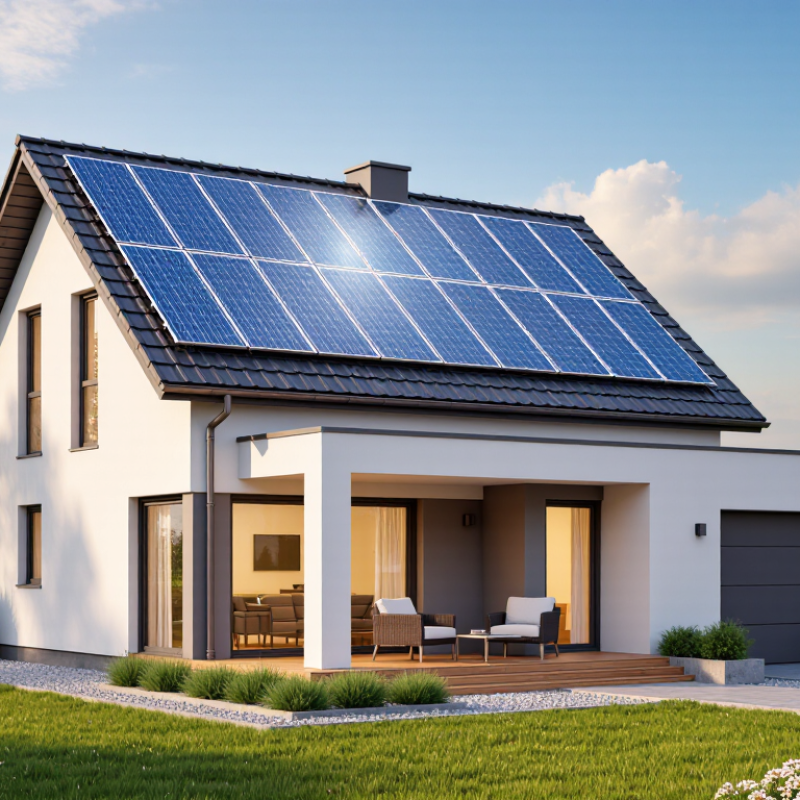
A home solar system turns sunlight into direct current electricity. An inverter changes it into usable household power. Roof direction, shading, temperature, and local sunlight strongly affect production. A small chimney shadow can reduce output during important morning hours.
The International Energy Agency reports that solar photovoltaics may provide nearly 80% of global renewable capacity growth through 2030, showing how quickly the technology is scaling.
Yet national growth does not guarantee equal savings for every household. Electricity prices, export rules, and installation quality still matter.
Start with your hourly electricity use, not your roof size. A 5-kilowatt system may suit one home but fail another with electric heating.
Batteries can store midday generation for evening cooking, cooling, or vehicle charging. They also add cost, weight, and replacement planning.
The International Renewable Energy Agency recorded about 452 gigawatts of new solar capacity worldwide in 2024.
That figure is impressive, but it does not remove local design risks. Ask for production estimates based on shading surveys and twelve months of utility bills. Check equipment warranties, fire access, roof condition, and maintenance requirements.
I would not trust a perfect payback forecast. Weather varies, repairs happen, and household habits change. A realistic plan leaves financial space for those uncomfortable surprises.
2026 Best Solar Energy For Home Systems?
How to Compare Home Solar System Types and Technologies
Choosing the best home solar system in 2026 requires more than comparing panel prices. Your roof, electricity use, climate, and backup needs matter equally. A shaded roof may reduce production, even with high-efficiency panels.
Grid-tied systems usually cost less and can send extra electricity to the utility network. They normally stop operating during outages for safety reasons. Hybrid systems add a battery, allowing selected appliances to run when the grid fails. Off-grid systems require larger batteries, careful load planning, and a backup power source. They suit remote properties, but installation mistakes can become expensive quickly.
Panel technology also deserves close attention. Monocrystalline panels often provide strong output in limited roof space. Thin-film panels may perform differently on unusual surfaces, but they can need more area. Ask for the panel’s efficiency, temperature coefficient, expected degradation, and product warranty. Inverters should match the system size and include clear monitoring data. Battery choices involve usable capacity, cycle life, operating temperature, and fire-safety certifications.
A practical comparison begins with twelve months of electricity bills. Check afternoon shade, roof age, and the location of the main electrical panel. Request a written production estimate, not only a sales forecast. Confirm permits, grid-connection rules, maintenance duties, and installer qualifications. No estimate is perfect. Weather varies, and household demand changes. I would leave room for that uncertainty rather than design around an ideal month. Also, a larger system is not always better. Unused production can weaken the financial case.
| Solar System Type or Technology | Typical Module Efficiency | Typical Power Density | Expected Service Life | Typical Annual Degradation | Roof-Space Requirement | Temperature Performance | Best-Fit Home | Main Advantages | Important Limitations |
|---|---|---|---|---|---|---|---|---|---|
| Monocrystalline PERC | Approximately 19%–22% | About 180–220 W/m² of module area | Generally 25–30 years of useful generation | Usually about 0.35%–0.50% per year | Low to moderate | Power output decreases as module temperature rises; typical temperature coefficients are around −0.30% to −0.40% per °C above the rated temperature. | Homes seeking a widely available, space-efficient system with a balanced cost and performance profile. | Proven manufacturing process, broad availability, good efficiency, and a large installation base. | Usually less efficient than newer high-efficiency designs; performance depends strongly on roof orientation, shading, and installation quality. |
| Monocrystalline TOPCon | Approximately 21%–23% | About 200–230 W/m² of module area | Generally 25–30 years of useful generation | Often about 0.25%–0.40% per year | Low | Typically performs well in warm conditions, with temperature coefficients commonly near −0.29% to −0.32% per °C. | Homes with limited roof area or households wanting a high-efficiency mainstream option. | Higher efficiency, low degradation potential, and good performance in a wide range of climates. | May have a higher purchase price than standard PERC modules; real-world results vary by module construction and installation. |
| Monocrystalline HJT | Approximately 21%–24% | About 200–240 W/m² of module area | Generally 25–30 years of useful generation | Often about 0.20%–0.35% per year | Low | Usually among the strongest crystalline-silicon options in hot climates because of a relatively low temperature coefficient. | Homes in hot regions or properties where long-term energy yield is more important than the lowest initial price. | High efficiency, low degradation, and strong hot-weather performance. | Higher manufacturing complexity and potentially higher system cost; installer availability may be more limited. |
| Bifacial Crystalline Silicon | Front-side efficiency commonly about 20%–23% | Front-side density similar to the underlying cell technology; rear-side gain is site-dependent. | Generally 25–30 years of useful generation | Usually about 0.25%–0.50% per year | Low to moderate | Similar to the selected crystalline-silicon cell technology. | Homes using elevated ground mounts, carports, or rooftops with a reflective surface and clearance behind the modules. | Can produce additional energy from reflected and rear-side light; useful where mounting conditions support rear illumination. | Rear-side gains can be small on flush-mounted roofs; results depend on albedo, row spacing, tilt, height, and shading. |
| Thin-Film Solar | Approximately 10%–18%, depending on the thin-film material | About 100–180 W/m² of module area | Typically 20–30 years, depending on product and enclosure | Often about 0.30%–0.80% per year, depending on technology | Moderate to high | Some thin-film technologies maintain a larger portion of rated output at high temperatures than many crystalline-silicon modules. | Large roofs, lightweight structures, commercial-style installations, or projects with special weight and appearance requirements. | Can be lightweight, flexible in some forms, and comparatively tolerant of certain low-light conditions. | Lower efficiency generally requires more roof area; residential availability and installer familiarity may be limited. |
| Solar Shingles or Building-Integrated PV | Approximately 14%–23%, depending on the product design | Usually lower than the highest-efficiency framed modules because of roof-integration constraints | Often designed for 20–30 years; roof and electrical warranties vary separately | Product-specific; commonly within roughly 0.25%–0.80% per year | Moderate to high | Depends on the integrated product design, roof ventilation, and local climate. | New construction or re-roofing projects where appearance and roof integration are major priorities. | Low-profile appearance, integration with roofing materials, and potential reduction in separate panel hardware. | Higher installation complexity, more difficult repairs, fewer compatible installers, and potentially lower output per roof area. |
| Grid-Tied Solar Without Battery | Uses the selected PV module technology | System output depends on module rating, roof area, inverter capacity, and shading | PV modules commonly 25–30 years; inverters often require replacement sooner | Determined primarily by the selected PV modules | Depends on the chosen modules and annual electricity demand | Inverter location and ventilation affect conversion performance and service life. | Homes with reliable grid service and electricity consumption that aligns reasonably well with daylight production. | Usually the simplest system design, lower upfront cost than adding storage, and straightforward grid interaction. | Typically cannot provide backup power during a grid outage unless specifically designed with backup equipment. |
| Solar Plus Battery Storage | Uses the selected PV module technology | PV density is unchanged; battery capacity is measured in usable kWh rather than roof area. | Solar modules commonly 25–30 years; lithium-ion batteries are often warranted for about 10–15 years. | Battery capacity gradually declines with use and age; the exact rate depends on chemistry, temperature, and operating limits. | Depends on PV size; battery equipment requires separate indoor, garage, or outdoor space. | Battery systems require temperature management and installation within the manufacturer’s approved operating range. | Homes seeking outage backup, higher solar self-consumption, or reduced exposure to time-of-use electricity prices. | Can store daytime solar energy for evening use and may provide backup when correctly configured and permitted. | Higher upfront cost, limited usable energy, round-trip losses, and eventual battery replacement planning. |
| Comparison note: The ranges above are general residential planning values, not guaranteed specifications. Actual energy production depends on solar resource, roof orientation and tilt, shading, weather, soiling, wiring, inverter efficiency, local codes, maintenance, and system design. A professional proposal should use a site-specific solar study and annual energy estimate. | |||||||||
Choosing the best home solar setup starts with your household’s actual electricity pattern. IRENA’s Renewable Capacity Statistics 2025 reported 585 gigawatts of new renewable capacity worldwide in 2024. Solar contributed about 452 gigawatts. Growth is impressive, but more panels do not automatically mean better value.
Review twelve months of utility bills, then compare daytime demand, evening consumption, and seasonal changes. A roof with partial shade may produce less than a smaller, unshaded roof. NREL’s PVWatts tool estimates output using location, tilt, direction, and system size. Its estimate is useful, not perfect.
Tips:
Check roof age, shading, local approval rules, and future loads before requesting quotes. Ask for production assumptions, equipment service terms, battery usable capacity, and expected degradation. A battery can improve backup and evening self-consumption, but it also adds cost, weight, and replacement risk.
DOE guidance emphasizes proper permitting, qualified installation, and clear emergency procedures. Those details matter during outages. They are easy to overlook.
Look beyond the panel’s headline efficiency. Compare annual kilowatt-hour production, inverter limits, monitoring quality, and maintenance access. An installer should explain why the proposed system fits your roof and load profile.
Be cautious with guaranteed savings claims. Weather, tariffs, tree growth, and changing household habits can reduce results.
My practical concern is simple: many plans are oversized because future demand is guessed too confidently.
A modest system, designed around measured usage, may perform more honestly. Consider a battery only after understanding your outage needs and electricity pricing.
A reliable home solar system begins with a site inspection, not a sales estimate. The roof should be checked for age, shading, wind exposure, and structural capacity. The International Energy Agency’s Renewables 2024 report recorded about 510 gigawatts of renewable capacity added globally in 2023. Solar produced most of that growth. This scale makes professional installation even more important.
A qualified electrician should verify grounding, circuit protection, emergency shutoff access, and local permitting requirements. Battery storage needs a dry, ventilated location away from bedrooms and heat sources. The National Fire Protection Association recommends listed equipment, correct clearances, and documented installation practices for energy storage systems. Never place a battery beside cardboard boxes or fuel containers. Small details matter.
Maintenance is usually simple, but not optional. Inspect cables, roof penetrations, mounting hardware, and inverter alerts at least annually. Dust, leaves, and bird nesting can reduce output or hide damage. The National Renewable Energy Laboratory reports typical photovoltaic degradation near 0.5% annually, although real homes vary. I would not promise a perfectly predictable bill. Weather, battery aging, and household habits interfere. A monitoring app may show normal operation while a loose connector quietly worsens, so occasional physical inspections remain necessary.
Choosing a home solar system in 2026 requires more than comparing panel prices. NREL’s U.S. Solar Photovoltaic System and Energy Storage Cost Benchmarks estimate residential solar costs near $2.68 per watt before incentives. IRENA’s Renewable Power Generation Costs report placed utility-scale solar’s global average cost at about $0.044 per kilowatt-hour in 2023. Those figures are not household quotes. Roof shape, labor, wiring, storage, and financing can change the result sharply.
In the United States, federal policy has offered a 30% credit for qualifying residential clean-energy projects. Eligibility, deadlines, and transfer rules require current verification. Local rebates may reduce upfront costs, while permitting and electricity-export rules affect payback. The International Energy Agency reported that solar provided roughly three-quarters of new renewable capacity additions in 2023. Efficiency is not only a panel rating. Shade at 3 p.m., dust, high temperatures, or an aging inverter can reduce actual production. Small details matter.
Solar can also influence long-term home value. A Berkeley Lab analysis found that homes with owned solar systems sold for about 4.1% more in several U.S. markets. That evidence is useful, not universal. Local buyers, appraisal practices, roof age, and system ownership can change the result. Keep permits, utility bills, production records, and equipment warranties. I would model conservative output losses and future battery replacement costs. The calculation is not tidy. A site-specific inspection remains more reliable than a glossy estimate.